




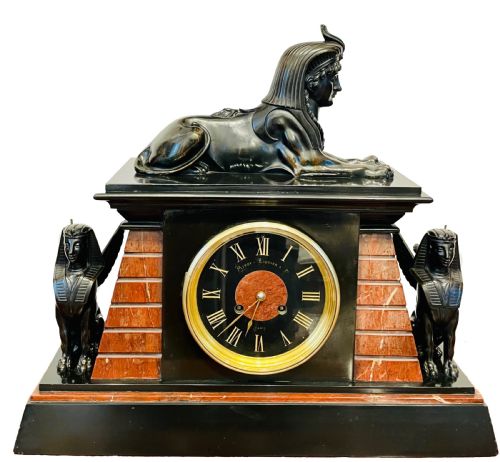
Black Marble Sphinxes
Black marble sphinxes bring monumental Egyptian Revival design indoors, offering dramatic sculptural presence for any mantelpiece or table.
Black Marble Sphinxes
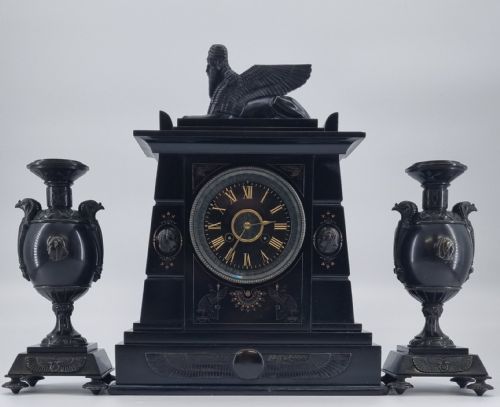
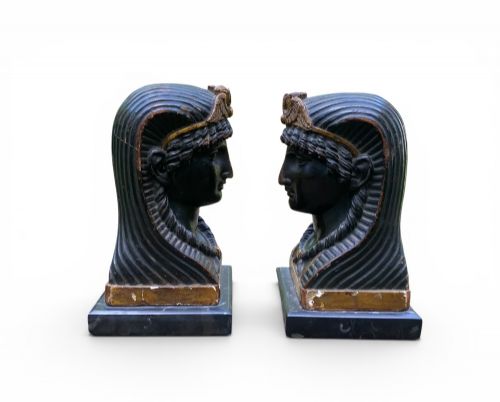
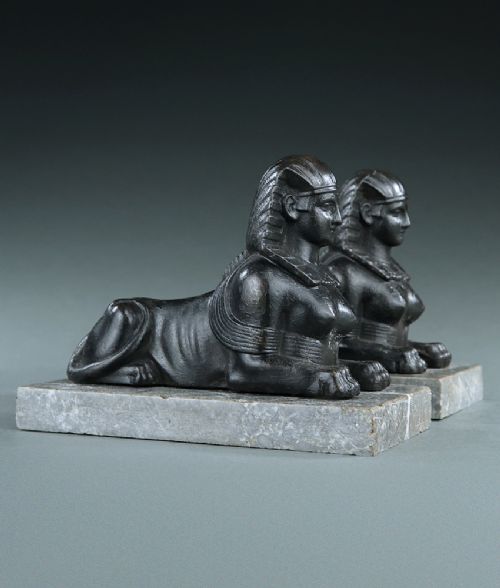
When buyers search for black marble sphinxes, they encounter ornamental figures and clock garnitures rooted in the nineteenth century. These pieces predominantly reflect the Egyptian Revival and Regency styles, appearing as singular sculptures or paired figures mounted on bases.
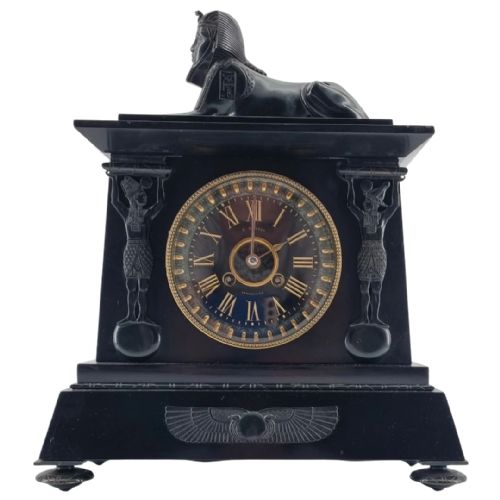
The objects on this page span the Victorian era, including mantel clocks featuring slate and black marble alongside patinated or gilt bronze figures. Thomas Hope and Grand Tour influences inform many of these sculptural interpretations.
Makers and horologists such as Achille Brocot and Barraud & Lund London contribute to the selection of clock cases and sculptural mountings. Buyers are most likely to meet nineteenth-century mantel clocks and bronze-mounted stone figures when browsing this category.
How they were made
Materials combine heavy dark stones like black slate and marble with cast metals, utilising bronze, brass, and gilt elements. Figures are cast in bronze or iron, then patinated or gilt before being secured to stone plinths.
Clock movements require precision engineering, paired with fusee chains and enamel dials fitted into stone and metal architectural cases. Decorative details include engraved hieroglyphics and cast architectural mouldings typical of the period.
Some sphinxes wear their historical mystery with a stern Victorian gaze, guarding mantelpieces against mundane timekeeping.
What varies in quality
The selection and preparation of the stone base affect the overall presence, with dense black slate or veined marble providing stable heft and polished surfaces. Movement complexity, such as single chain fusee mechanisms by noted makers, elevates the horological significance.
Thomas Hope·D. Munsey of Cambridge·Achille Brocot·Barraud & Lund London
The Black Marble Sphinxes Glossary
- Egyptian Revival
- A nineteenth-century artistic style drawing inspiration from ancient Egyptian motifs, including sphinxes, obelisks, and hieroglyphics. This aesthetic dominated decorative arts following archaeological discoveries.
- Garniture
- A set of matching decorative objects, typically a mantel clock accompanied by a pair of side ornaments such as urns or sphinxes. These sets created a balanced arrangement on nineteenth-century fireplace mantels.
- Fusee
- A conical pulley used in clock movements to maintain equal driving force as the mainspring unwinds. This mechanical component is associated with higher quality British and French timepieces.
- Patination
- The surface alteration or colouring developed on metal through age or chemical treatment. A controlled patinated finish enhances the depth of bronze sculptures.
Black Marble Sphinxes: Frequently Asked Questions
What periods do these pieces date from?
The pieces span the nineteenth century, encompassing Regency and Victorian eras.
Dates range from approximately eighteen hundred through the late eighteen nineties.
How were sphinx figures used?
Sphinx figures served as decorative mantel ornaments, often flanking central clocks.
They also appeared as standalone cabinet sculptures and Grand Tour souvenirs.
What materials are commonly found?
Materials include black slate, marble, bronze, brass, and cast iron.
Gilt bronze and wood elements also appear across the selection.
Are clock movements included?
Several listings incorporate mantel clocks alongside the sculptural figures.
Mechanisms range from standard movements to chain fusee systems by known makers.