


Black Leather Writing Table
A black leather writing table is a sturdy working surface designed for correspondence, bringing tactile authority and period character to a room.
Black Leather Writing Table
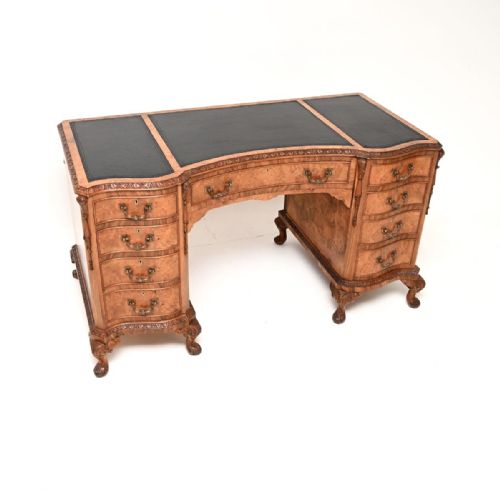
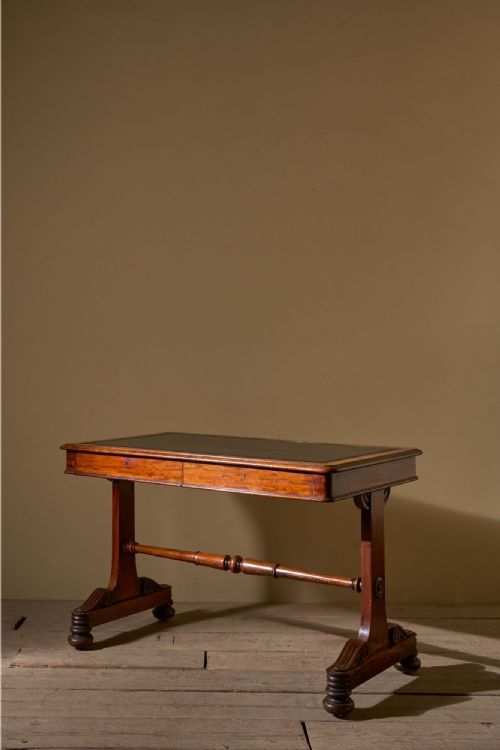
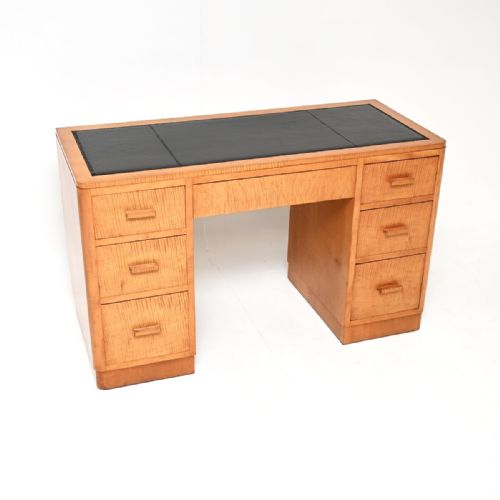
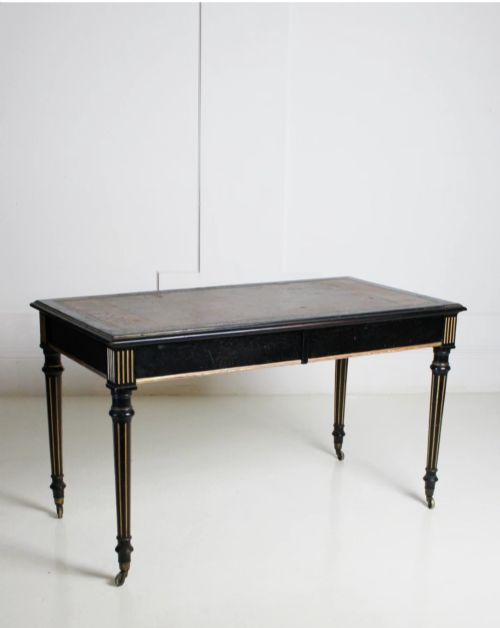
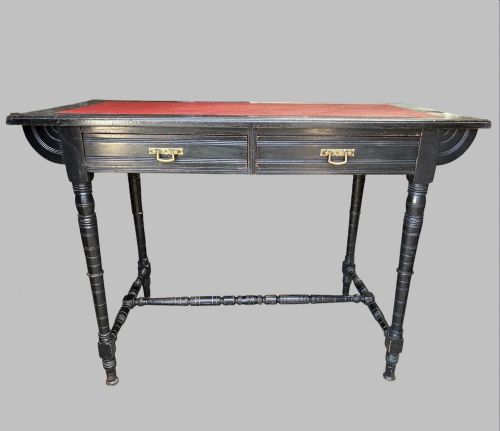
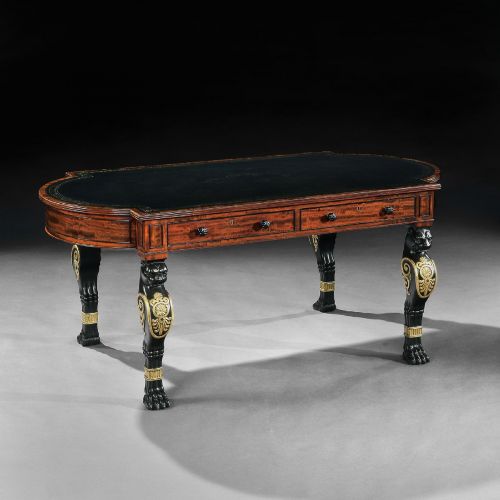
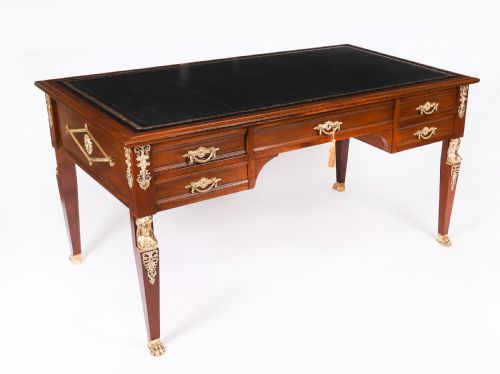
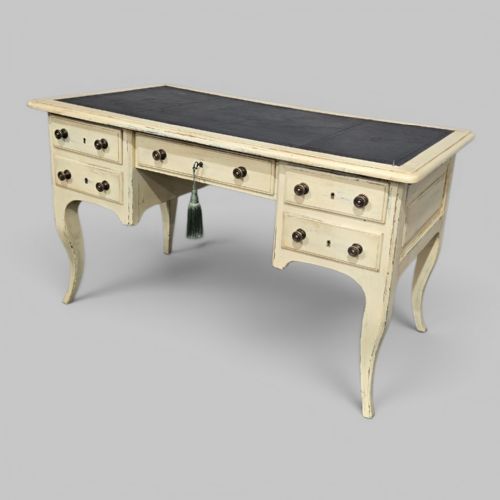
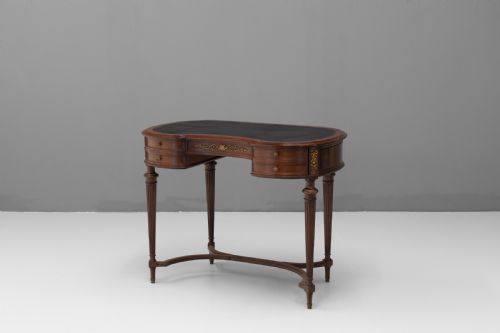
A black leather writing table encompasses freestanding library desks, pedestal forms, and compact writing tables designed for daily correspondence. You will frequently encounter Victorian and Art Deco examples alongside pieces influenced by Regency and French Empire design.
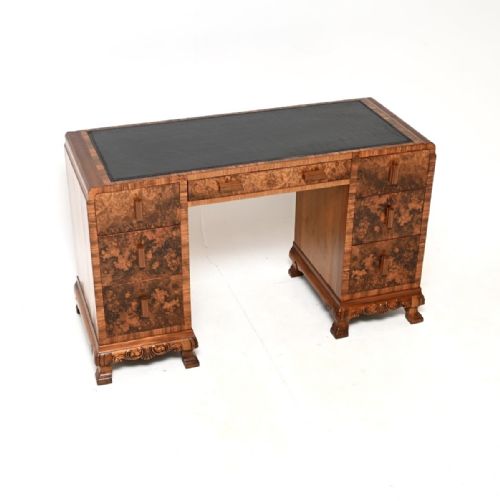
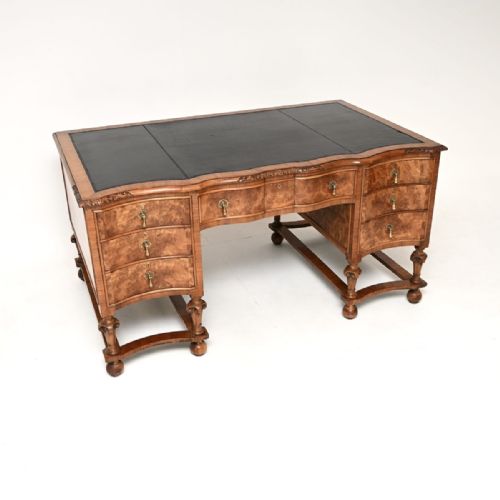
The construction typically follows formal desk layouts, including kneehole arrangements and partners desks intended for shared use. Woods such as mahogany, burr walnut, and ebonised timber provide the structural foundation for the inset leather surfaces.
Materials and construction
Makers utilised solid hardwoods and figured veneers like burr walnut and mahogany over robust timber frames. Surfaces frequently incorporated applied brass mounts, ormolu, and hand-tooled leather writing inserts.
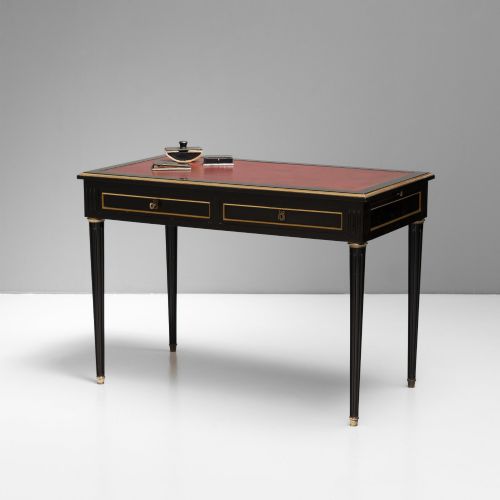
Finishes range from traditional French polish on mahogany to ebonised and painted treatments reflecting Aesthetic or Art Deco preferences. Joinery employed traditional drawer construction and sturdy pedestal framing to support heavy daily use.
The listings demonstrate a strong presence of nineteenth-century ebonised wood alongside nineteen-thirties burr walnut and satin birch.
Judging execution
Quality rests in the selection of timber veneers and the crispness of applied brass or ormolu mounts. Finer pieces demonstrate careful attention to secondary timbers and the precision of the leather tooling.
Structural integrity of the pedestals and smooth operation of the drawers separate standard workshop production from important cabinet work by established makers.
Maple and Co·Johnstone and Jeanes
The Black Leather Writing Table Glossary
- Pedestal desk
- A heavy freestanding desk comprising two supporting banks of drawers beneath a central writing surface. This form provides substantial storage while maintaining a finished appearance on all sides.
- Partners desk
- A double-sided desk designed for two people to work opposite one another simultaneously. These large pieces feature drawers or cupboards on both faces.
- Ormolu
- Gilded bronze mounts applied to furniture for decorative enrichment. This technique appears prominently on Empire and nineteenth-century Continental pieces.
- Ebonised
- Wood finished to resemble ebony through staining or painting. The technique was particularly favoured during the Victorian and Aesthetic periods.
- Bureau plat
- A flat-topped freestanding writing table originating in France. They typically feature cabriole or tapered legs and elaborate mounts.
Black Leather Writing Table: Frequently Asked Questions
How do I care for the leather?
Keep leather tops away from direct sunlight and excessive heat to prevent drying and cracking. Regular dusting and occasional specialist conditioning will maintain the supple texture.
Avoid using modern domestic cleaning sprays or excessive water when wiping the surface. A damp cloth followed by dry buffing is generally sufficient for routine maintenance.
Were these desks used in offices?
Many examples served in domestic libraries, private studies, and professional offices throughout the nineteenth and twentieth centuries. Heavier pedestal and partners forms were built for serious administrative work.
Lighter writing tables and side variants often furnished drawing rooms and boutique apartments where space was more constrained.
How do I identify the period?
Period identification relies on a combination of timber selection, structural hardware, and stylistic ornament. Regency and Empire pieces display classical proportions and bronze mounts, while Victorian examples often feature rich mahogany or ebonised finishes.
Art Deco desks from the nineteen-thirties introduce geometric satin birch and burr walnut veneers with simplified profiles.
Can I use a laptop on these?
These tables provide stable working surfaces well suited to contemporary laptop use and writing. The generous proportions of pedestal and partners desks easily accommodate modern technology alongside traditional stationery.
Ensure that hot equipment or heavy items are placed with care to protect antique wood and leather surfaces from accidental indentation or heat marks.