



Black Leather Chairs
Black leather chairs combine heavy timber frames with dark hides, serving as practical seating across dining rooms and libraries.
Black Leather Chairs
When seeking black leather chairs, buyers encounter a diverse selection spanning the eighteenth, nineteenth, and early twentieth centuries. These seating forms range from utilitarian office swivel seats and heavy library armchairs to matched sets of dining chairs.
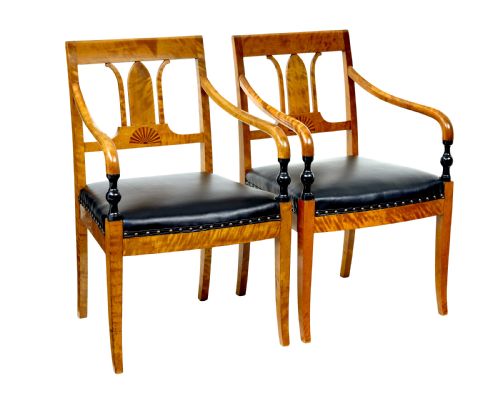
The Victorian period provides a substantial portion of these pieces, often constructed in mahogany, oak, or walnut with buttoned or plain leather upholstery. Alongside British examples, continental pieces including Swedish Biedermeier birch armchairs and French Empire desk chairs appear regularly.
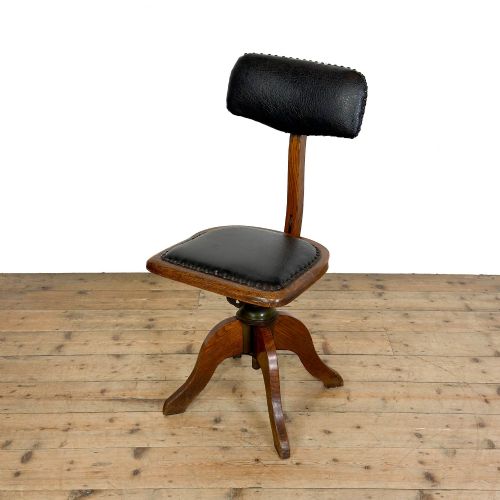
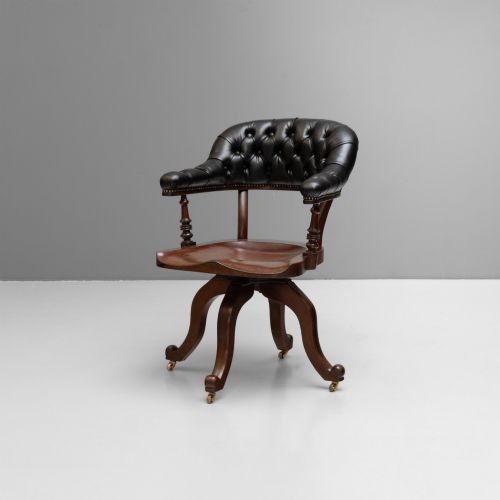
Specialist forms such as revolving desk chairs, campaign folding chairs, and low library armchairs dominate the selection. Buyers find both individual carvers and larger sets designed for formal dining rooms or studies.
Construction and Materials
Frames rely upon durable hardwoods such as mahogany, oak, walnut, and birch, selected for their structural strength and grain quality. Joinery techniques reflect the period of manufacture, incorporating pegged mortise and tenon joints in earlier oak pieces and turned wooden spindles in later revolving desk chairs.
Upholstery combines vegetable-tanned leather secured with metal studs over traditional stuffing materials. Secondary supports utilise brass fittings, iron mechanisms in swivel chairs, and occasional cane work alongside the primary wooden structures.
Judging Quality
The standard of a black leather chair rests upon the integration of timber frame construction and the preservation of its covering. Pieces retaining their original leather upholstery demonstrate superior historical integrity compared to later replacements.
Carving depth and timber selection separate standard utilitarian seating from high-status library and desk chairs. Finely figured mahogany and heavily carved oak demonstrate superior workshop execution.
W.Williamson & Sons
The Black Leather Chairs Glossary
- Carver chair
- An armchair designed to match a set of smaller dining chairs, usually placed at the head of a table. These often feature open arms and sturdy wooden frames.
- Library armchair
- A heavily upholstered seat designed for prolonged reading in a study or library. They frequently incorporate padded arms and deep seats.
- Revolving desk chair
- A swiveling office seat mounted on a central pivot mechanism, often with an adjustable height screw. These pieces accommodate active working environments.
- Biedermeier
- A Central European style dating to the nineteenth century, prioritising clean lines and blonde or ebonised birch veneers over excessive ornamentation.
- Campaign chair
- A folding or collapsible piece designed for transport during military campaigns or travel. They utilise hinged wooden frames and durable leather.
Black Leather Chairs: Frequently Asked Questions
How do I care for antique leather?
Antique leather requires gentle cleaning with appropriate conditioning balms to maintain flexibility and prevent the surface from drying out over time. Avoid harsh chemical cleaners and excessive exposure to direct sunlight.
Keeping the room humidity stable helps preserve both the hide and the underlying timber frame without causing the materials to warp or crack.
Can I use these chairs daily?
Most nineteenth and early twentieth-century wooden chairs are structurally sound for everyday seating if the joints remain secure. Heavier library armchairs and desk chairs suit regular study use.
Checking the stability of the legs and the tension of the leather periodically ensures the seating handles normal daily weight safely.
How do I identify Victorian pieces?
Victorian seating often employs dense mahogany or carved oak, frequently featuring buttoned leather upholstery and heavy proportions. Cabinetmakers of this era favoured darker finishes and robust joinery.
Examining the construction methods underneath the seat reveals hand-cut screws or traditional pegging typical of nineteenth-century workshops.
Are swivel desk chairs sturdy?
Nineteenth-century revolving desk chairs utilise iron spindles and wooden screw mechanisms designed for continuous movement in offices. These mechanical components generally offer reliable support.
Periodic inspection of the central pivot ensures the swivel action remains smooth and secure during routine adjustments.