
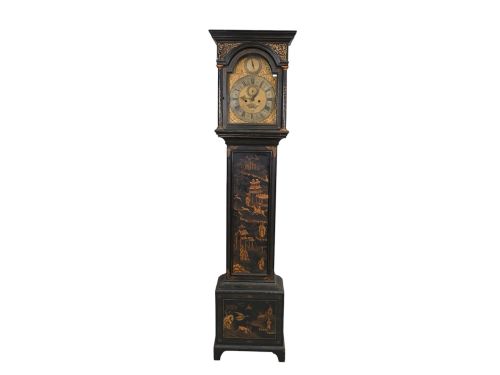


Black Lacquer Clock
A black lacquer clock brings deep surface and gilt detail to a room, ranging from small mantel pieces to tall longcase forms.
Black Lacquer Clock
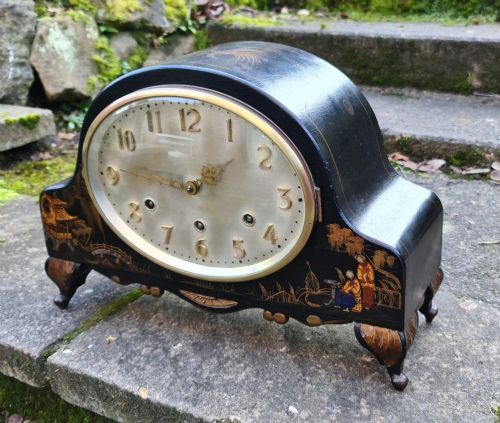
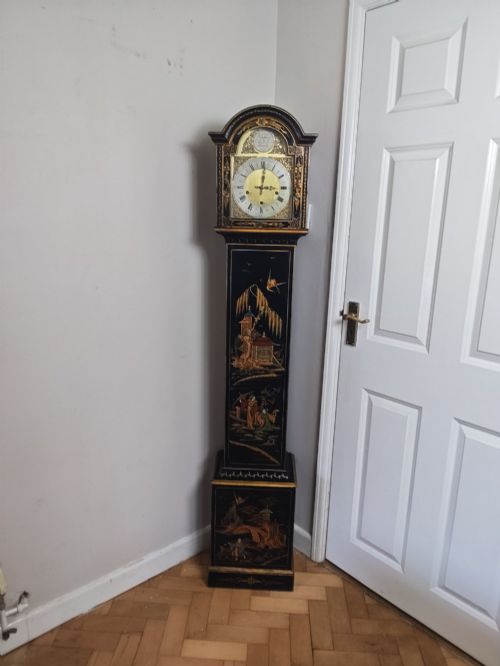
A black lacquer clock spans tall floor-standing longcase examples from the eighteenth century alongside compact mantel and wall pieces from later decades. The most common format met here is the longcase, often termed grandfather or grandmother clocks, alongside bracket and mantel variations.
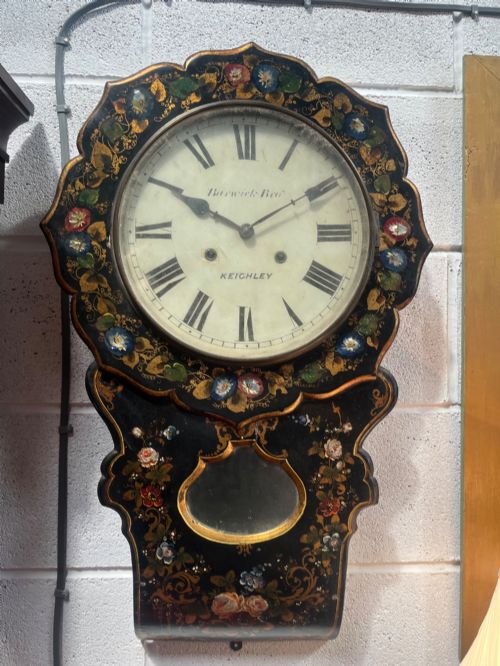
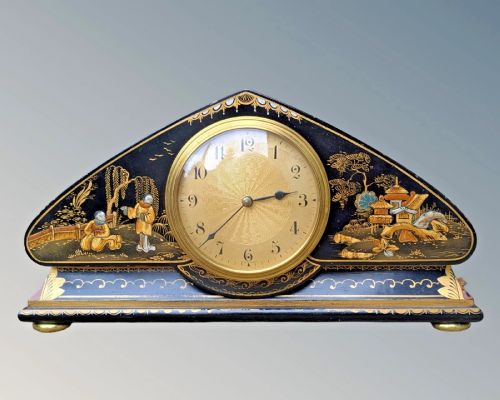
The periods represented stretch from the eighteenth century, including George III and early Georgian eras, through Victorian and Edwardian times, up to the twentieth century. Chinoiserie decoration dominates the visual style across these periods, pairing dark polished finishes with painted and gilt motifs.
Assessing quality in the finish and movement
Quality rests in the depth of the lacquer surface and the execution of the hand-painted Chinoiserie details, where finer examples display crisp gilt work and complex pictorial scenes rather than plain finishes. The harmony between the casework and the mechanical movement also dictates the standing of the piece.
Maker attribution elevates certain longcase and bracket examples, with signed dials from known clockmakers indicating higher workshop standards. The complexity of the movement, such as musical capabilities or three-train mechanisms, separates standard timepieces from more ambitious works.
Listings feature eighteenth-century longcase clocks alongside twentieth-century mantel and grandmother clock formats.
Wise of Reading·Thomas Utting of Yarmouth·Gardner of London·Robert Berry·Elliott of London
The Black Lacquer Clock Glossary
- Chinoiserie
- European decorative style reflecting Chinese artistic motifs, frequently seen on these clocks as raised gilt and painted figures on black grounds. It gained popularity during the seventeenth and eighteenth centuries.
- Japanned
- European imitation of East Asian lacquerwork, created by building up layers of varnish and resin then curing and polishing the surface. This technique produces the characteristic dark glossy finish found on many eighteenth-century cases.
- Longcase clock
- Tall freestanding weight-driven timepiece housed in a wooden case, commonly called a grandfather or grandmother clock depending on its height. These structures protect the pendulum and weights while displaying the dial.
- Bracket clock
- Portable table or shelf clock originally designed to sit on a wall bracket. They frequently feature detailed wooden cases and sophisticated internal movements.
- Movement
- The internal mechanical assembly of gears, springs, and escapements that drives the clock hands and strikes the hour. Mechanisms vary from simple time-only designs to complex musical systems.
Black Lacquer Clock: Frequently Asked Questions
Where should I place a longcase clock?
A longcase clock requires a stable wall and level flooring to ensure the pendulum swings evenly without catching. Hallways and principal rooms provide suitable environments where the height and surface detail can be appreciated.
Avoid placing these pieces near direct heat sources or in damp areas, as fluctuations in temperature affect the wooden casework and the lacquer finish over time.
How do I wind an eight-day clock?
Eight-day mechanisms require winding using a specific key inserted into the dial holes to lift the internal weights or tension the springs. Care must be taken not to overwind the movement, stopping when resistance increases.
Consulting the specific mechanical requirements helps prevent damage to the gear train and maintains accurate timekeeping.
What is the difference between a grandfather and a grandmother clock?
Grandfather clocks refer to full-sized eighteenth-century longcase timepieces, typically standing over six feet tall with heavy weights and long pendulums. Grandmother clocks are smaller twentieth-century versions built to a reduced scale.
Both share similar dial layouts and lacquered Chinoiserie casework, but the smaller format suits more compact modern interiors.
How do I care for the black lacquer finish?
Dusting the surface with a soft, dry cloth prevents particle buildup without scratching the polished lacquer or gilt decoration. Avoid using chemical polishes, abrasive cloths, or water on the decorated wood.
Maintaining a stable room humidity protects the underlying wood and prevents the lacquer from crazing or cracking.