
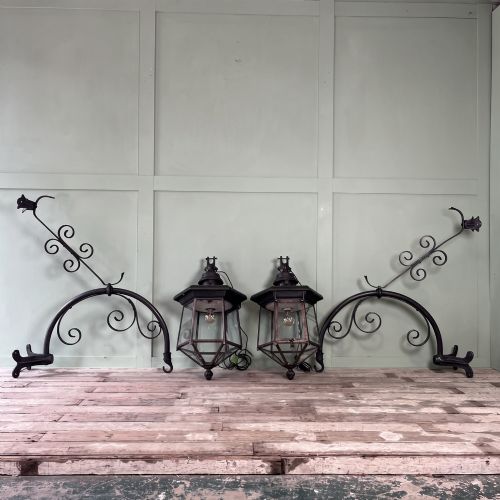


Black Iron Sconces
Black iron sconces bring heavy metalwork and industrial character to interior and exterior walls.
Black Iron Sconces
When you search for black iron sconces, you are looking at robust wall-mounted lighting and lanterns designed for practical illumination inside or outside buildings. The selection ranges from substantial nineteenth century castle wall lights and French carriage lamps to early twentieth century industrial lanterns.
The versions you are most likely to meet on this page include exterior wall lanterns, coach lamps, and multi-branch fixtures spanning the eighteenth, nineteenth, and twentieth centuries. Styles stretch from Gothic Revival and Victorian to industrial and rustic European forms.
Makers recorded in the evidence include REVO and Daris, representing specialised production of heavy brackets and carriage lamps. Forms also incorporate related wall-mounted items such as iron shelves alongside standard wall lights.
Materials and construction methods
Makers constructed these pieces primarily from wrought iron and cast iron, often combining the dark metalwork with brass, copper, and glass panels. Frosted glass frequently diffuses the light within octagonal and box lanterns.
Hot-working techniques shaped the wrought iron branches and brackets into scrollwork and structural supports, whilst casting formed heavier iron components and decorative housing for coach lamps.
Assessing quality in iron lighting
Quality rests in the heaviness of the casting, the hand-forging detail of the wrought iron branches, and the integrity of mixed-metal construction where brass and copper accents meet the black iron body. Substantial scale and complete original brackets elevate certain lanterns above standard domestic iterations.
The refinement of the period style, whether Gothic Revival tracery or clean industrial housing, dictates the visual success of the piece. Integrated glazing panels and signed maker badges further distinguish superior examples from utilitarian hardware.
REVO Leicester·Daris
The Black Iron Sconces Glossary
- Wrought iron
- Iron beaten into shape while hot by a blacksmith, creating a fibrous structure visible in the grain. This material bends rather than snaps under stress.
- Cast iron
- Iron poured molten into a mould to produce complex rigid shapes with uniform thickness. It forms the heavy housings of industrial lanterns.
- Carriage lamp
- A specialised wall-mounted light originally designed for horse-drawn transport or vehicle entrances, featuring protective glass panes and metal chimneys. These often incorporate brass and copper components.
- Gothic Revival
- A nineteenth-century design style drawing inspiration from medieval architecture, characterised by pointed arches, heavy ironwork, and fortress-like details. Castle wall lights frequently adopt this aesthetic.
- Frosted glass
- Glass treated to diffuse light evenly and soften the glare from early bulbs or flames. It appears in twentieth-century exterior wall lanterns.
Black Iron Sconces: Frequently Asked Questions
What periods do these sconces come from?
The pieces span several centuries, with examples originating from the eighteenth, nineteenth, and twentieth centuries. Listings include specific dates from the 1910s, 1920s, and 1940s.
Earlier items tend to feature hand-forged wrought iron, whilst later twentieth-century pieces lean towards industrial designs and standardised lantern production.
Where were these lights used originally?
Many of these fixtures served specific exterior and functional purposes as coach lamps, carriage lamps, and outside wall lanterns. Others were built for large interiors as heavy castle wall lights or multi-branch chandeliers.
They provided essential illumination for building entrances, pathways, and grand halls before modern electrical grids became universal.
How do I install vintage iron sconces?
Installation requires professional electrical fitting to mount heavy iron brackets safely to exterior or interior masonry and timber walls. Weight considerations are paramount given the heavy cast iron and wrought iron construction.
Wiring must be adapted to modern safety standards while preserving the original bracket and housing structure.
Are these lights suitable for outdoor use?
Many pieces in this category were originally manufactured as exterior wall lights, coach lamps, and outdoor lanterns designed to withstand the weather. Their iron, copper, and brass construction naturally endures exterior environments.
Weathered patinas on the iron and copper often develop further character when exposed to the elements over decades.