


Pair Outdoor Lanterns
Pair outdoor lanterns bring architectural presence to exterior walls and gateways, offering enduring character built from honest metalwork and glass.
Pair Outdoor Lanterns
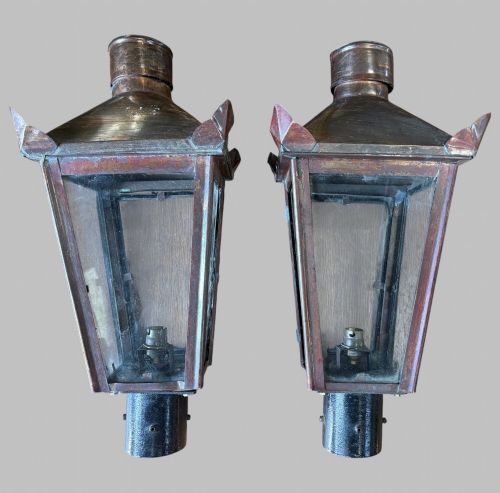
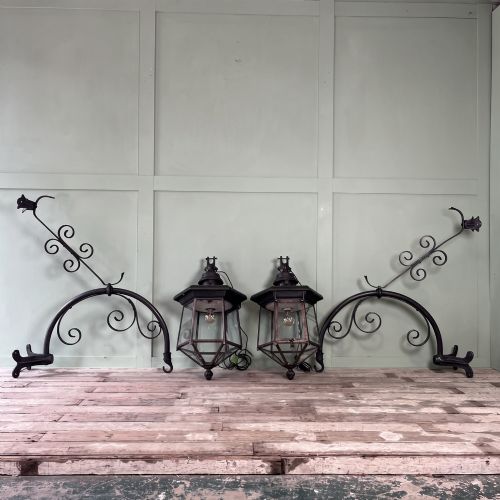
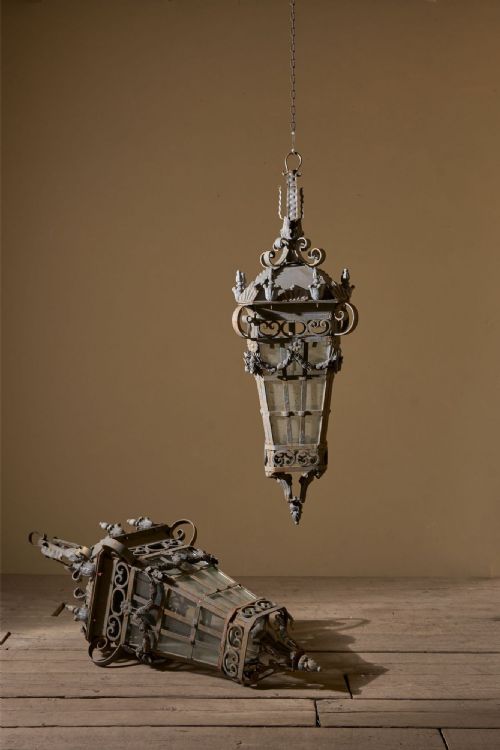
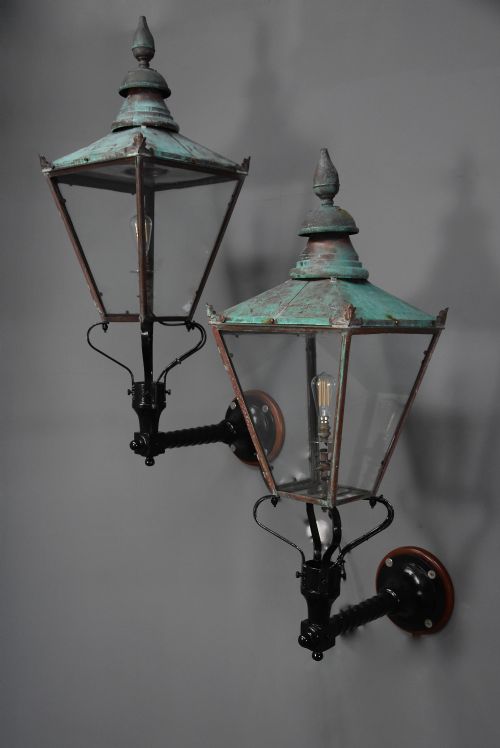
When you search for pair outdoor lanterns, you encounter lighting designed for exteriors, boundaries and facades, spanning wall lanterns, hanging lights, lamp posts and carriage lamps. The selection ranges from late nineteenth-century coach-house designs and Victorian lamp posts to early twentieth-century industrial street lamps and French brass half lanterns.
Most examples originate from the Victorian, Edwardian and early twentieth-century periods, capturing the architectural shifts between ornate neo-classical styling, robust industrial utility and French chateau elegance. Buyers frequently meet copper post lanterns, iron and zinc hanging fixtures, and brass wall lights.
Forms vary from octagonal wall units and Windsor style street lanterns to sophisticated spiral twist wall brackets and Gothic designs. Each configuration reflects the specific exterior lighting requirements of its era, from municipal streetscapes to grand domestic entrances.
How they were made
Makers utilised durable metals suited to external exposure, principally copper, iron, cast iron, wrought iron, brass and zinc, often paired with protective glass panels. Construction methods combine heavy sheet metal fabrication with structural casting and hand-forged scrollwork.
Surface finishes range from natural verdigris patina on copper to painted iron and patinated brass, developing depth through weathering over decades of exposure. Joints are riveted, soldered or secured with traditional hardware to withstand exterior elements.
Periods represented include Victorian, nineteenth century, 1900, 1910, 1920, 1930 and 1940.
What varies in quality
Quality rests in the substance of the metalwork, the weight of the castings and the sophistication of structural brackets, such as spiral twists or articulated mounts. Heavier gauges of copper, iron and brass provide structural integrity that lighter utilitarian production lacks.
Design ambition separates standard functional lighting from superior architectural pieces, evident in proportions, hand-formed glazing bars and decorative details like neo-classical motifs or verdigris patination.
REVO Leicester·Daris
The Pair Outdoor Lanterns Glossary
- Verdigris
- A green patina formed naturally on copper, brass or bronze through long-term atmospheric exposure. This chemical layer protects the underlying metal and indicates considerable age.
- Coach-house style
- An architectural lighting design derived from lanterns mounted on nineteenth-century carriage houses and stables. These fixtures typically feature bracket mounts and protective glass panels.
- Half lantern
- A wall-mounted lighting fixture flat on one side to sit flush against an exterior wall or pillar. This configuration projects outward while conserving space in narrow passageways.
- Post lantern
- A light fixture designed to mount vertically on top of a stone pier, brick pillar or dedicated post. They frequently incorporate substantial copper or iron hoods to shed rainwater.
- Wrought iron
- Iron heated and hammered into shape by hand, resulting in a fibrous grain structure and visible forge marks. It provides exceptional tensile strength for exterior brackets and hanging arms.
Pair Outdoor Lanterns: Frequently Asked Questions
How do I choose the right size pair outdoor lanterns?
Consider the scale of the wall, gateway or entrance where the pair will hang. Large proportions suit stone pillars and Victorian facades, while more compact half lanterns fit domestic doorways.
Ensure the mounting height and bracket projection balance with the surrounding architecture for a cohesive exterior elevation.
Can antique outdoor lanterns be wired for modern electricity?
Most metal and glass lanterns from the nineteenth and early twentieth centuries adapt readily to modern interior and exterior electrical standards. Electricians can house standard lamp holders within the original weatherproof enclosures.
Check the internal clearance and wiring access points of specific models before planning an installation.
How should I maintain copper and brass outdoor lanterns?
Allow copper and brass to retain their natural patination and verdigris over time without applying harsh abrasive polishes. Gentle washing with warm soapy water removes accumulated surface grime.
Inspect structural brackets and glass securing clips periodically to ensure the fixtures remain secure against wind and rain.
What distinguishes Victorian outdoor lanterns from Edwardian examples?
Victorian pieces often lean towards heavier cast iron construction, Gothic revival details and ornate carriage lamp forms. Edwardian and early twentieth-century designs introduce cleaner industrial utility, refined copper spinning and neo-classical restraint.
Examining the bracket fixings and metal gauge helps clarify the manufacturing period.