

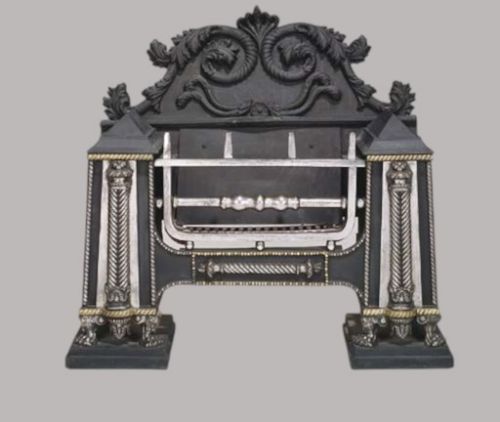


Black Iron Basket Grate
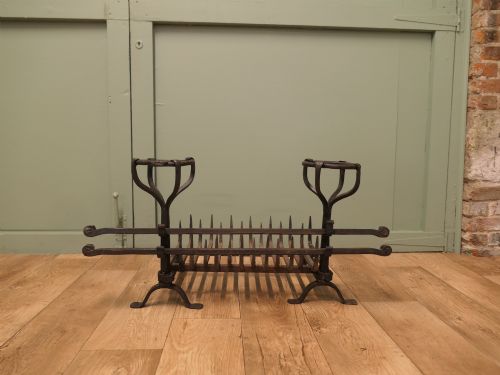
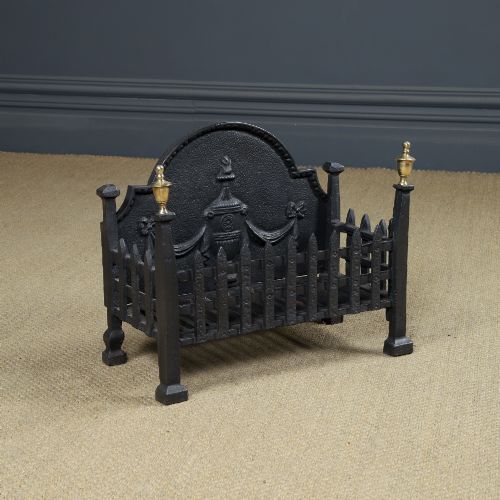
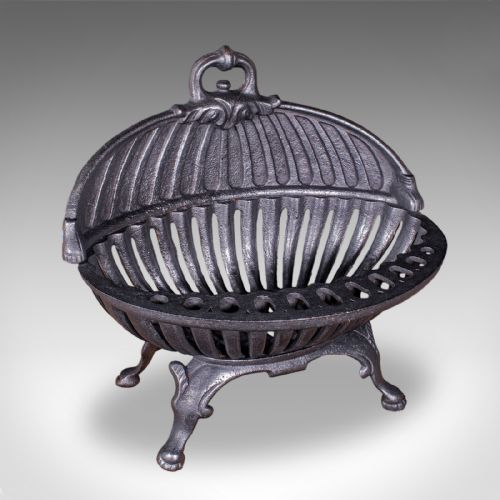
A black iron basket grate sits heavy in the hearth, built to contain coal or logs while radiating steady warmth into the room.
Black Iron Basket Grate
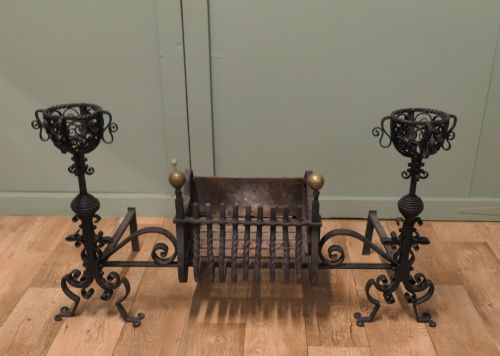
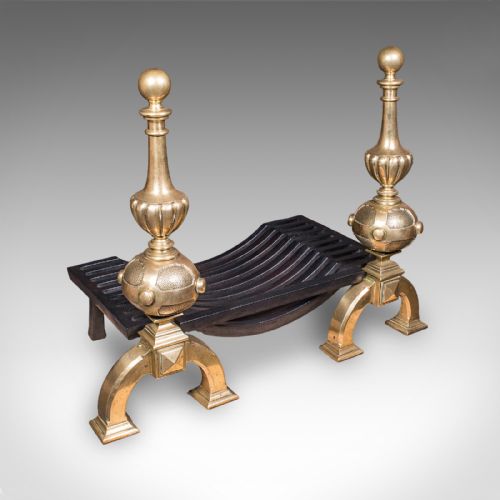
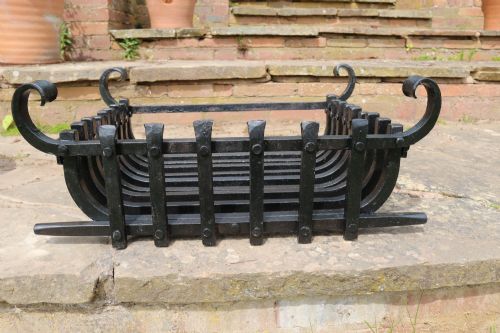
A black iron basket grate is an essential hearth fitting designed to hold solid fuel securely within an open fireplace. These items range from smaller freestanding log baskets to heavy inglenook grates paired with matching andirons.
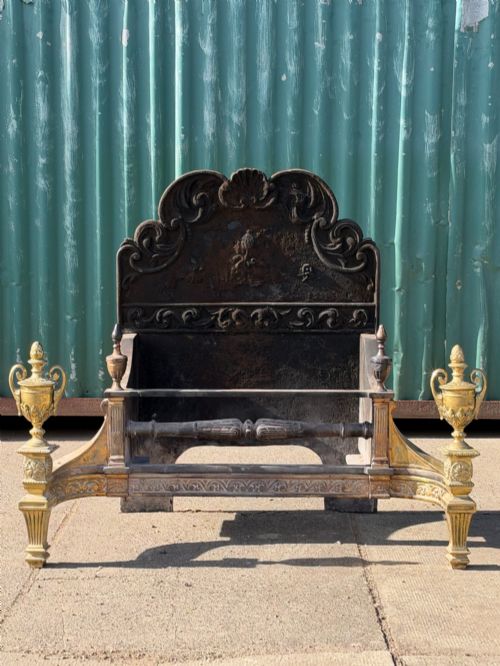
Most examples found here date from the Victorian and Georgian eras, alongside Regency and Arts and Crafts interpretations. Pieces often incorporate cast iron bodies with wrought iron elements, and occasionally brass details.
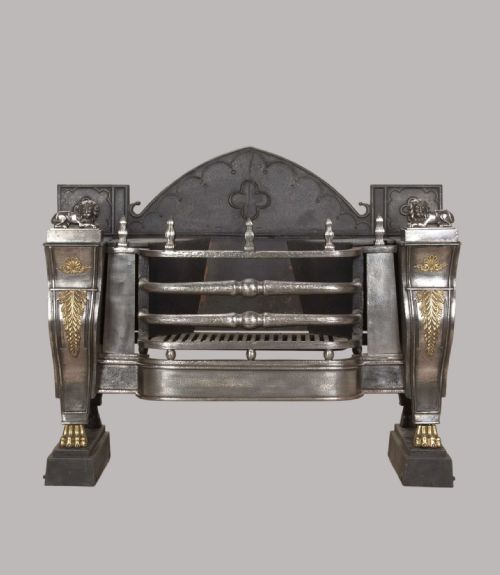
Forms vary from simple classical hob grates to elaborate Gothic Revival and Neo-Gothic designs with integrated fire backs and fenders.
How they were made
Makers utilised heavy cast iron for the main structure and fire backs, pouring molten metal into sand moulds to achieve solid durability and detailed ornamentation. Wrought iron was worked by hand for basket bars and structural supports, offering greater tensile strength under intense heat.
Brass components such as finials and andirons were cast separately and polished to contrast against the dark ironwork. Internal linings frequently incorporated firebrick to protect the metal shell and retain radiant heat within the hearth.
Black Iron Basket Grate Retail Price Guide 2026
Typical asking prices for black iron basket grate among the pieces listed under this phrase on Sellingantiques today, from the lower quarter to the upper quarter. They describe what is for sale here now, not the wider market.
Some heavy inglenook grates require multiple people to move, having been built to anchor a country house kitchen through centuries of winter stews.
What varies in quality
The distinction between standard utility grates and superior examples lies in the weight of the metal and the crispness of the casting. Finer pieces display refined classical proportions or detailed Gothic Revival ornamentation rather than plain industrial casting.
Completeness dictates much of the standing of a fireplace set. Grates accompanied by original matching andirons, fire backs, or fenders demonstrate greater architectural harmony than assembled components.
The Black Iron Basket Grate Glossary
- Basket grate
- An open metal basket designed to hold coal or wood for burning in a fireplace. These units stand independently on legs or rest upon andirons.
- Andirons
- Supporting metal fire dogs placed on either side of the hearth to hold logs or support a basket grate above the floor of the fireplace. They often feature decorative brass or iron fronts.
- Hob grate
- A fireplace grate featuring raised side plates known as hobs, used for keeping kettles warm. This form is closely associated with Georgian and Regency interior design.
- Fire back
- A heavy cast iron plate placed against the rear wall of a fireplace. It protects the brickwork and reflects heat back into the room.
- Register grate
- A fireplace insert featuring a moveable flap or damper to control the draught up the chimney. These units became common during the nineteenth century for regulating room temperature.
Black Iron Basket Grate: Frequently Asked Questions
How do I choose the right size grate?
Measure the width, depth, and height of your fireplace opening carefully before selecting a basket. Leave adequate clearance around the sides and back for proper airflow and safety.
Consider whether you intend to burn wood logs or coal, as different basket designs accommodate fuel depths and ash collection in distinct ways.
Can these grates be used in an open fire?
These pieces are built from heavy cast and wrought iron specifically to withstand solid fuel fires. Many retain original firebrick linings or sturdy bars designed for daily use.
Ensure a professional chimney sweep inspects your flue before lighting any antique hearth furniture for the first time.
What is the difference between cast and wrought iron?
Cast iron is poured into moulds while molten, creating rigid structures and detailed decorative surfaces that excel at holding heat. Wrought iron is beaten and shaped by hand, providing fibrous strength for bars and structural frames.
Many period pieces combine both techniques, using cast plates alongside forged baskets.
How do I clean and maintain a black iron grate?
Remove ash regularly to prevent moisture retention and corrosion against the metal surfaces. Apply a traditional grate polish or black lead periodically to maintain the dark finish.
Avoid using harsh chemical cleaners that can strip the historic patina from the ironwork.