



Black Inlaid Clock
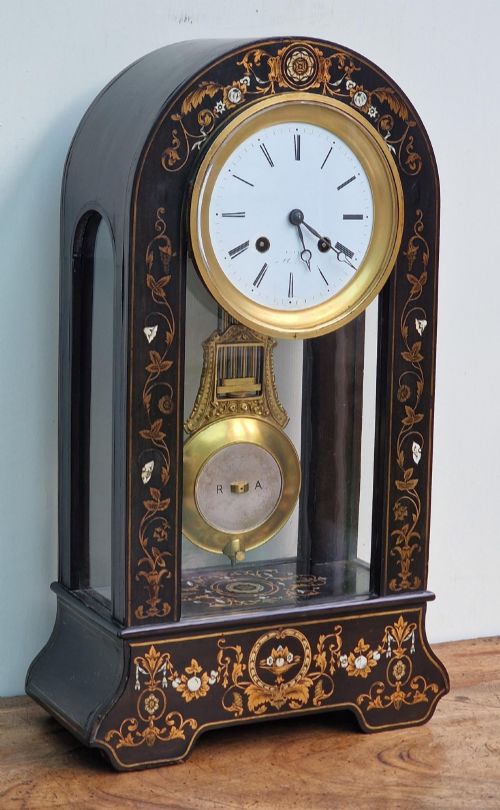
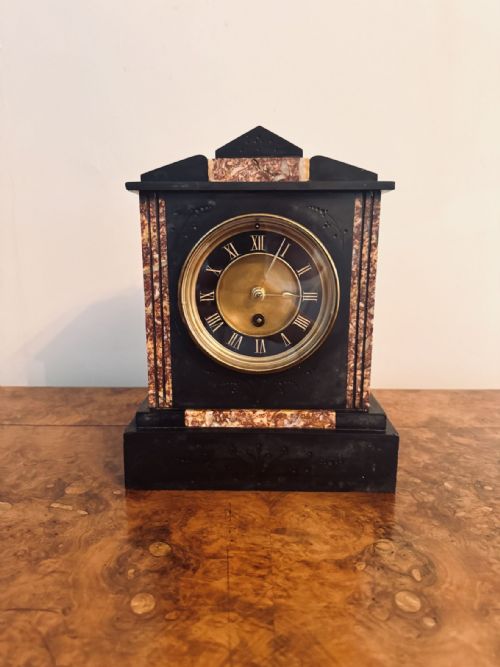
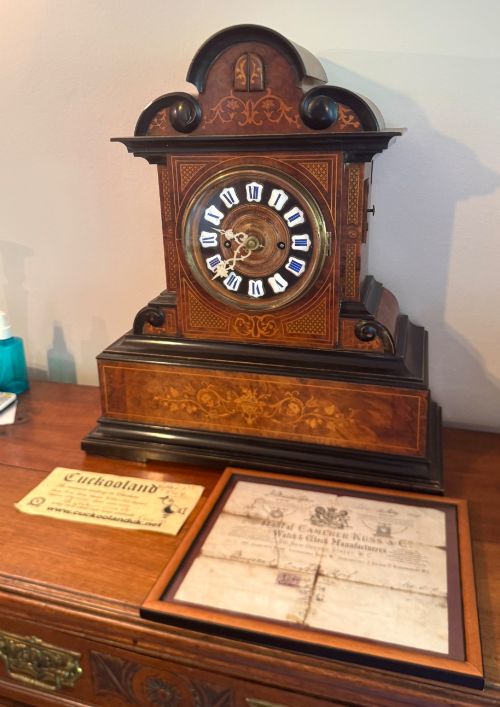
These black inlaid clock examples combine dark stone and ebonised timber with contrasting brass, mother-of-pearl, and marquetry details.
Black Inlaid Clock
When you search for a black inlaid clock, you encounter nineteenth-century timepieces fashioned from black slate, block marble, and ebonised wood. The most common form on this page is the Victorian mantel clock, alongside French wall clocks and bracket clocks.
Originating predominantly from British and French workshops, these architectural timepieces feature contrasting geometric or floral inlays using materials like brass wire and mother-of-pearl.
The selection ranges from William IV bracket clocks to high Victorian garniture pieces, offering substantial presence on a mantelpiece or wall.
How they were made
Maker construction relies heavily on heavy black slate and marble bases, shaped into architectural cases that house enamel dials protected by glass bezels.
Surface decoration employs marquetry in walnut and ebonised wood, alongside intricate brass wire inlay and mother-of-pearl embellishments set flush into the dark ground.
Black Inlaid Clock Retail Price Guide 2026
Typical asking prices for black inlaid clock among the pieces listed under this phrase on Sellingantiques today, from the lower quarter to the upper quarter. They describe what is for sale here now, not the wider market.
Listings span periods from 1800 through the 19th century, featuring Victorian, William IV, and French Napoleon III styles.
What varies in quality
Distinction across the range rests in the precision of the marquetry and the crispness of the brass and mother-of-pearl inlay work. Simpler ebonised timber cases contrast with substantial marble garnitures displaying complex stone combinations.
The sophistication of the movement and the integration of signature details by named makers elevate certain examples above standard domestic timepieces.
John Bull of Bedford·Baby and Jannings·Thomas A Paris
The Black Inlaid Clock Glossary
- Ebonised wood
- Timber treated to imitate ebony, giving a dense black finish popular in nineteenth-century case design. This treatment provided a dark contrast for brass and pearl inlays.
- Garniture
- A set consisting of a clock and matching side ornaments, often in block marble. These matched sets created a balanced decorative display on a mantelpiece.
- Marquetry
- The art of applying pieces of veneer to a structure to form decorative patterns. Walnut and exotic woods were frequently utilised for these floral or geometric designs.
- Bracket clock
- A portable timekeeper originally designed to sit on a wall bracket rather than a floor. Many later examples functioned as substantial mantel clocks.
Black Inlaid Clock: Frequently Asked Questions
Where should a black inlaid clock be placed?
These heavy slate and marble pieces require a sturdy mantelpiece or shelf that can support substantial weight. Wall-mounted versions need secure fixings into solid masonry.
Position them away from direct heat sources and damp walls to protect the delicate enamel dials and internal brass movements.
How do I wind a nineteenth-century clock?
Use the appropriate winding key gently in the dedicated holes on the enamel dial, turning only until firm resistance stops the key. Do not overwind, as this damages the mainspring.
Keep the original key with the clock where possible to ensure the square winding arbor does not get stripped by incorrect tools.
How do I identify a French wall clock?
French wall clocks from the nineteenth century often feature ebonised wooden frames with brass wire or mother-of-pearl inlay. They rely on pendulum-regulated movements visible behind glass doors.
Examining the dial style and interior movement stamps helps distinguish continental manufacture from British bracket and mantel clocks.
What is the difference between slate and marble cases?
Slate cases provide a uniform dense black matte appearance that was frequently polished or incised with gilt details. Block marble versions offer natural veining and heavier stone composition.
Both materials formed the durable architectural housings typical of the Victorian high period.