
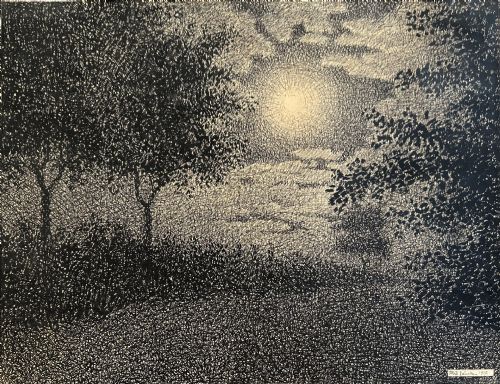


Black Ink Art
Black ink art encompasses works on paper and framed drawings executed primarily in monochrome pigment, sought after for their precise graphic clarity and direct connection to the hand of the maker.
Black Ink Art
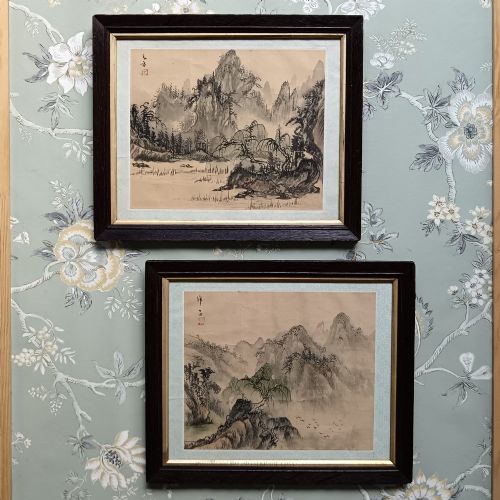
The term black ink art covers original drawings, illustrated leaves, and printed works spanning from the eighteenth century through to the mid-twentieth century. Buyers encounter varied formats, from landscape watercolours touched with ink to architectural studies and portrait silhouettes.
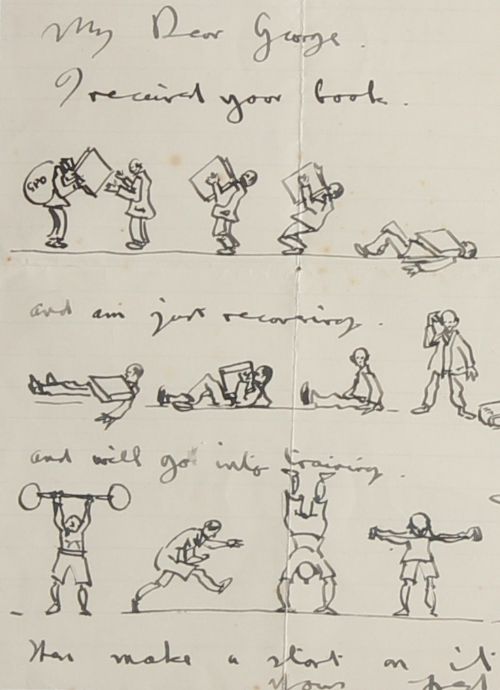
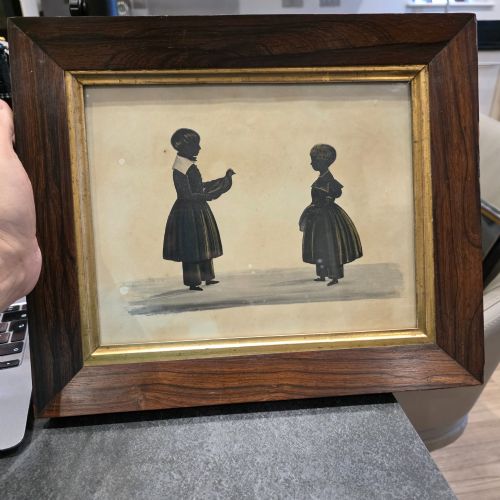
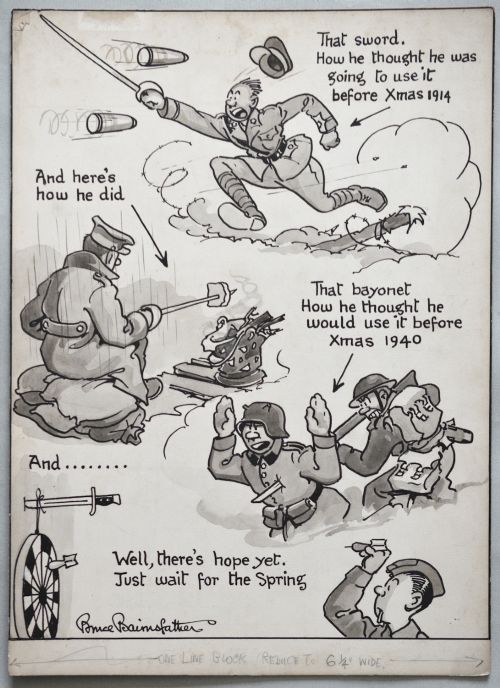
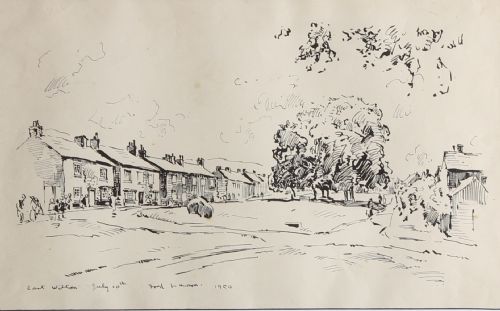
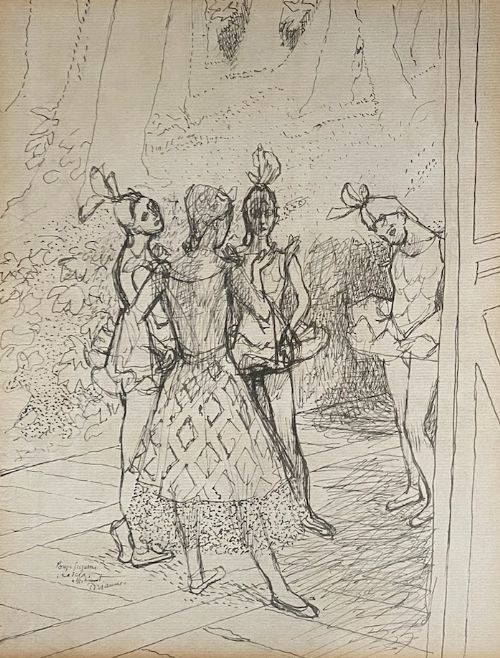
Nineteenth-century examples frequently comprise detailed topographical drawings, historical studies, and silhouette portraits executed on paper or card. Mid-century acquisitions lean toward illustrative pen work, anatomical sketches, and modernist studies by British and European hands.
Framed works dominate the selection, alongside unfurled sheets and occasional desk items such as period inkstands equipped with original pots. The unifying thread across these objects is the reliance on dark linear mark-making to define form and narrative.
Materials and technique
Makers utilised iron gall or carbon-based inks applied with steel nibs, reed pens, or fine sable brushes directly onto handmade paper, card, or panel. Watercolour wash and gold leaf occasionally supplement the monochrome linework to create depth and tonal contrast.
Support materials range from heavy laid paper watermarked with period mills to smooth Bristol board and silk grounds. Original frames utilise timber, gesso, and glass to protect the delicate media from environmental degradation.
A youthful seventeen-year-old architectural student named H. H. Wyatt preserved his royal palace design in ink for the South Kensington School.
Judging quality and execution
The distinction between ordinary and superior pieces rests upon the surety of the line and the expressive economy of the draftsmanship. Confident, unhesitating strokes indicate an accomplished hand, whereas hesitant linework suggests a weaker execution.
Condition of the paper support and stability of the ink significantly influence desirability. Unfaded pigment, minimal foxing, and the presence of original framing or authentic provenance labels elevate the standing of a piece.
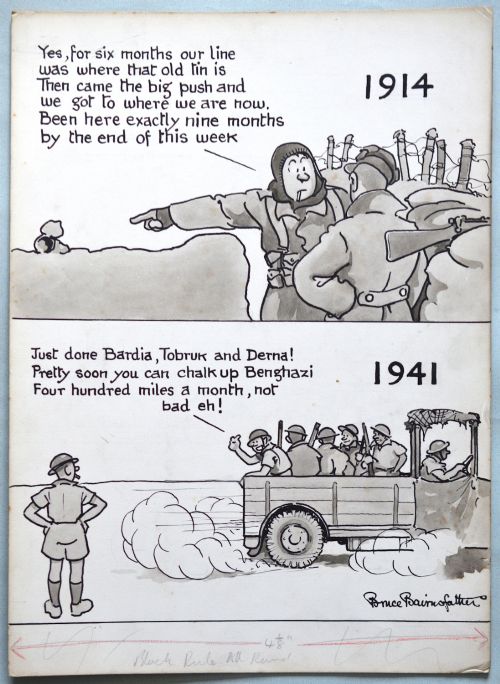
Fred Lawson·Bruce Bairnsfather·Herbert Dicksee·John Duncan Fergusson
The Black Ink Art Glossary
- Wash
- A diluted layer of ink or watercolour applied evenly across paper to build tone and shadow. It is frequently combined with fine pen work to create atmospheric depth in landscapes.
- Silhouette
- A portrait or scene cut from dark paper or painted in solid pigment, typically in profile. This technique gained widespread popularity during the eighteenth and nineteenth centuries.
- Etching
- A printmaking method where lines are bitten into a metal plate with acid before being inked and pressed onto paper. Herbert Dicksee utilised this technique for detailed animal studies.
- Calligraphy
- Decorative handwriting or handwritten lettering executed with specialised pens and inks. Antique sets often include moulded ink blocks used for traditional writing.
- Laid paper
- Paper showing parallel translucent lines caused by the wire mesh of the handmade paper mould during production. It is commonly found in older documents and drawings.
Black Ink Art: Frequently Asked Questions
How do I care for antique works on paper?
Keep framed pieces away from direct sunlight to prevent the ink and paper support from fading over time. Maintain stable indoor humidity levels to protect fragile nineteenth-century paper from warping.
Use professional framing services utilising acid-free mounts and UV-protective glazing when reframing works. Avoid hanging pieces in damp environments such as unheated kitchens or bathrooms.
How can I tell the age of an ink drawing?
Dating relies upon paper characteristics, watermarks, framing styles, and the stylistic conventions of the depicted subject. Eighteenth-century pieces often employ hand-laid paper with visible chain lines.
Twentieth-century works display modern machine-woven paper supports and stylistic influences ranging from Art Nouveau to mid-century modernism. Signatures and dated inscriptions penned by the artist provide definitive chronological markers.
What subjects are most common in these works?
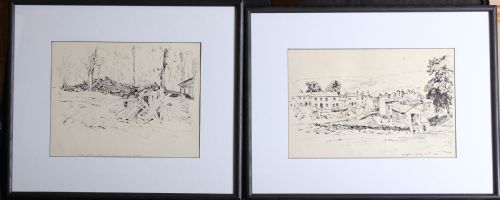
Landscapes and architectural studies form a large portion of the available drawings, recording British and European scenes from past centuries. Portraiture, silhouettes, and illustrative figure studies also appear frequently across the selection.
Specialised subjects include anatomical diagrams, military depictions, and animal studies by established printmakers. Each genre reflects the prevailing artistic training and domestic interests of its respective period.