


Black Framed Horse Picture
These black framed horse picture examples capture centuries of equine depiction, offering buyers an authentic slice of sporting history.
Black Framed Horse Picture
A black framed horse picture brings together a diverse array of equestrian art spanning multiple centuries and artistic traditions. Buyers exploring this category encounter everything from early engravings and original prints to detailed pencil drawings and reverse glass paintings.
The pieces on offer draw from periods such as the Georgian era, the nineteenth century, and early twentieth century sporting art. Victorian and Edwardian examples sit alongside photographic prints and hand-coloured works, reflecting how horses have long inspired makers across different media.
Framed prints and drawings dominate the selections, often preserved behind glass in dark or black wooden surrounds. This variety ensures that collectors find works ranging from formal racehorse portraits to lively hunting scenes.
Materials and construction
Artists and makers utilised paper, wood, and glass as the primary components for these works, enclosing delicate imagery within robust frames. Media such as ink, watercolour, pencil, chalk, and hand-applied paint bring depth and tone to the paper supports.
Specialised techniques include reverse glass painting and eglomise reproduction, where imagery is applied directly to the glass rather than standard paper. Brass rubbings and photographic printing further expand the technical scope found across these listings.
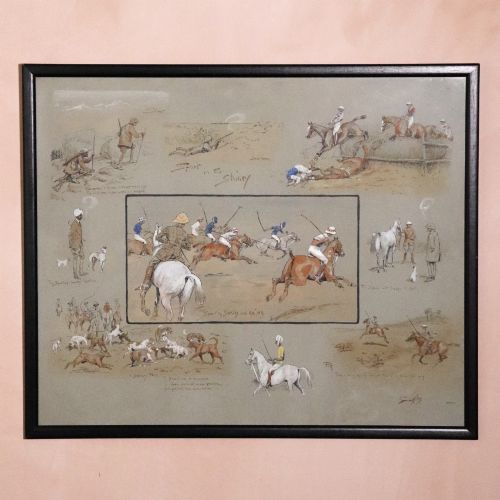
Some equestrian pieces capture lively moments like carpet beaters facing off against bobbery wallahs in vintage prints.
Assessing the pieces
Quality in a black framed horse picture rests on the clarity of the medium and the fidelity of the framing. Original hand-coloured engravings and signed drawings by known artists command attention through their distinct linework and historical weight.
The condition of the paper, the preservation of the ink or watercolour pigment, and the integrity of the glass enclosure all contribute to the enduring appeal of each artwork.
Augustin Edouart·Snaffles·Abraham Cooper·Michael Lyne·John Atkinson
The Black Framed Horse Picture Glossary
- Engraving
- A printmaking process where an artist cuts lines into a metal plate to hold ink. This technique allows for fine detail and sharp contrasts in historical prints.
- Eglomise
- A process involving the application of gold leaf or painting on the reverse side of glass. It creates a reflective, decorative surface often seen in historical reproduction pieces.
- Silhouetting
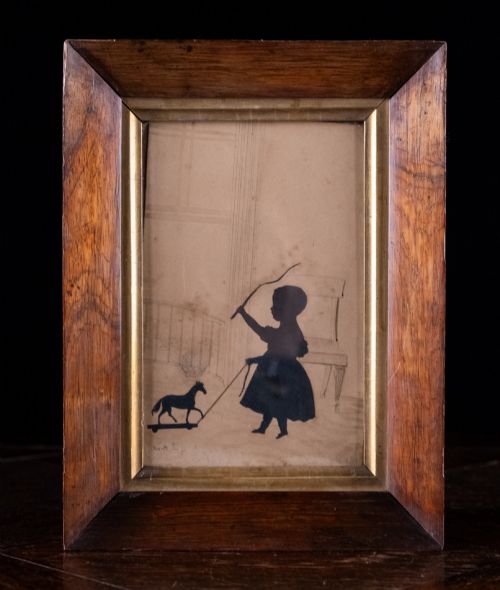
- The art of cutting or painting a profile likeness in solid black. These pieces capture the outline of figures and horses with striking economy.
- Brass Rubbing
- A method of transferring the design of a brass plaque onto paper using wax or pigment. Large scale examples record historical motifs with textured precision.
Black Framed Horse Picture: Frequently Asked Questions
How do I date an antique horse picture?
Dating relies on examining the paper stock, printing technique, and framing style used by the maker. Inscriptions, signatures, and stylistic markers tied to specific periods offer further clues.
Comparing the medium against known historical production methods helps narrow down the decade of creation.
Are these works original period pieces?
The selection includes both original prints, watercolours, and drawings alongside period photographic prints and later reproductions. Each listing specifies the exact nature of the artwork and its historical context.
Careful reading of the title and description reveals whether a piece is a contemporary print or a later interpretation.
How should I display these framed pieces?
These framed works suit studies, hallways, and living spaces where traditional sporting art complements the interior. Hanging them away from direct sunlight protects the paper and pigments from fading.
Ensuring stable room humidity prevents warping in the wooden frames and protects the glass enclosures.
What subjects appear in these artworks?
The imagery covers famous racehorses, hunting scenes, point-to-point races, and silhouettes of riders and mounts. Artists captured both individual animal portraits and dynamic group activities.
These diverse subjects reflect the central role of equestrian sports in British and international culture over the centuries.