

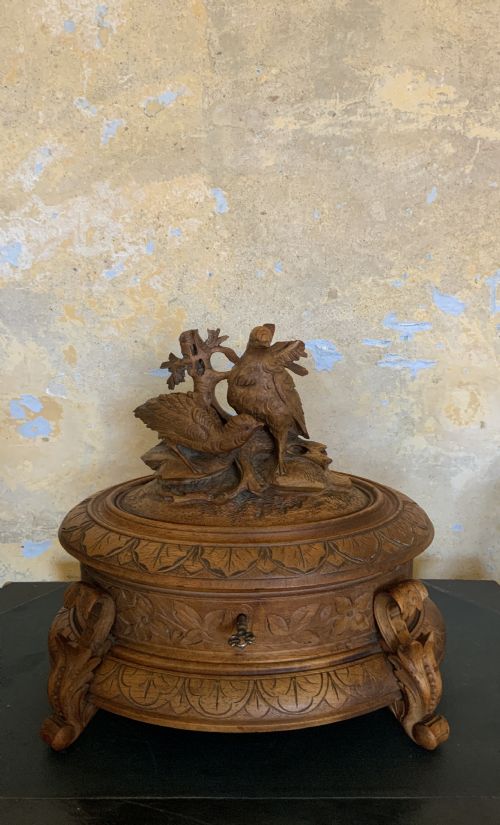
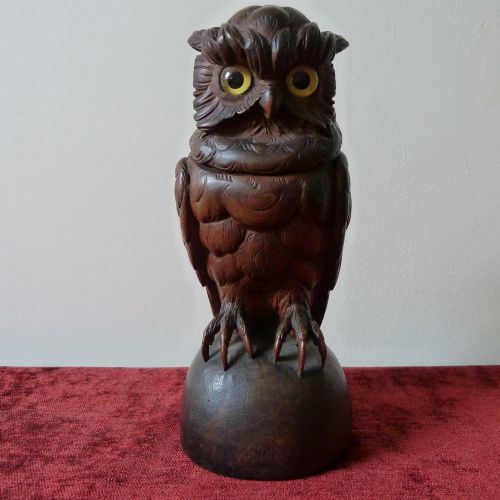


Black Forest Bird Carving
These black forest bird carving pieces are expressive, highly detailed wood sculptures and functional objects that bring dramatic naturalism into a room.
Black Forest Bird Carving
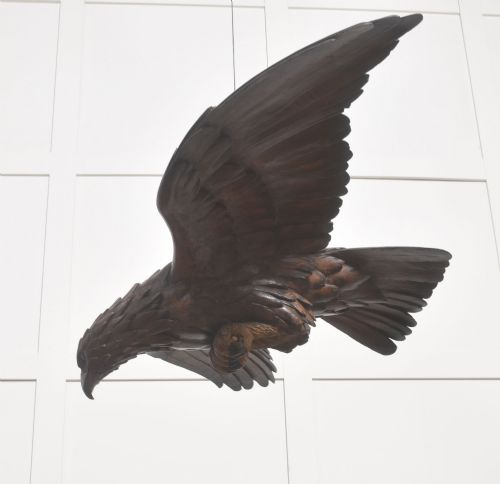
When you search for a black forest bird carving, you encounter a specialised category of 19th-century and Victorian decorative wood items originating primarily from Switzerland and Germany. These works take the form of practical furnishings and standalone sculptures, capturing avian subjects with striking realism.
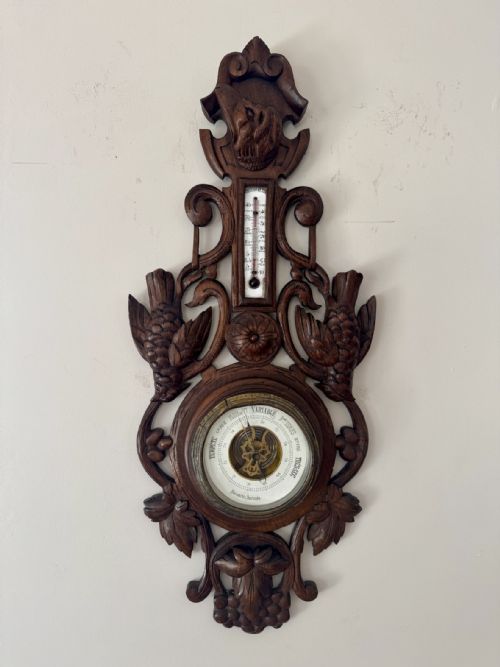
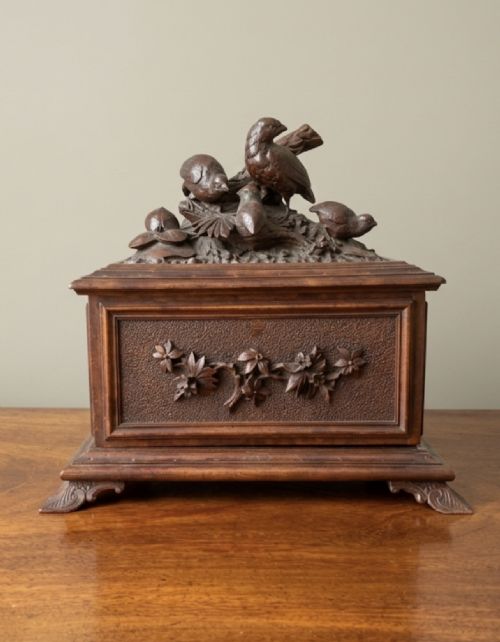
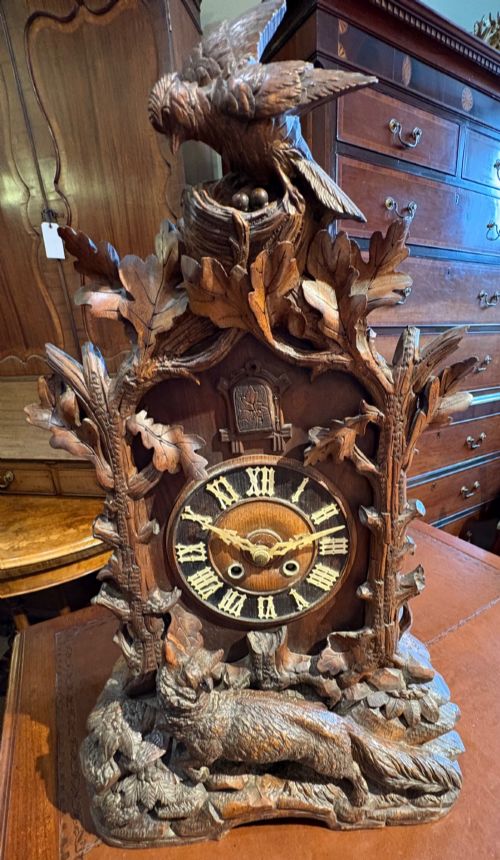
The most common examples on this page include wall mirrors framed by birds of prey, mantel clocks, inkwells, humidors, and cuckoo clocks. Larger statement pieces like eagle sculptures, stick stands, and fire screens also appear alongside smaller carved boxes and caskets.
The stylistic influences span traditional Black Forest naturalism alongside French Rococo and Victorian Gothic Revival designs. Whether executed as an eagle, an owl, a hawk, or a grouse, each object displays the distinctive carved wooden textures typical of the movement.
How they were made
Carvers predominantly utilised linden wood and walnut for their fine grain and suitability for intricate hand-tool work, occasionally employing oak and dark stain finishes to achieve deeper tonal contrast. The production relied entirely on skilled manual carving, using specialised chisels and gouges to render individual feathers, talons, and realistic anatomical details.
Functional pieces integrate secondary materials such as brass fittings, glass eyes, and aneroid barometer mechanisms alongside solid carved timber structures. Garnitures, wall mirrors, and clocks demonstrate how structural carpentry combined with high-relief sculptural carving to create durable domestic items.
Black Forest Bird Carving Retail Price Guide 2026
Typical asking prices for black forest bird carving among the pieces listed under this phrase on Sellingantiques today, from the lower quarter to the upper quarter. They describe what is for sale here now, not the wider market.
Listings feature items spanning the 1850s to 1900, incorporating walnut, linden wood, oak, and brass elements.
What varies in quality
The distinction between standard and superior pieces rests on the depth of relief and the anatomical precision of the carving. Master carvers achieved lifelike tension in the musculature and plumage of birds, whereas lesser examples remain stiff and generalized in form.
Proportion and compositional balance also dictate worth, particularly on complex items like mirror frames, clocks, and cuckoo clocks where the bird sculpture must harmonise with the functional object. The crispness of the finishing work and the preservation of the original wood surface without excessive smoothing determine the enduring character of the piece.
The Black Forest Bird Carving Glossary
- Aneroid barometer
- A non-liquid barometer measuring atmospheric pressure through the expansion and contraction of a flexible metal capsule. These mechanisms are frequently housed within carved wooden animal cases.
- Humidor
- A specialised moisture-controlled box designed for storing cigars. In this category, they are often decorated with detailed avian carvings on the lid or sides.
- Garniture
- A set of ornamental objects designed to be displayed together on a mantelpiece or sideboard. They typically feature matching carved wood motifs.
- Casket
- A small decorative box or chest used for storing jewellery or valuables. These items often showcase high-relief carvings of birds and foliage.
- Fire screen
- A decorative panel placed in front of an unused fireplace to block draughts or hide the grate. In this tradition, they feature large carved wooden panels with hunting or avian themes.
Black Forest Bird Carving: Frequently Asked Questions
What is a black forest bird carving?
These items are carved wooden sculptures and functional household objects produced during the nineteenth century, mainly in the European mountain regions. They depict birds such as eagles, owls, and hawks with deep, expressive realism.
Craftsmen utilised local timbers like walnut and linden wood to create everything from wall mirrors and inkwells to large clocks and stick stands. Each piece relies on hand-tooling to capture texture in feathers and anatomy.
How do I date these carvings?
Dating relies on examining the materials, mechanical components, and stylistic markers associated with the nineteenth century. Pieces often correspond to specific Victorian periods or mid-century European design movements.
Examining the backboards, fixings, and movement types in clocks or barometers helps narrow the decade of manufacture. The absence of modern power tools in the tool marks further confirms nineteenth-century origin.
Were these items purely decorative?
While many pieces serve as standalone sculptures or wall art, the majority were designed for practical domestic use. Carvers integrated bird motifs into functional household objects such as clocks, barometers, mirrors, and storage boxes.
Owners utilised them as inkwells on desks, humidors for cigars, and umbrella holders in hallways. This combination of utility and naturalistic art made them popular in Victorian interiors.
How should I care for antique wood carvings?
Maintaining these pieces involves keeping them away from direct sunlight and rapid temperature fluctuations to prevent timber splitting. Gentle dusting with a soft, dry brush preserves the intricate crevices of the hand-carved feathers.
Avoid using modern liquid polishes or silicone sprays, which can build up in the recessed carved details. A light application of microcrystalline wax can protect the antique wood finish when necessary.