

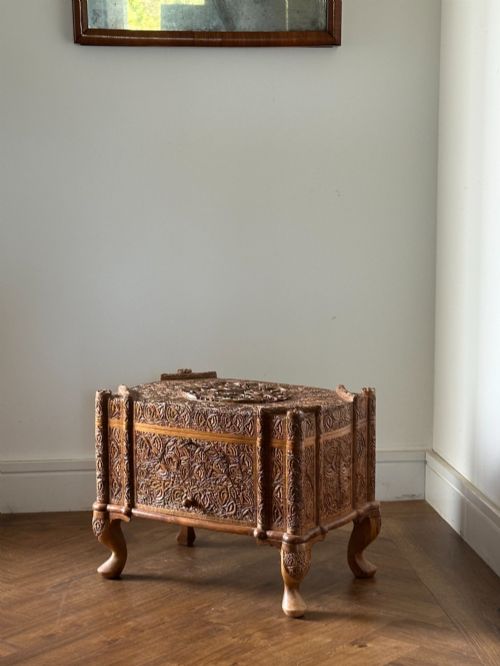
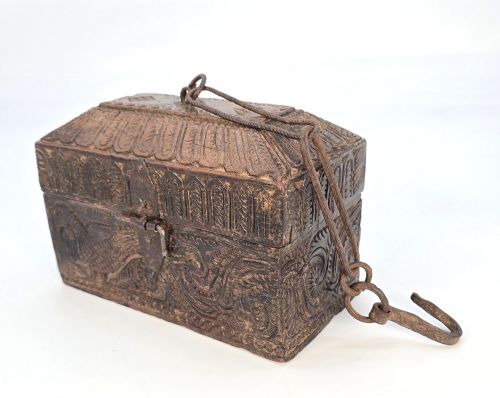


Hand Carved Wooden Casket
These hand carved wooden casket selections bring together global traditions of relief work and timber crafting from the eighteenth century onwards.
Hand Carved Wooden Casket
A hand carved wooden casket serves as a container for jewellery, spices, games, or keepsakes, taking the form of boxes, sarcophagi, books, and cellarettes. You will most frequently encounter nineteenth-century pieces alongside examples from the Edwardian era and the early twentieth century.
The regional origins and styles span Black Forest, Anglo-Indian, Qajar Iran, Folk Art, and the Bezalel School, demonstrating diverse decorative vocabularies. Forms range from compact trinket boxes to large spice boxes and game sets.
Makers utilised various regional woods to achieve distinct surface textures, applying carving techniques that define each geographical tradition. The selection reflects global trade and local vernacular crafts from specific periods.
Materials and construction methods
Craftsmen shaped these vessels from hardwoods, walnut, teak, sandalwood, and ebony, frequently integrating brass, metal, or wrought iron hinges and fittings. Timber selection dictated the depth and intricacy of the carving, allowing artisans to create high relief panels and fitted interiors.
Carpenters joined the wooden sides using traditional methods before carvers applied surface ornament by hand, working directly into the grain. Surfaces received polish, wax, or left natural depending on the regional workshop practice and timber properties.
Hand Carved Wooden Casket Retail Price Guide 2026
Typical asking prices for hand carved wooden casket among the pieces listed under this phrase on Sellingantiques today, from the lower quarter to the upper quarter. They describe what is for sale here now, not the wider market.
Some nineteenth-century makers hid secret compartments inside book-form caskets to outsmart curious houseguests.
Distinguishing quality across examples
Quality rests in the precision and depth of the hand carving, where crisp undercut details distinguish superior workmanship from simpler surface incisions. The choice of timber also dictates quality, with dense exotic woods and figured grains supporting finer sculptural work.
The integration of original hardware, such as brass locks, handles, or wrought iron mounts, separates complete surviving items from altered pieces. Interior fitted compartments and the structural integrity of the box carcass further determine the standard of execution.
The Hand Carved Wooden Casket Glossary
- Black Forest
- A nineteenth-century European style known for deeply carved naturalistic animal and foliage motifs executed in walnut or softer woods.
- Anglo-Indian
- Describing items made by Indian craftsmen for British patrons, typically featuring intricate floral and fauna carvings in sandalwood or teak.
- Cellarette
- A lockable container originally designed for holding bottles of wine or spirits, often fitted with internal partitions.
- Tramp art
- A folk art style created by self-taught makers using notched, chip-carved pieces of wood, often from discarded cigar boxes.
- Qajar
- Pertaining to the Iranian dynasty spanning the late eighteenth to early twentieth centuries, characterised by distinct regional decorative arts.
Hand Carved Wooden Casket: Frequently Asked Questions
What were hand carved wooden caskets used for?
These boxes served practical domestic functions for storing precious items, spices, documents, or games sets.
Over time, owners repurposed them as decorative display objects or secure receptacles for personal keepsakes.
How do I date a wooden casket?
Dating relies on examining the timber species, construction joints, regional style, and any associated historical hardware.
Comparing the carving technique with documented workshop practices from periods like the nineteenth century helps narrow the era.
Where were these caskets made?
Makers produced them across diverse global workshops, including regions in India, Europe, Palestine, and Iran.
Each region employed native timbers and specific carving traditions that identify the geographical origin of the piece.
How should I care for an antique wooden box?
Keep the wood away from direct heat sources and dramatic humidity fluctuations to prevent splitting or warping.
Apply a microcrystalline wax occasionally to nourish the surface without building up excessive residues.