
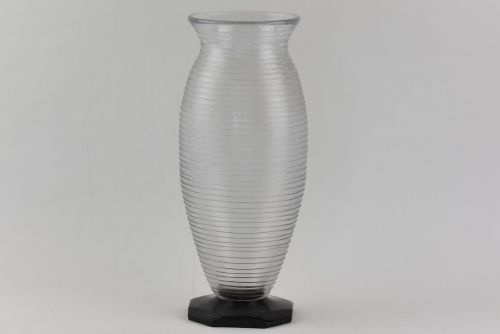


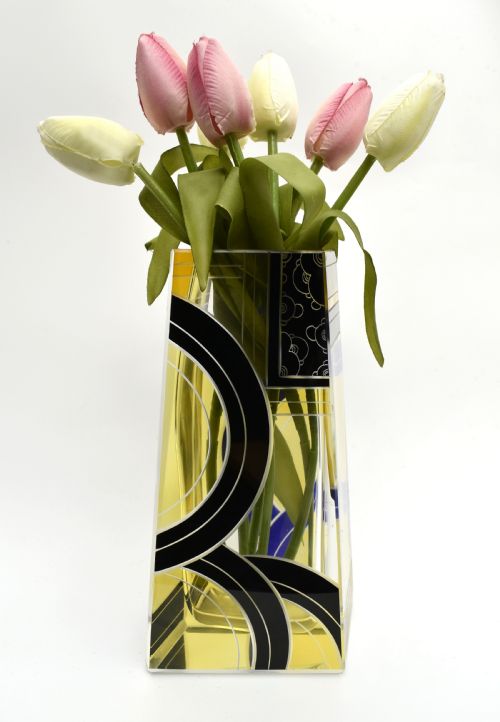


Black Etched Vase
A black etched vase brings striking contrast and geometric clarity to a room, offering the bold lines characteristic of the Art Deco period.
Black Etched Vase
When you search for a black etched vase, you encounter decorative vessels predominantly originating from the 1930s and the Art Deco period. These objects combine dark glass surfaces with intricate surface decoration created by acid or cutting techniques.
The most common form on this page is the tall Czech glass vase, frequently associated with makers such as Karl Palda. Such pieces often incorporate enamel alongside the etching to accentuate the geometric patterns.
Earlier nineteenth-century examples also appear, such as Black Forest carved wood paired with crystal epergne components. These heavier traditional centrepieces contrast with the sleek silhouettes of later twentieth-century glasswork.
How they were made
Glassmakers utilised blown glass and frosted glass as substrates, applying acid-etching techniques to cut into the material and reveal contrasting textures. Enamel was frequently added by hand to highlight specific motifs within the design.
Alternative methods involve deep cutting into crystal or carving dense wood, as seen in nineteenth-century Black Forest items. The interplay between opaque black surfaces and translucent etched areas defines the physical structure of these works.
Some nineteenth-century tables required heavy wooden branches to support crystal bowls without tipping.
What varies in quality
Quality rests in the precision of the etch and the complexity of the glass body, particularly when enamel is introduced to define the pattern. Pieces attributed to documented designers display sharper lines and more deliberate colour application.
The weight and clarity of the underlying crystal or glass determine the substance of the vessel. Simpler moulded pieces lack the crisp depth found in deeply etched examples.
Jean Luce·Karl Palda·Paul Heller·Booms glass
The Black Etched Vase Glossary
- Acid-Etched Glass
- Glass decorated by applying acid to eat away exposed areas, creating frosted or recessed designs. This technique allows for fine, controlled detail across the surface.
- Art Deco
- A design style of the 1920s and 1930s characterised by streamlined shapes, geometric patterns, and modern materials. It dominates the glassware found in this category.
- Hyalite Glass
- An opaque black glass popular in earlier twentieth-century production, often serving as a solid canvas for enamel decoration. It mimics the appearance of jet or obsidian.
- Epergne
- A central table ornament featuring multiple dishes or vases branching from a single base. Crystal examples often combine with carved wooden stands.
Black Etched Vase: Frequently Asked Questions
What periods do these pieces come from?
The selection spans from the nineteenth century into the twentieth century, with a strong concentration of pieces from the 1920s and 1930s.
Art Deco items form the majority of the glassware, while earlier Victorian examples represent different manufacturing traditions.
How do I identify Karl Palda work?
Karl Palda designs from the 1930s frequently feature tall glass forms with square or panelled profiles. They often combine black enamel with geometric etched decoration.
Czech glass production of this era is recognised through its distinct modernist shapes and bold surface contrast.
What is hyalite glass?
Hyalite is an opaque black glass that provides a dense, dark background for enamel and etched patterns. It was utilised by makers such as Paul Heller for Booms glass.
This material gives the vessel a solid, obsidian-like appearance before any surface decoration is applied.
How were centrepieces used?
Table centrepieces served as decorative focal points for dining tables and sideboards during the nineteenth and twentieth centuries. Crystal epergnes held fruit, flowers, or sweetmeats.
Their tiered construction added height and visual interest to formal table settings.