



Black Dog Portrait
When you search for a black dog portrait, you are looking for framed artwork and oil paintings capturing canine character across the nineteenth and twentieth centuries.
Black Dog Portrait
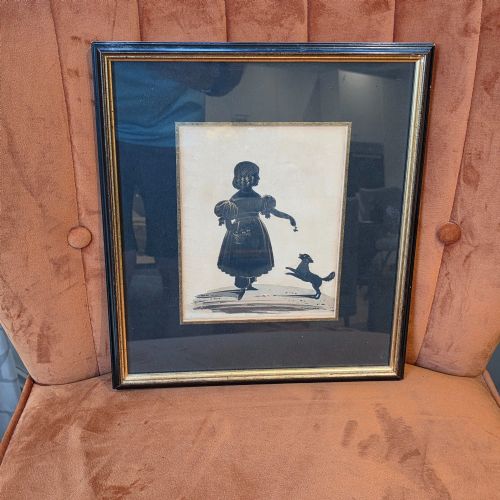
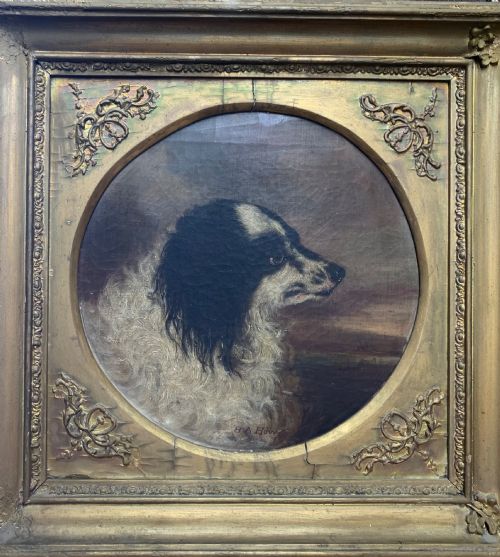
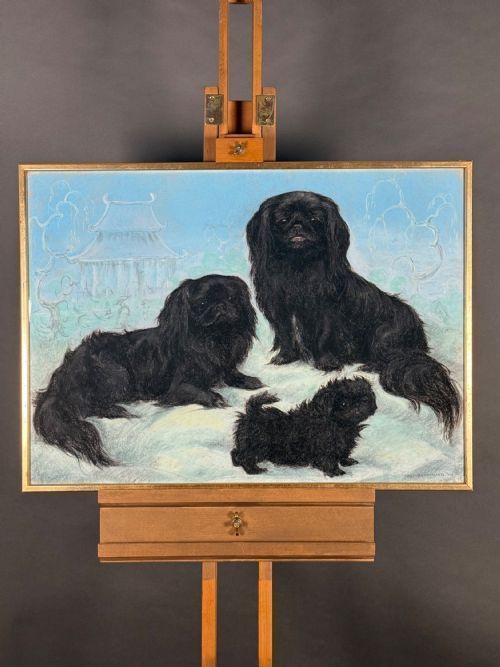
A black dog portrait encompasses oil paintings, watercolours, etchings, drawings, and cut paper silhouettes spanning from the Regency period through to the nineteen-sixties. The works capture various breeds including spaniels, terriers, pointers, pockingese, and bulldogs, often rendered within detailed landscapes or domestic interiors.
Buyers frequently encounter nineteenth century oil paintings by notable practitioners, alongside early twentieth century etchings and mid-century watercolours. The selections range from Victorian folk art to fine art paintings associated with the circles of established animaliers.
The subjects extend beyond single animals to include dogs depicted with children, show dogs, or groupings such as three bulldogs titled Three Graces. Each piece records the historical bond between human and animal through diverse artistic mediums of its time.
How they were made
Makers utilised oil on canvas, often complemented by gesso and giltwood frames, to build rich textures in nineteenth century portraits. Other works employ paper, ink, charcoal, pastel, and watercolour to achieve fine illustrative detail.
Printmakers created original drypoint etchings and prints using metal plates and paper substrates, yielding sharp linear definitions as seen in works from the nineteen-tens and nineteen-twenties. Silhouettes relied on precision cutting and watercolour washes on paper.
Black Dog Portrait Retail Price Guide 2026
Typical asking prices for black dog portrait among the pieces listed under this phrase on Sellingantiques today, from the lower quarter to the upper quarter. They describe what is for sale here now, not the wider market.
Listings feature works spanning from the Regency period through to nineteen-sixty, using oil on canvas, paper, ink, and gesso.
What varies in quality
The distinction between standard works and superior pieces rests upon the anatomical precision of the animal and the depth of the background landscape or interior. Master painters capture light, coat texture, and individual canine expression with greater conviction than lesser followers.
Framing materials and overall preservation also differentiate the examples, where original giltwood and well-maintained canvas or paper surfaces sustain the visual impact of the portrait over time.
William James Hubard·Augustin Edouart·Sir Edwin Landseer·Herbert Dicksee·John Frederick Herring Senior
The Black Dog Portrait Glossary
- Drypoint etching
- A printmaking process where an artist scratches a design directly onto a metal plate with a sharp needle, producing soft, velvety lines when inked and pressed onto paper. This technique allows for subtle tonal variations in canine portraits.
- Giltwood
- Wood that has been coated with a thin layer of gold leaf or gilt, commonly used for traditional picture frames during the nineteenth century. It adds a warm, reflective border to oil paintings and drawings.
- Gesso
- A plaster-like mixture applied to wooden frames as a base for moulding ornamental details before gilding. It provides a smooth surface for intricate decorative moulding.
- Regency
- An architectural and design period spanning from eighteen-eleven to eighteen-twenty, characterised by classical elegance and refined decorative arts. Pieces from this era often display restrained neoclassical framing and portraiture styles.
Black Dog Portrait: Frequently Asked Questions
What are the common subjects in a black dog portrait?
The listings feature specific breeds including spaniels, pointers, pockingese, terriers, and bulldogs, often shown alone in landscapes, within domestic interiors, or alongside children.
Some artworks record named animals such as Lord Methuen’s favourite dogs, while others depict show dogs or wartime bulldogs.
How do I identify a nineteenth century oil painting?
Nineteenth century oil paintings typically use canvas or panel supports, often housed within period giltwood or gesso frames. The painting techniques reflect academic styles of the Victorian era, ranging from sporting art to detailed realism.
Signatures, framing styles, and subject matter often align with the Victorian and Regency periods represented in the evidence.
What is an original drypoint etching?
An original drypoint etching is a print created when the artist works directly onto a metal plate with a sharp tool, raising a burr that holds ink during the printing process. This creates characteristic rich, velvety lines on paper.
Artists such as Herbert Dicksee utilised this method for detailed animal studies in the early twentieth century.
How should I display framed artwork safely?
Framed artwork should be hung away from direct sunlight and excessive humidity to protect paper, canvas, oil paint, and watercolours. Maintaining a stable indoor environment preserves the integrity of the materials.
Ensuring secure wall fixings protects heavy giltwood frames and oil paintings from accidental falls.