




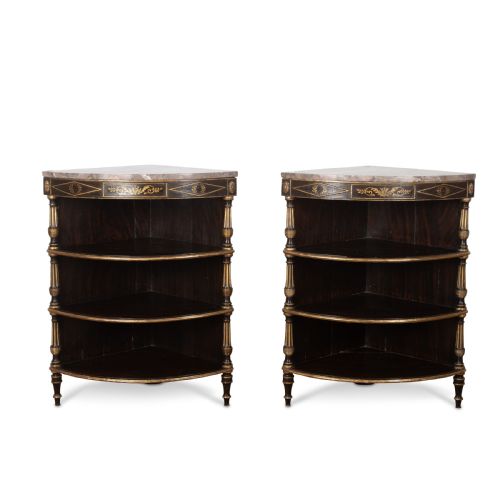
Black Corner Cabinet
These black corner cabinets transform unused angles into focal points through dark surfaces and lacquer.
Black Corner Cabinet
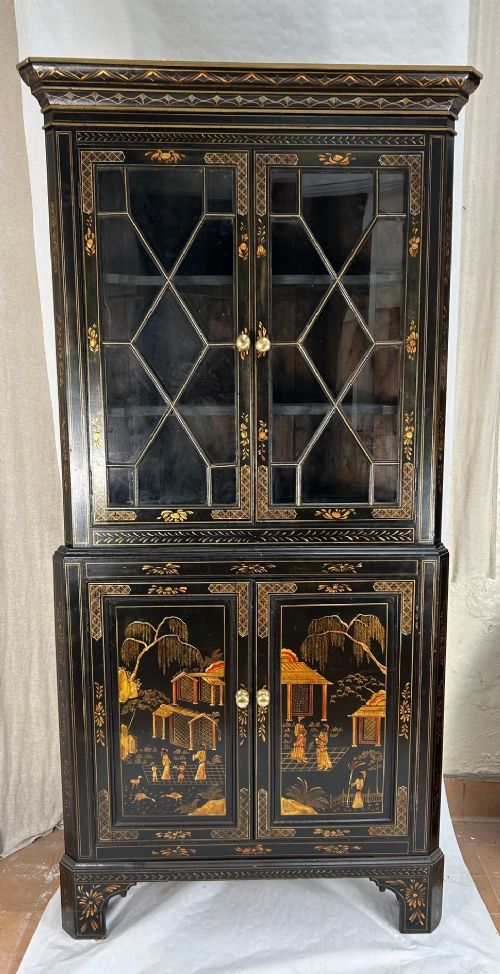
A black corner cabinet turns a room's junction into storage space while introducing dark tones or painted scenes. The inventory spans straightforward corner cupboards alongside glazed display cabinets and smaller shelves.
Most examples date from the eighteenth and nineteenth centuries, though Edwardian and nineteen-twenties pieces also appear. Forms range from simple single-door cupboards to bow fronts and two-door variants.
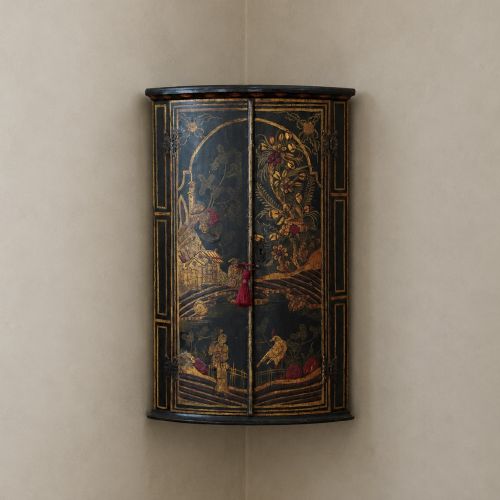
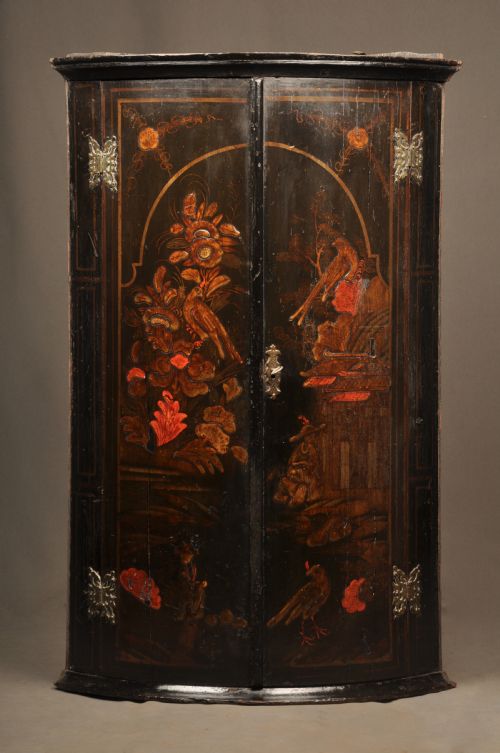
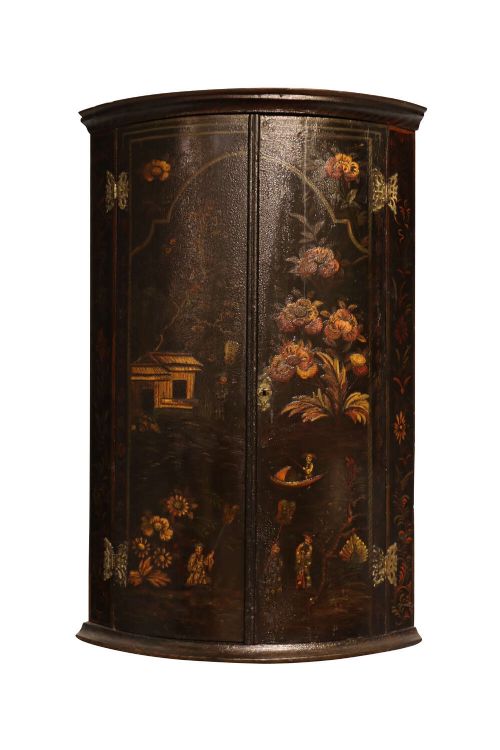
Chinoiserie and lacquer work dominate the selection, bringing gilt figures and landscapes across dark backgrounds. Plain ebonised wood and painted finishes also feature regularly across the periods.
How they were made
Makers built these cabinets from timber substrates, employing softwood and general wood construction before applying surface finishes. Brass hardware such as hinges and mounts frequently secures the doors and corners.
Lacquered and japanned surfaces require multiple layers of finishing to achieve deep black grounds. Artisans then applied gold leaf and hand-painted details, depicting traditional motifs across the doors.
Listings feature black corner cabinets spanning the eighteenth, nineteenth, and twentieth centuries, incorporating materials like brass, glass, and gold leaf.
What varies in quality
The sophistication of the painted or lacquered decoration dictates much of the visual merit. Finer pieces display intricate gilt work and layered depth, whereas simpler items rely on basic painted motifs.
Hardware selection and internal fitting also separate examples. Solid brass mounts and thoughtful interior arrangements distinguish the better workshops from utilitarian production.
Garnett & Sons·Sage & Co
The Black Corner Cabinet Glossary
- Chinoiserie
- European interpretation and imitation of Chinese artistic traditions and motifs. This style appears frequently on eighteenth-century lacquer work.
- Ebonised
- Wood stained or painted to resemble ebony. It provides a dense black finish used across various nineteenth-century styles.
- Japanned
- European-made imitation of East Asian lacquer work. Artisans built up dark varnishes and metallic powders to simulate oriental lacquer.
- Vitrine
- A glass-fronted display cabinet designed for objects of curiosity. Examples in this category utilise glass panels to showcase contents.
Black Corner Cabinet: Frequently Asked Questions
Where do you place a corner cabinet?
These units fit directly into ninety-degree room intersections to utilise neglected floor space.
They anchor empty corners while providing enclosed storage or display areas without protruding far into the room.
How do I clean lacquered wood?
Dust surfaces gently with a soft, dry cloth to prevent scratching the dark finish.
Avoid chemical polishes and moisture, which can damage aged lacquer and delicate gold leaf details.
What is the difference between lacquer and paint?
Lacquer involves building up multiple resin coats to create a hard, glossy, dark surface.
Paint sits on the timber as an opaque layer, whereas traditional lacquer finishes offer greater depth and reflectivity.
Are these cabinets secure for heavy items?
Most historic corner cupboards feature sturdy timber shelving fixed into the cabinet carcase.
Lighter display items suit glazed vitrines best, while heavier storage items fit solidly constructed wooden cupboards.