



Black Chinoiserie Table Lamp
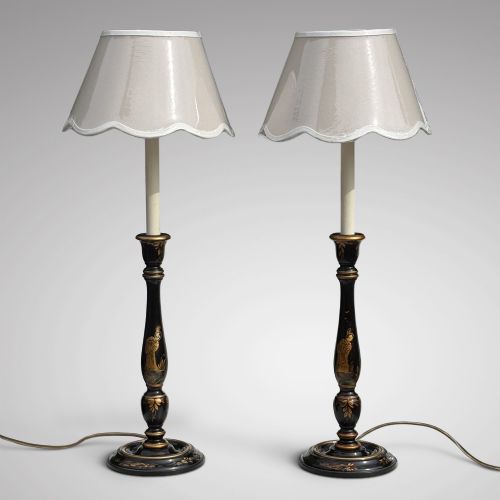
A black chinoiserie table lamp brings rich painted ornament and dark polished lacquer into a room to catch the candlelight.
Black Chinoiserie Table Lamp
A black chinoiserie table lamp combines dark lacquered surfaces with painted decorative motifs drawn from East Asian traditions. These pieces appear across several distinct periods, including Victorian, Edwardian, and the early decades of the twentieth century.
The form often emerges from the adaptation of existing objects or specialised manufacture, utilising bases shaped like urns, canisters, or columnar shafts. Buyers frequently encounter examples from the nineteen-twenties and nineteen-thirties alongside nineteenth-century interpretations.
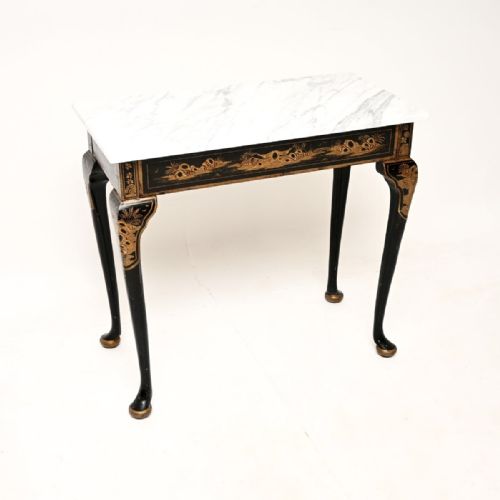
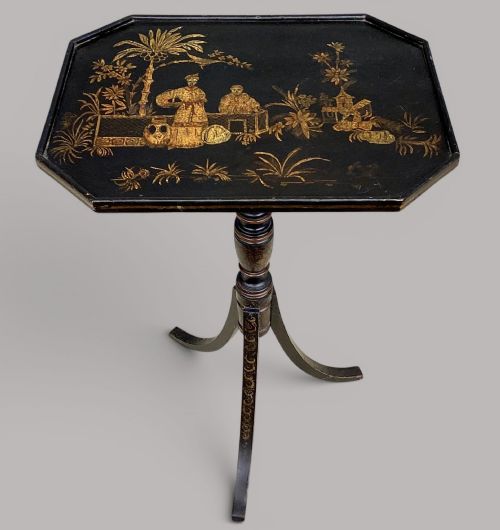
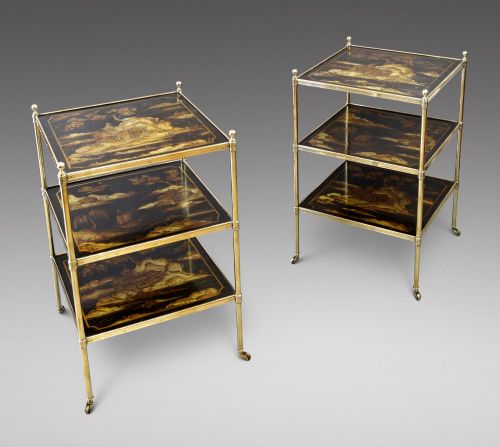
Surfaces display characteristic imagery executed in paint and gold leaf, showing figures, pavilions, and landscapes against a dark ground. The execution spans simple decorative applications to refined interpretations found on occasional tables and converted vessels.
Materials and construction
Construction relies upon wood, brass, and applied lacquer layers built up to create a smooth, deep ground. Craftsmen applied paint and gold leaf directly to the lacquered body to build up the intricate decorative scenes.
Many items incorporate metal components such as brass fittings or structural mounts alongside timber frames. The finishing process requires careful polishing of the lacquer surface to achieve the characteristic sheen found on these pieces.
Tea canisters secretly lived past lives as illumination.
Evaluating the craftsmanship
Quality rests upon the depth of the lacquer finish and the precision of the painted and gilded details. Superior examples exhibit finely rendered figures and landscapes that retain their crisp outlines and vibrant contrast against the dark background.
The integrity of the underlying material, whether wood or converted vessel, determines the structural soundness of the lamp. Better specimens demonstrate careful preservation of the original painted surface without excessive later repainting.
The Black Chinoiserie Table Lamp Glossary
- Chinoiserie
- European decorative style reflecting Chinese artistic influences. It employs painted motifs of landscapes, figures, and architectural elements.
- Lacquer
- A durable resin finish applied in multiple layers and polished to a hard gloss. It forms the dark foundational surface for painted ornamentation.
- Gilt
- Application of gold leaf or gold paint to highlight decorative details. It provides contrast against the black lacquered background.
- Toleware
- Painted and lacquered metalware utilised for decorative objects and lamp bodies. It offers a smooth surface suited for detailed ornamentation.
- Japanning
- European imitation of East Asian lacquerwork popular in furniture and decorative objects. It uses heat-dried varnishes to simulate oriental finishes.
Black Chinoiserie Table Lamp: Frequently Asked Questions
How do I care for lacquer?
Dust the surface regularly with a soft, dry cloth to prevent accumulation. Avoid chemical cleaners and moisture, which can damage the delicate finish.
Keep the piece away from direct sunlight and heat sources to prevent the lacquer from cracking or fading over time.
Are these lamps wired for modern use?
Many surviving examples have been rewired during their history to comply with modern electrical standards. It remains wise to check the internal wiring upon acquisition.
A qualified electrician can inspect older cords and lamp holders to ensure safe operation in your home.
What periods do these pieces date from?
The selection includes items from the nineteenth century, the Edwardian era, and the nineteen-twenties and thirties. Each period brings distinct variations in the application of lacquer and paint.
Earlier nineteenth-century pieces often reflect Aesthetic Movement tastes, while later examples show streamlined early twentieth-century manufacture.
How do I distinguish lacquer from paint?
True lacquer possesses a deep, reflective quality built from multiple layered resins rather than a flat surface coat. It feels hard and cool to the touch.
Painted finishes often sit higher on the wood substrate and show brush marks, whereas high-grade lacquer is polished smooth.