
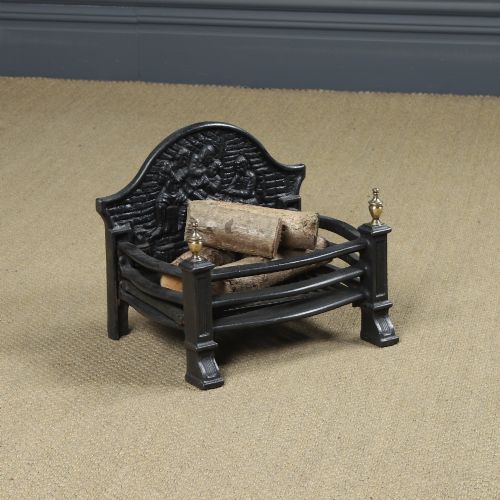
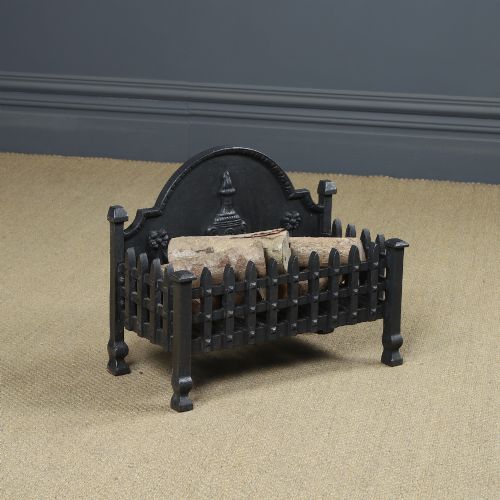
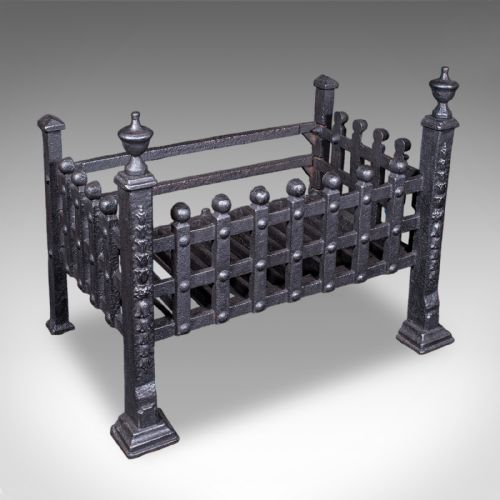


Black Cast Iron Fire Basket
A black cast iron fire basket holds solid fuel safely within a hearth while radiating warmth into a room.
Black Cast Iron Fire Basket
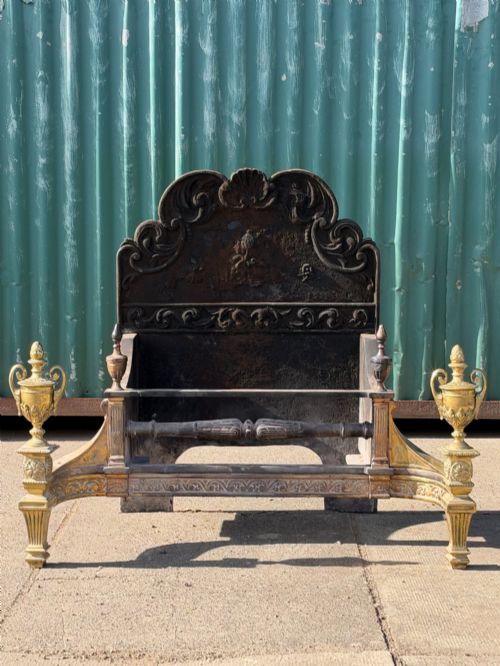
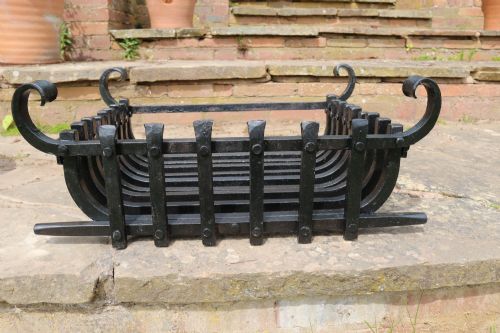
A black cast iron fire basket is a heavy hearth vessel designed to contain burning wood or coal inside an open fireplace. Buyers searching for a black cast iron fire basket encounter robust receptacles dating from the Georgian, Regency, and Victorian eras, alongside later revival pieces from the early twentieth century.
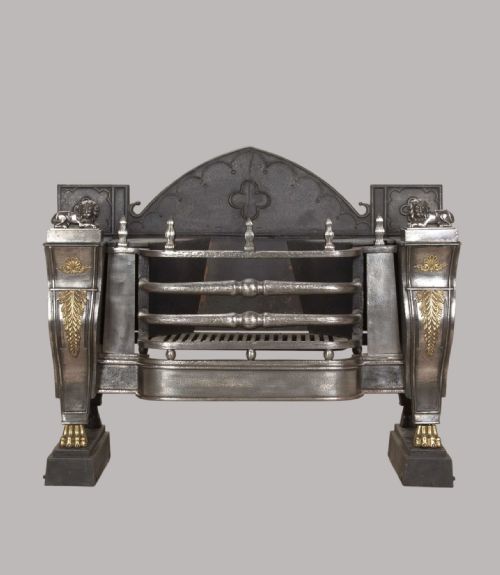
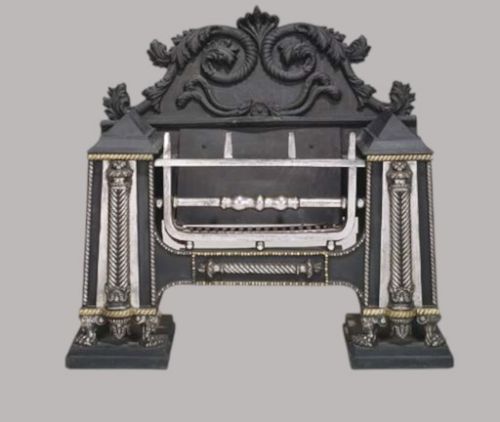
The objects take several forms, ranging from simple freestanding grates to elaborate fireplace sets complete with andirons, firebacks, and fenders. Many examples combine cast iron with wrought iron framework, brass details, or internal firebrick linings to manage intense heat.
Victorian and Edwardian versions often appear alongside earlier Regency and Georgian styles featuring classical or Gothic revival ornamentation. These grates serve both practical heating functions and decorative roles within period hearths.
Evaluating craftsmanship and proportion
Quality in these baskets depends heavily on the weight of the metal and the crispness of the casting details. Finer examples display cleanly rendered classical or Gothic motifs without surface pitting, alongside substantial iron thickness that ensures long-term durability under daily coal or wood fires.
The assembly method also distinguishes standard production pieces from superior work. Robust joints, well-fitted firebrick inserts, and integrated components like matched andirons indicate higher standards of period manufacture.
Some sets arrive equipped with mulling andirons, ready to heat spiced wine directly beside the hearth flames.
The Black Cast Iron Fire Basket Glossary
- Fire basket
- A metal container that holds logs or coal elevated above the hearth floor to improve airflow. This open structure allows oxygen to reach the fuel from beneath.
- Andiron
- One of a pair of horizontal metal supports placed in a fireplace to hold logs. They often sit alongside or attach directly to the fire basket.
- Fireback
- A heavy iron plate placed at the back of a fireplace. It protects the masonry wall and reflects heat forward into the room.
- Hob grate
- A fireplace grate featuring flat raised shelves on either side. These ledtes were traditionally used for keeping kettles warm.
- Register grate
- A fireplace insert featuring a built-in damper flap to control the draught. This mechanism regulates the airflow passing up the chimney.
Black Cast Iron Fire Basket: Frequently Asked Questions
How do I choose the right size fire basket?
Measure the width, depth, and height of your fireplace opening carefully before selecting a grate. Leave adequate clearance around the basket to ensure proper ventilation and safe heat distribution within the hearth.
Take into account whether your setup includes andirons or a fireback, as these auxiliary pieces add to the total footprint required inside the fireplace chamber.
Can these fire baskets burn real wood and coal?
Most of these cast and wrought iron baskets were originally built to burn solid fuels like coal or wood. Check the internal construction for firebrick linings and sturdy bar spacing appropriate for your intended fuel type.
Heavier cast iron models handle high-intensity coal fires effectively, while open log baskets suit wood burning within suitably lined hearths.
How do I clean and maintain cast iron?
Remove ash regularly to prevent moisture retention and subsequent corrosion of the iron surfaces. Apply specialised grate polish or black lead periodically to maintain the dark finish and protect the metal.
Avoid using harsh chemical cleaners that can strip the protective carbon finish from the cast iron components.
How do I identify the period of a fire basket?
Examine the decorative motifs, such as Regency classical lines, Victorian Gothic revival details, or clean Arts and Crafts styling. Manufacturing techniques and metal textures also offer strong clues to the date of production.
Compare the construction methods, such as the use of hand-wrought elements versus machine casting, to determine whether the piece originates from the eighteenth, nineteenth, or early twentieth century.