

Black Carved Table
A black carved table brings dark wood and deep relief work into a room, offering both surface utility and distinct regional carving.
Black Carved Table
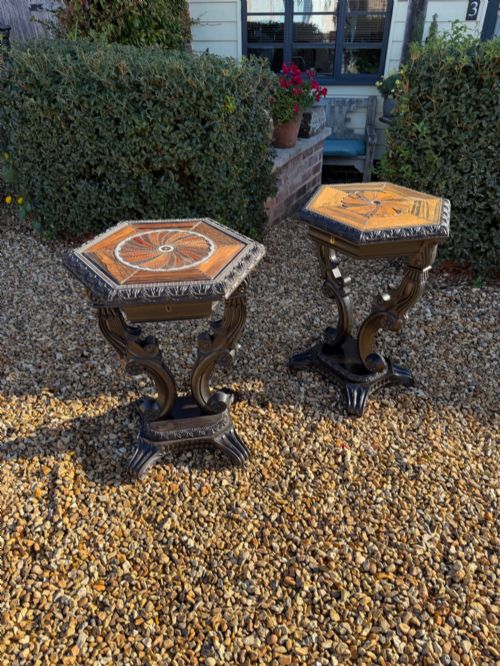
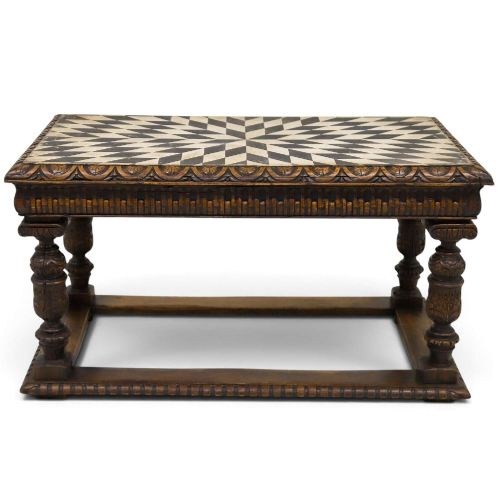
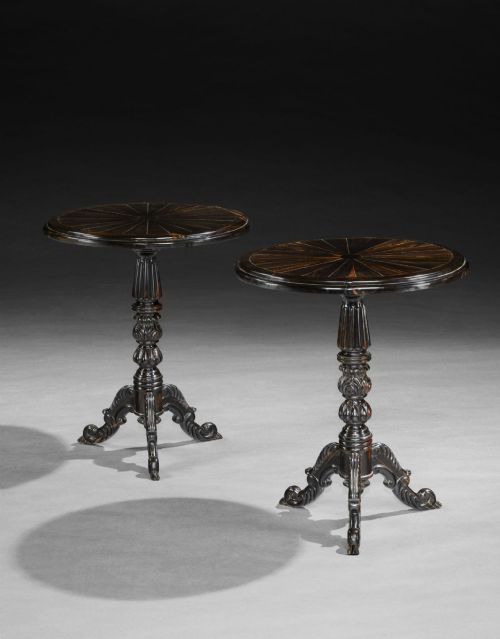
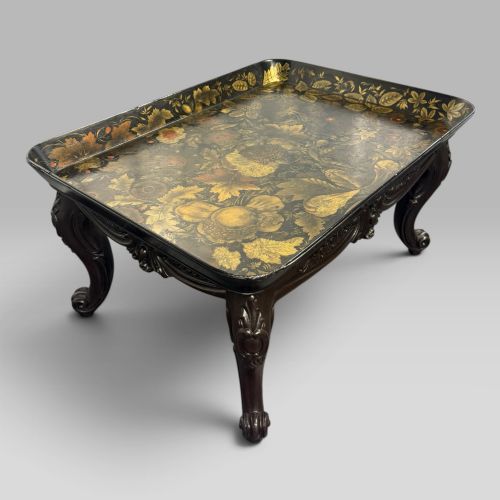
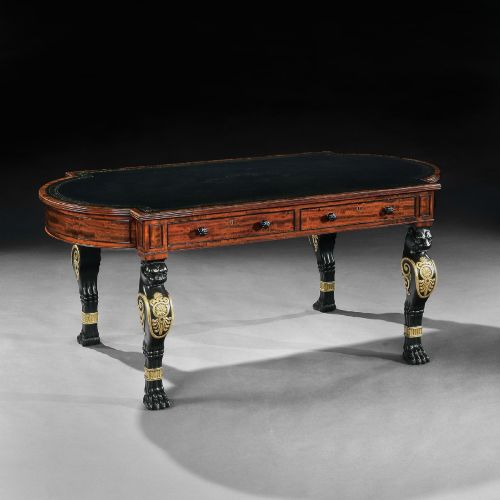
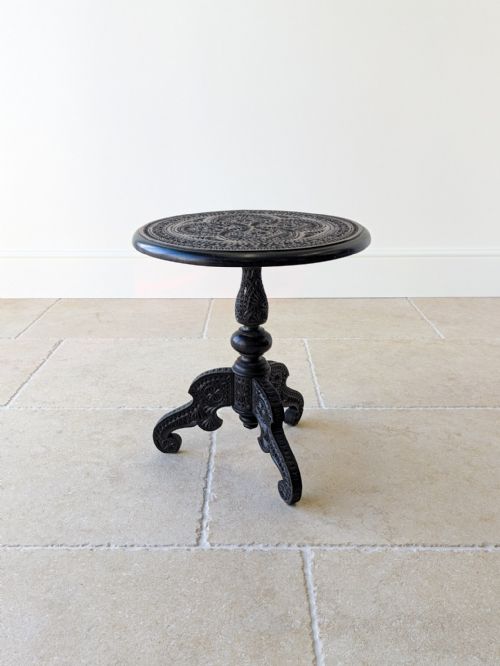
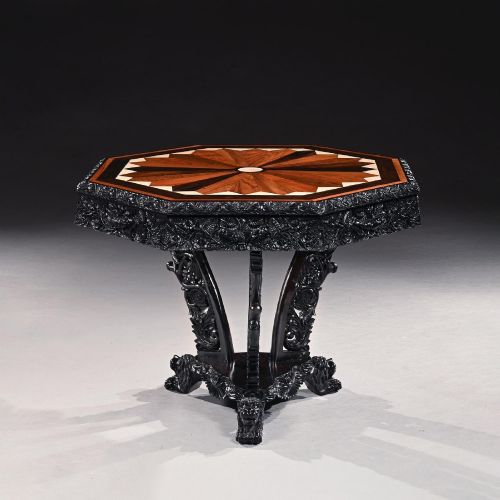
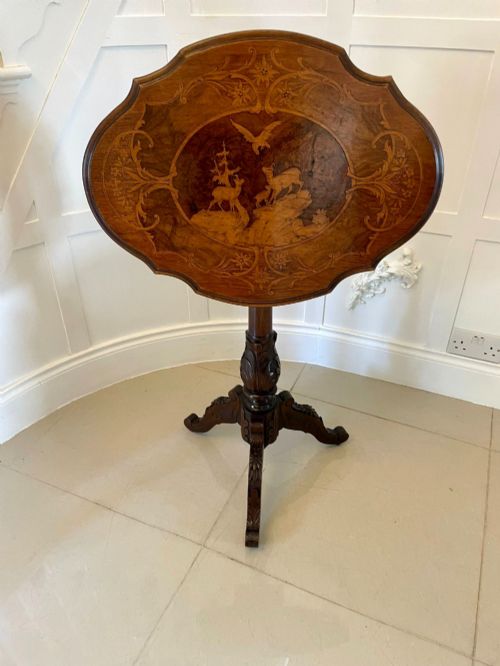
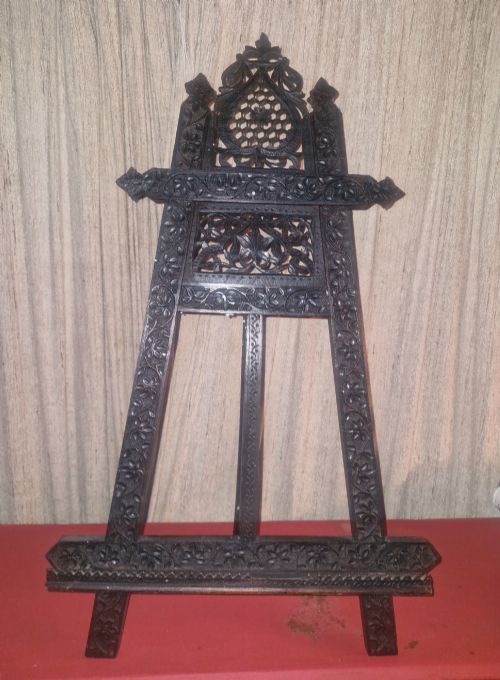
A black carved table appears across several distinct regional traditions, most notably in Swiss and German Black Forest workshops, Anglo-Indian colonial production, and Victorian British furniture. These pieces take the form of occasional tables, centre tables, and side tables designed for display and daily use in a reception room.
The buyer meets examples utilising ebonised wood, blackened oak, and dense tropical hardwoods such as ebony. Surfaces range from chip-carved geometric patterns to deep figurative reliefs depicting local flora and fauna.
Materials and Technique
Craftsmen built these tables using hardwoods, pine, oak, and walnut, often applying ebonisation or dark finishes to resemble costlier materials like solid ebony. Lime wood and linden wood frequently served for intricate, deep-relief carving due to their fine grain.
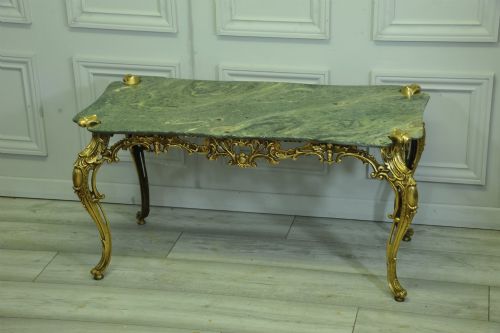
Carvers employed hand chisels and gouges to create three-dimensional motifs, while secondary techniques included marquetry inlay, japanning, and marble top insertions for centre tables.
Black Carved Table Retail Price Guide 2026
Typical asking prices for black carved table among the pieces listed under this phrase on Sellingantiques today, from the lower quarter to the upper quarter. They describe what is for sale here now, not the wider market.
Swiss woodcarvers frequently hid tiny, watchful forest bears within the dense foliage of their tables.
Judging the Workmanship
The distinction between ordinary and superior pieces lies entirely in the crispness and depth of the hand carving. Finer tables exhibit undercut foliage and figures with sharp detail, whereas lesser examples show blunt edges and shallow, mechanical stamping.
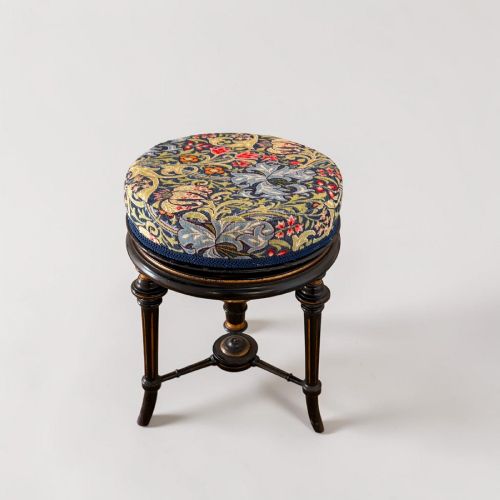
Structural integrity also separates the range, visible in the stability of tripod bases, the precise joining of table tops, and the condition of the ebonised or polished surface finish.
Maple and Co
The Black Carved Table Glossary
- Ebonised
- Wood treated with stain, dye, or paint to imitate the dark, dense appearance of true ebony. This finish gained popularity during the Victorian era for occasional furniture.
- Black Forest
- A style of wood carving originating from the mountainous region of central Europe, characterised by realistic depictions of animals and foliage in limewood or walnut.
- Anglo-Indian
- Furniture produced in the Indian subcontinent during the British colonial period, often featuring dense, intricate plant motifs carved into local hardwoods.
- Centre table
- A freestanding table designed to be viewed from all sides and placed in the middle of a room rather than against a wall.
- Chip-carving
- A decorative technique where small chips are removed from a wooden surface with a knife or chisel to form geometric patterns.
Black Carved Table: Frequently Asked Questions
Where should I place a black carved table?
These tables suit hallways, reception rooms, and drawing rooms as centre pieces or occasional surfaces for lamps and decorative objects.
Their dark tones and carved decoration contrast well against lighter walls and neutral interiors.
How do I clean an ebonised wooden surface?
Dust the carved recesses regularly with a soft brush to prevent the buildup of dirt within the intricate details.
Avoid harsh chemical polishes and apply occasional clear wax to maintain the dark sheen of the wood.
How can I tell Black Forest work apart?
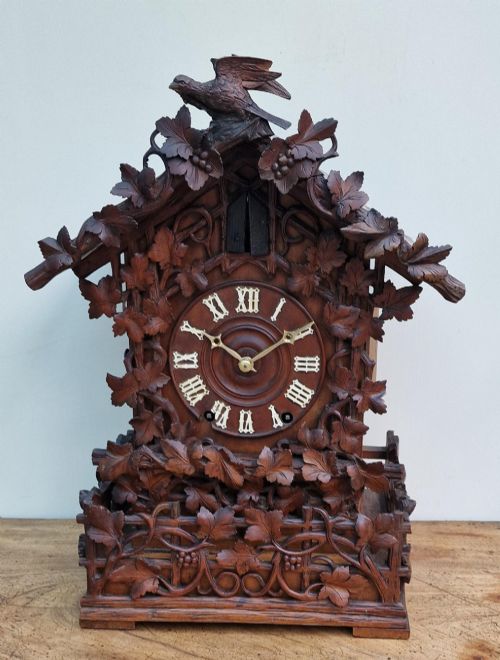
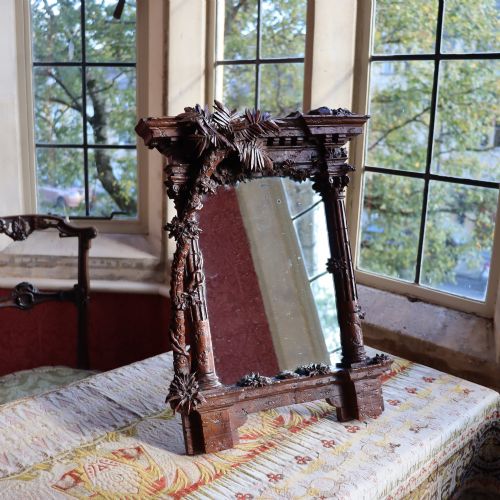
Black Forest pieces feature naturalistic motifs such as bears, vines, and oak leaves rendered in deep, three-dimensional relief.
The carving is typically executed on limewood, walnut, or pine with high fidelity to organic forms.
Are marble tops original to these tables?
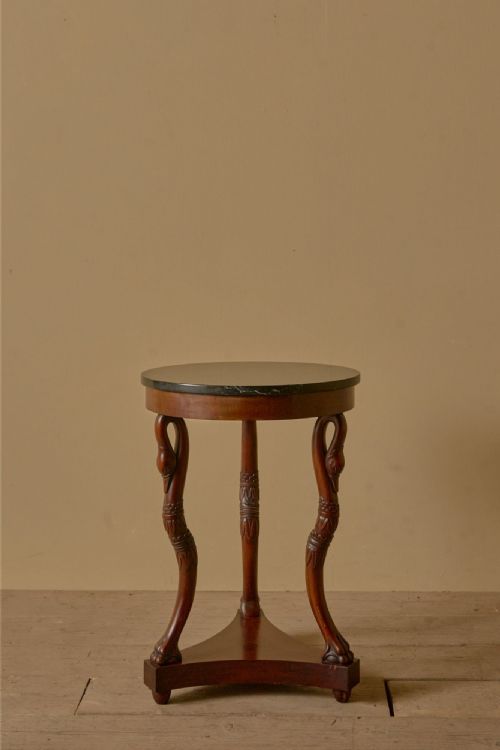
Many centre tables and gueridons were manufactured with fitted marble inserts to provide a durable, decorative surface for heavy items.
Check that the marble sits flush within the wooden frame and matches the period of the base.