


Black Botanical Wall Art
Black botanical wall art brings dark grounds and natural forms together, offering striking contrast for any interior.
Black Botanical Wall Art
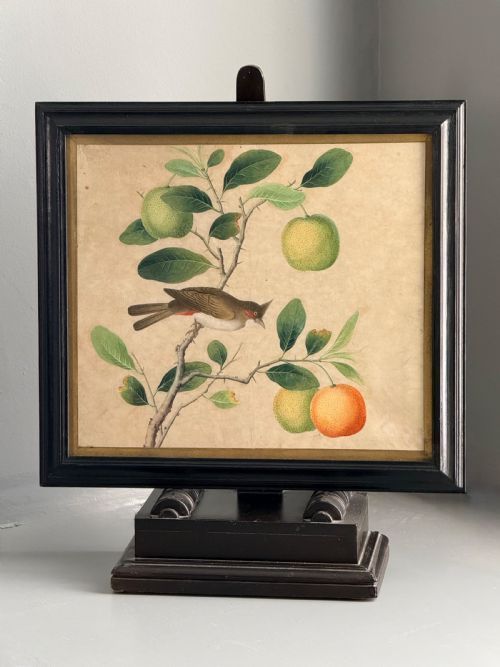
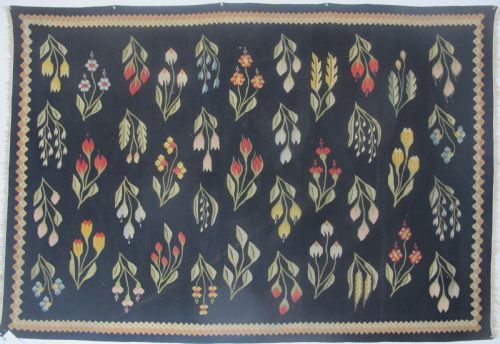
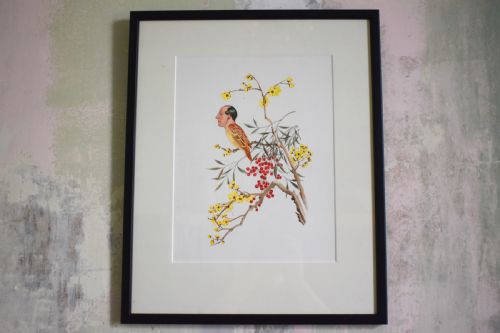
Black botanical wall art encompasses framed paintings, tapestries, cut paper pictures, and panels depicting flora against dark backgrounds. You are most likely to meet pieces originating from the eighteenth and nineteenth centuries, alongside regional folk art and early twentieth-century examples.
How they were made
Makers utilised traditional supports such as canvas, paper, pith paper, and wood, frequently housing the finished works within ebonised wooden frames or glass settings. Pigments include oil paint and gouache, applied to render detailed floral studies.
Textile pieces rely on woven tapestry techniques using wool or cotton threads to build up floral imagery. Works on paper involve delicate cutting or water-based painting directly onto fragile oriental pith or standard paper sheets.
Listings feature works from the 18th century, 19th century, Regency period, and Victorian era, utilising glass, paper, and canvas.
What varies in quality
Quality rests upon the precision of botanical draughtsmanship and the balance of composition across the dark ground. Finer examples display meticulous botanical accuracy in petals, leaves, and accompanying insects.
The condition of the underlying material, whether fragile pith paper or aged canvas, dictates the overall integrity of the piece. Superior execution is evident in the depth of the pigments and the harmonious relationship between subject and dark background.
George Lance·Pierre-Joseph Redouté
The Black Botanical Wall Art Glossary
- Pith paper
- A fragile material prepared from the pith of the Tetrapanax papyrifer plant, common in nineteenth-century Chinese export art. It absorbs gouache exceptionally well to create velvety painted surfaces.
- Ebonised wood
- Timber treated to resemble ebony, providing a deep black finish that frames botanical artworks. This technique was popular in Victorian and Regency framing.
- Gouache
- An opaque water-based paint composed of pigment, water, and a binding agent such as gum arabic. It produces matte surfaces ideal for detailed botanical illustration.
- Meiji period
- The era of Japanese history spanning from 1868 to 1912, known for sophisticated craftsmanship in decorative panels and screen art. Pieces from this time often incorporate natural motifs.
Black Botanical Wall Art: Frequently Asked Questions
How do I hang black botanical art?
Ensure the artwork hangs away from direct sunlight to protect vulnerable water-based pigments and aged paper supports from fading.
Use appropriate wall fixings suited to the weight of the ebonised wood frames or glazed panels.
What periods do these pieces span?
The available selection covers items from the eighteenth century through to the early twentieth century, including Victorian and Regency examples.
Different eras employ distinct materials, ranging from pith paper to oil on canvas.
How do I care for pith paper?
Pith paper is exceptionally delicate and sensitive to humidity changes, requiring stable indoor environmental conditions.
Keep such pieces securely behind glass within their frames to prevent physical damage to the fragile surface.
What is Chinese export art?
This term describes items manufactured in China specifically for Western markets during the eighteenth and nineteenth centuries.
Works often combine traditional Asian materials like pith paper with subjects tailored to European tastes.