








Black Base Sculpture
A black base sculpture anchors figurative metalwork and carved models securely to marble, onyx, or wood plinths.
Black Base Sculpture
A black base sculpture combines a distinct figure or animal subject with a contrasting dark stone or wooden plinth. When buyers search for a black base sculpture, they encounter figures ranging from Victorian studies to Art Deco dancers and animals.
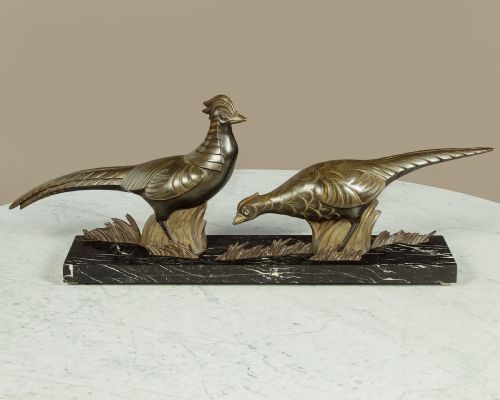
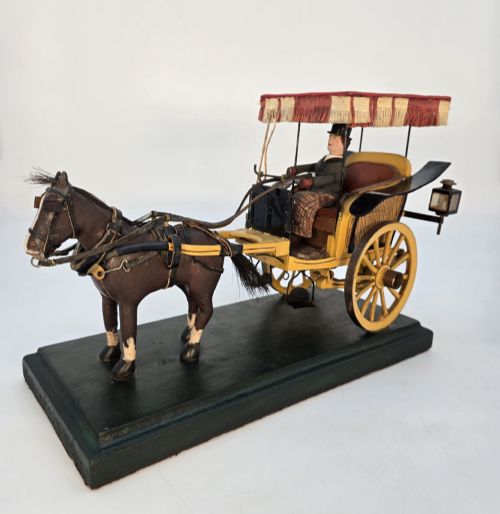
The pieces on this page span the nineteenth century through the mid-twentieth century, including Egyptian Revival antiquities, Grand Tour subjects, and Black Forest carvings. Spelter, bronze, and wood figures predominate, each mounted deliberately upon a darker foundation.
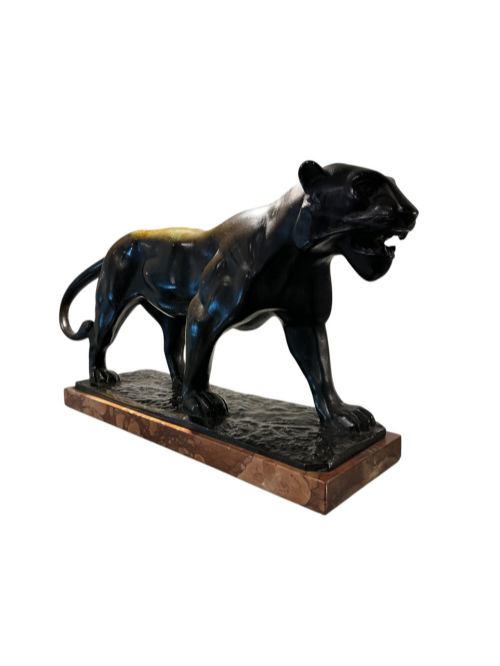
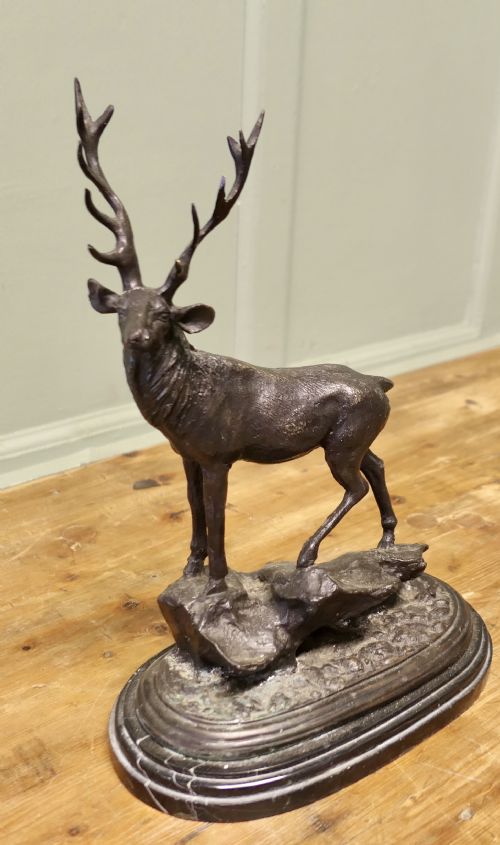
Makers and sculptors utilised these plinths to elevate the composition, grounding dynamic forms like panthers, stags, and dancers. The dark base provides a visual boundary that separates the subject from the surrounding surface.
Materials and Construction
Foundry workers cast metals using bronze or spelter, sometimes applying cold painted finishes, silvering, or gilt to the surface. Spelter offers a lighter, more malleable alternative to cast bronze for complex group figures.
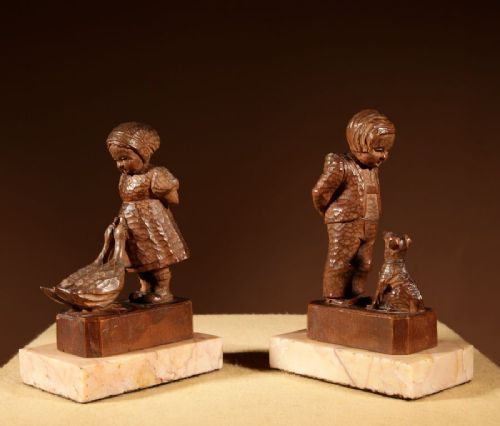
Sculptors carved other subjects directly from wood, ebony, terracotta, or pottery, then fitted them onto dedicated stone plinths. Marble and onyx bases were cut, polished, and bored to receive the fixing pins from the figures above.
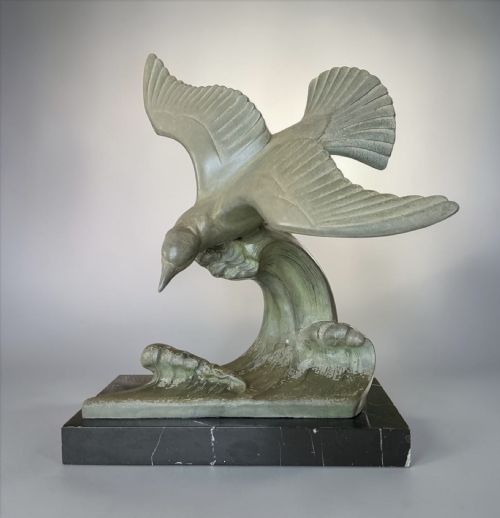
A tiny bronze albatross surmounts a crested wave, braving the elements entirely from a desk.
Assessing Quality and Execution
The definition in the cast and the crispness of the chasing separate standard castings from finer studio work. Greater care in chiselling surface details like feathers, drapery, and hair distinguishes the upper tier of pieces.
The selection and polish of the supporting plinth also matter, as dense fossil marble or fine black marble adds weight and permanence. Harmonious proportions between the height of the figure and the mass of the plinth indicate thoughtful design.
Bruno Zach·Pierre le Faguays·Ferdinand Preiss·Demetre Chiparus·Eugene Emile Borga·Karl Hagenauer·Guido Cacciapuoti·Geo Maxim
The Black Base Sculpture Glossary
- Spelter
- A zinc alloy used as a cost-effective substitute for bronze in decorative figures. It takes patination well but lacks the tensile strength of copper alloys.
- Cold painted
- A method where pigment is applied to metal without high-temperature firing. This finish remains vulnerable to flaking if handled improperly.
- Grand Tour
- A nineteenth-century tradition where travellers collected classical bronzes and architectural models. These souvenir pieces often feature custom stone plinths.
- Animalier
- A nineteenth-century sculptural movement focused on realistic depictions of animals in naturalistic poses. Artists captured creatures in motion, frequently mounted on dark bases.
- Scagliola
- A composite material made from selenite, glue, and pigments, mimicking natural stone. Artisans used it to create columns and plinths with marble-like veining.
Black Base Sculpture: Frequently Asked Questions
What are black base sculptures made from?
These sculptures combine metal figures, such as bronze or spelter, with polished stone plinths like marble or onyx. Some examples also utilise carved wood or terracotta mounted directly onto supportive bases.
The contrast between the metallic or carved subject and the dark stone foundation defines the aesthetic of the group. Makers selected these dense materials to ground the composition and provide stability.
How do I identify Art Deco pieces?
Art Deco examples feature streamlined silhouettes, stylised geometric forms, and subjects like panthers, dancers, and greyhounds. The materials often include silvered bronze, cold painted metal, and carved wood set upon stepped black marble plinths.
The overall design prioritises clean lines and dynamic movement, reflecting the artistic shifts of the 1920s and 1930s. Signatures from period sculptors frequently appear directly on the metal or the stone base.
What is a Grand Tour sculpture?
Grand Tour sculptures are nineteenth-century bronze reductions of classical antiquities and architectural monuments. Wealthy travellers purchased them as souvenirs during European expeditions and mounted them on decorative stone bases.
These pieces reflect a deep interest in classical antiquity, often depicting mythological figures, sphinxes, or famous statues. Their patinated bronze surfaces and dense marble plinths mark their nineteenth-century origin.
How should I clean a marble plinth?
Dust the marble plinth gently with a soft, dry cloth to remove surface particles. Avoid using harsh chemical cleaners, abrasive scouring pads, or excessive water on the stone.
If the marble requires deeper cleaning, use a damp cloth with mild soap, then dry it immediately. Protecting the stone surface preserves the original polish and finish of the base.