
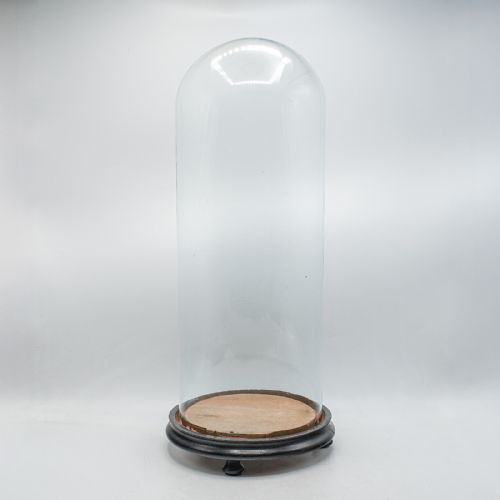


Black Base Cloche
These black base cloche pieces are glass display domes on wooden stands that preserve and showcase delicate specimens, and collectors prize them for their period character.
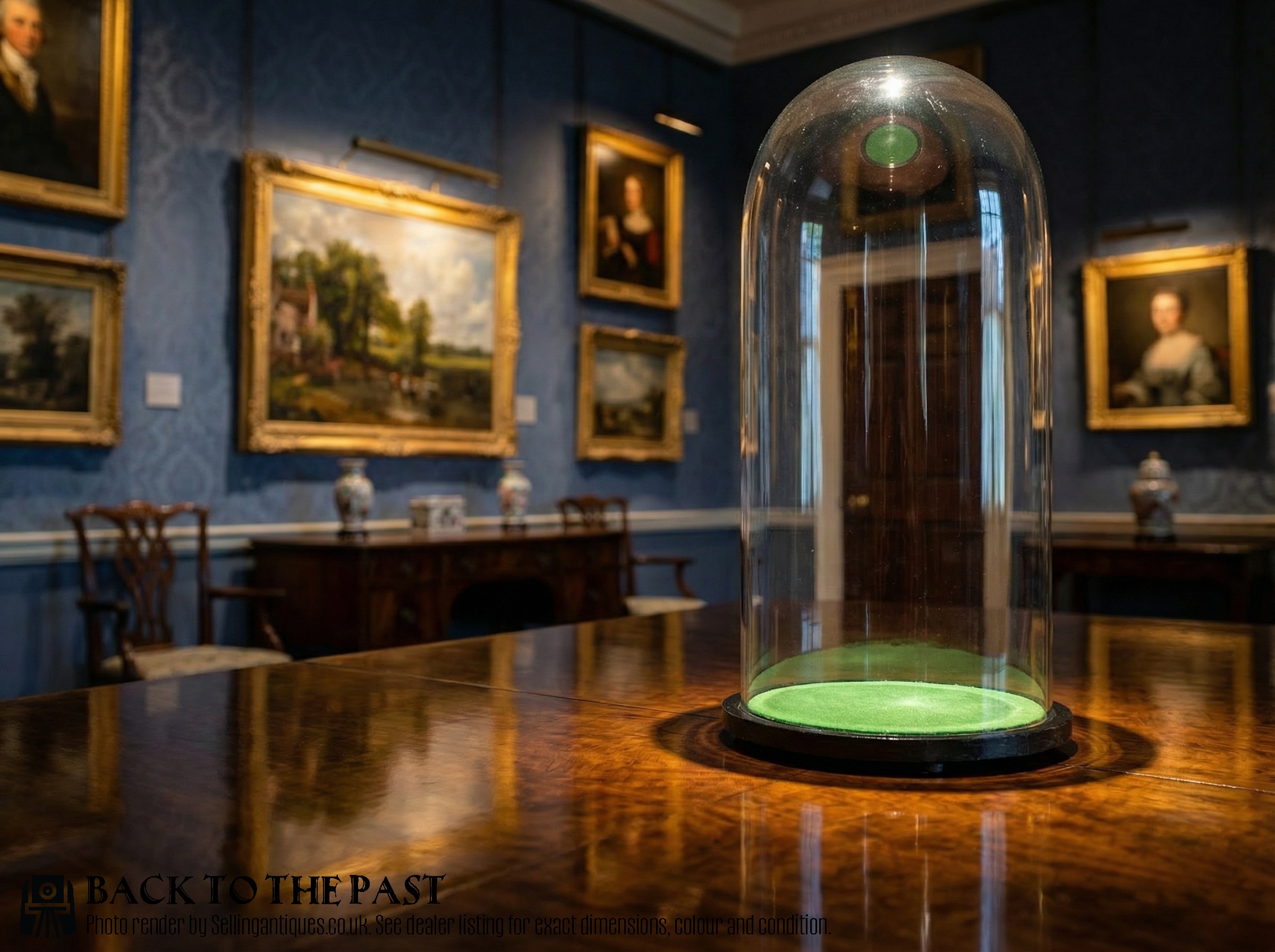
Black Base Cloche
A black base cloche typically appears as a glass display dome or showcase resting upon a dark timber foundation, most commonly seen in Victorian and Edwardian examples. These enclosures served to protect taxidermy, botanical specimens, and delicate ornaments from dust while displaying them for close study.
The pieces listed on this page span the Victorian and Edwardian periods, featuring tall profiles, oval shapes, and wide proportions designed for taxidermy or clock housings. Collectors will encounter various forms including professor's specimen domes and collector's cases originating from English workshops.
Materials and construction
The construction of a black base cloche relies upon blown glass domes fitted to turned or shaped wooden foundations. These bases are frequently ebonised, painted, or lined with fabrics such as baize and felt to provide a stable platform for mounted specimens.
Makers shaped the glass to form clear ovoid and tall profiles, sealing the interior environment against dust. The wooden bases often feature recessed grooves to secure the heavy glass dome firmly in place.
Materials recorded across these listings include glass, ebonised wood, timber, fabric, felt, and baize.
Assessing quality
Quality in a black base cloche depends upon the clarity and thickness of the blown glass dome, which should exhibit period characteristics without distracting distortion. Finer examples retain their original ebonised wood finishes and internal linings rather than later replacements.
Proportions also dictate the desirability of a piece, with taller specimen domes and balanced oval clock cases showing greater refinement in their turnery and glassblowing execution.
The Black Base Cloche Glossary
- Cloche
- A bell-shaped glass cover used to protect plants, food, or decorative objects. The term derives from the French word for bell.
- Ebonised wood
- Timber treated with a finish to imitate ebony. This dark surface creates a high-contrast foundation for the transparent glass above.
- Baize
- A coarse woolen material resembling felt. It frequently lines the interior floor of a display dome or clock case.
- Ovoid
- Egg-shaped in profile. This curvature appears frequently in the blown glass covers designed to house tall specimens.
Black Base Cloche: Frequently Asked Questions
What were glass domes originally used for?
These glass domes served primarily to protect delicate taxidermy, botanical specimens, and mantel clocks from dust and atmospheric damage in Victorian and Edwardian homes.
They allowed owners to exhibit their natural history collections and curiosities safely while keeping the fragile contents undisturbed in a controlled interior environment.
How do I style a cloche at home?
Place a glass dome on a side table, mantelpiece, or bookshelf to showcase interesting natural objects like shells, feathers, or dried botanicals. The dark wooden base anchors the display visually.
Ensure the piece sits on a stable, level surface away from heavy foot traffic to protect the heavy glass cover from accidental knocks.
How do I tell Victorian from Edwardian domes?
Victorian examples often display heavier ebonised wooden bases and deeply rounded glass profiles dating from the mid to late nineteenth century. Later Edwardian pieces frequently favor taller, more slender proportions for specimen display.
Examining the turning of the timber base and the weight of the glass provides helpful clues regarding the manufacturing era of the piece.