









Black Art Deco Sculpture
A black art deco sculpture brings the muscular lines and rhythmic movement of the interwar period straight into a room.
Black Art Deco Sculpture
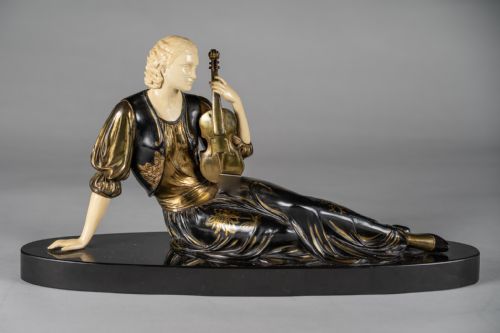
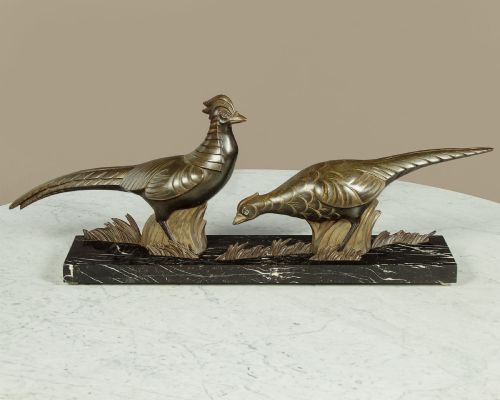
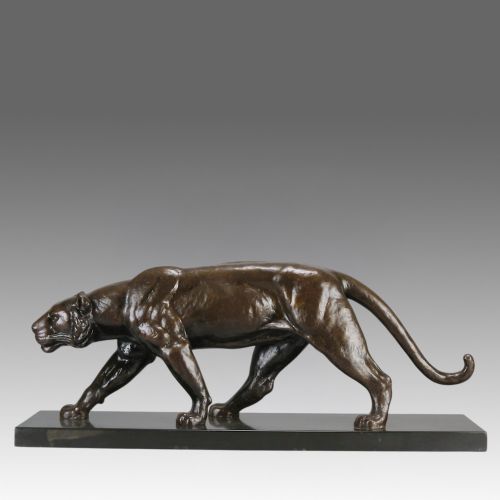
A black art deco sculpture typically combines dark patinated metal, bronze, or polished black marble to create stark, dramatic silhouettes. These pieces capture the dynamic energy of the 1920s and 1930s, ranging from lithe dancers and athletes to sleek predators.
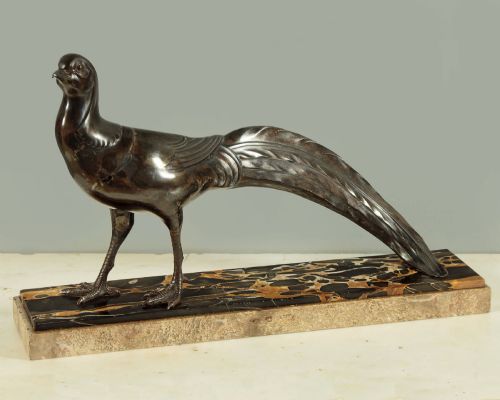
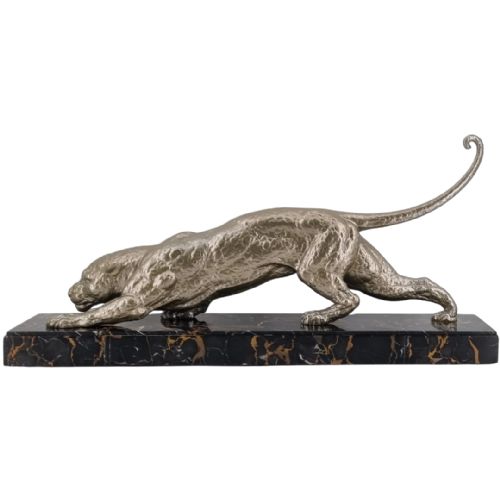
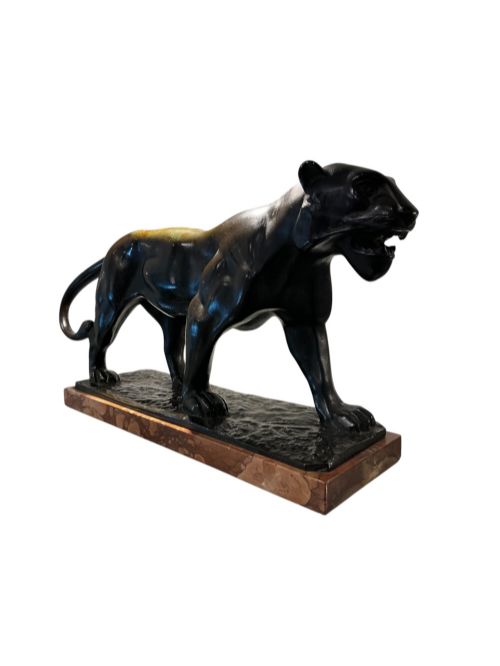
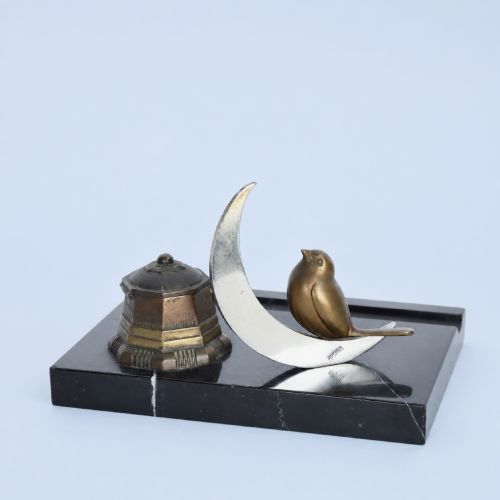
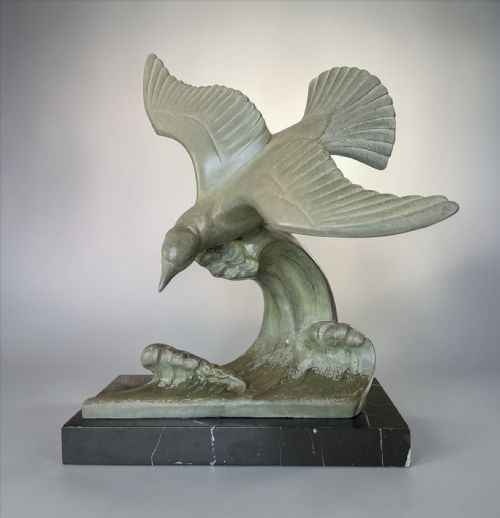
The objects take many forms on this page, including standalone animalier studies, figures mounted on heavy stone plinths, functional desk accessories, and bookends. French workshops produced a vast share of these works, frequently pairing metal figures with contrasting mineral bases.
Most examples date firmly from the early decades of the twentieth century, aligning with the height of the modernist movement in Europe. Buyers encounter both substantial cast bronzes and lighter spelter or alloy figures finished in dark tones.
Materials and Methods
Foundry work relied on traditional casting methods to capture fine detail in bronze, silvered bronze, and spelter. Figures often received dark patination or painted finishes to accentuate their musculature and geometric drapery.
Sculptors anchored their metal or carved wooden subjects to heavy plinths made of black marble or onyx, providing stability and visual contrast. Artisans also utilised chrome plating and terracotta depending on the workshop and the desired aesthetic effect.
Black Art Deco Sculpture Retail Price Guide 2026
Typical asking prices for black art deco sculpture among the pieces listed under this phrase on Sellingantiques today, from the lower quarter to the upper quarter. They describe what is for sale here now, not the wider market.
Materials span traditional cast bronze and spelter through to carved wood, terracotta, and polished black marble.
Factors of Quality
The integration between the figure and its base matters significantly, as premium works use dense, well-polished marble or onyx fitted precisely to the sculpture. Heavier metal content and signed surfaces by recognised modellers elevate the standing of a piece within the genre.
Demetre Chiparus·Bruno Zach·Ferdinand Preiss·Maurice Giraud-Riviere·Alexandre Ouline
The Black Art Deco Sculpture Glossary
- Animalier
- A sculpture depicting animals, particularly wild beasts in motion such as panthers, hounds, and birds. These subjects dominated twentieth-century modernist exhibitions.
- Spelter
- A zinc alloy frequently utilised as a cost-effective alternative to bronze during the interwar period. It accepts patination and metallic paint finishes readily.
- Patination
- The chemical treatment or surface ageing applied to metal to produce a specific dark or coloured finish. It protects the metal while defining highlights and shadows.
- Cold-painted
- A technique where paint is applied to a bronze sculpture after casting, without heat fusion. This method allowed for vibrant surface decoration on dancers and garments.
Black Art Deco Sculpture: Frequently Asked Questions
How do I spot spelter instead of bronze?
Spelter is noticeably lighter than bronze and tends to show a dull grey metal beneath any chipped surface finish. It also lacks the resonant ring of true bronze when lightly tapped.
Inspect the underside or mounting points where the casting meets the marble base to check the base metal. Bronze develops a deep, stable natural oxidation over time, whereas spelter often exhibits flaking paint or powdery corrosion.
What is animalier art deco?
Animalier art deco refers to sculptural works focused on wild animals rendered in the stylised, geometric aesthetic of the 1920s and 1930s. Sculptors emphasised raw power, tension, and streamlined motion in subjects like panthers, gazelles, and hounds.
These representations break away from Victorian realism by adopting sharp angles and smooth, sweeping contours. They frequently served as standalone ornaments or functional bookends.
Why are marble bases common?
Heavy black marble or onyx bases provided essential physical counterweight for dynamic, cantilevered figures like leaping dancers or pouncing panthers. The dark stone also grounded the composition visually.
French ateliers favoured the contrast between polished black stone and patinated metal surfaces. This pairing defined the architectural look of luxury interiors during the period.
How should I clean these sculptures?
Dust the surface regularly with a soft, dry brush to prevent particulate buildup on patinated metal or painted details. Avoid commercial metal polishes, which strip away original patination and finishes.
Marble bases require only a damp cloth followed by immediate drying. Protect the stone from acidic liquids and harsh household cleaners.