

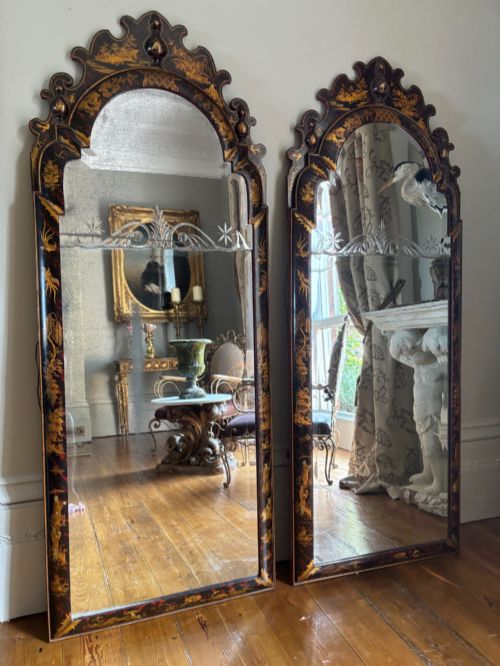
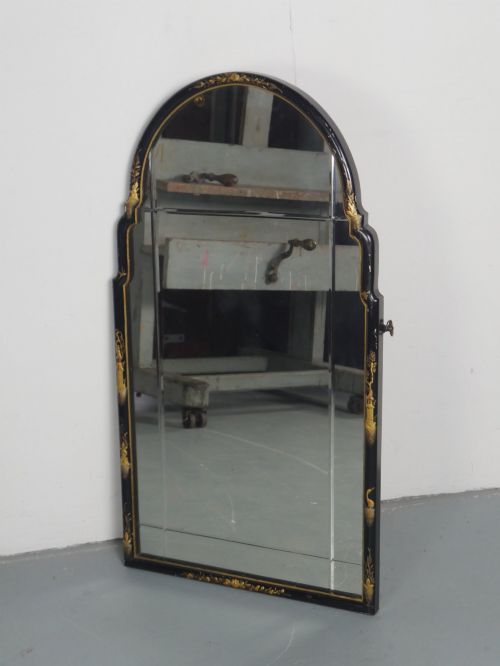
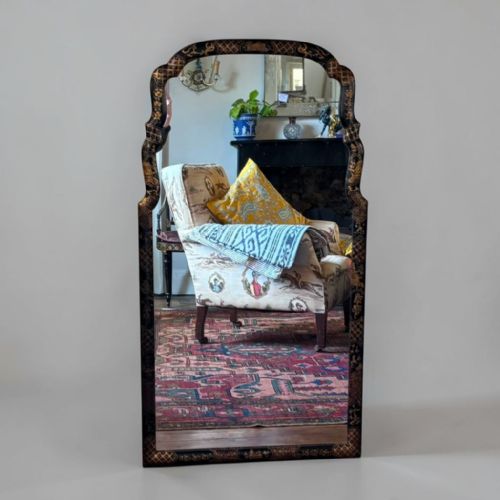
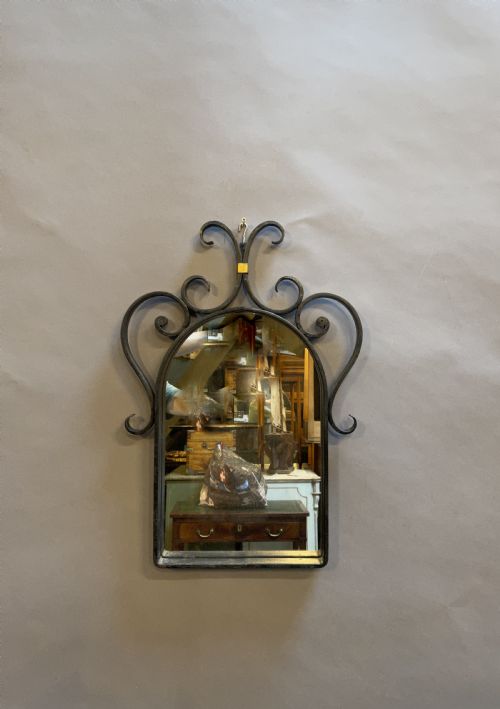


Black Arched Wall Mirror
A black arched wall mirror gives a room instant depth and architectural presence, drawing the eye with its curved top and dark frame.
Black Arched Wall Mirror
When you search for a black arched wall mirror, you are looking for architectural framing combined with dark or ebonised surfaces that anchor a room. The selections here span the nineteenth century and the early twentieth century, showing a strong presence of Victorian overmantel mirrors alongside French Provincial, Gothic Revival, and Aesthetic Movement designs.
You will encounter grand overmantel mirrors designed to sit above a fireplace, alongside wall-hung pieces and console tables with integrated mirrors. The forms utilise distinct arched profiles, ranging from simple curved tops to elaborate scrolling frameworks derived from historical revivals.
Materials and construction methods
Makers built these frames using solid timber, gesso, and carved wood, frequently applying ebonisation to imitate more expensive ebony. Surfaces often combine this black finish with parcel-gilt or gold leaf accents, highlighting the carved details and the sweep of the arch.
Other examples utilise wrought iron or cast iron for structural strength, providing heavy, durable frames suitable for large glass plates. Mirror glass of the period is set securely within these heavy wooden or metallic surrounds, often complemented by intricate surface ornamentation.
Black Arched Wall Mirror Retail Price Guide 2026
Typical asking prices for black arched wall mirror among the pieces listed under this phrase on Sellingantiques today, from the lower quarter to the upper quarter. They describe what is for sale here now, not the wider market.
One unexpected survivor brings the atmosphere of nineteenth-century fairgrounds directly into the collection with an antique carousel mirror.
Factors determining quality
Quality rests in the depth of the carving and the crispness of the gesso mouldings applied to the wooden core. Pieces with hand-carved wooden details display a sharper definition than those relying purely on moulded plaster compositions.
The sophistication of the ebonisation and the integration of gold leaf or silver gilt create a richer surface texture. The integrity of the original mirror glass and the weight of the frame further separate standard production from finer examples.
The Black Arched Wall Mirror Glossary
- Ebonised wood
- Timber treated with a finish to imitate ebony. This dark treatment was particularly popular during the Victorian and Aesthetic periods.
- Gesso
- A plaster-like mixture applied to wood frames as a base for carving and gilding. It allows for intricate surface ornamentation.
- Overmantel mirror
- A large mirror designed to sit on the mantelpiece above a fireplace. These pieces often feature an arched top to echo room architecture.
- Parcel-gilt
- Partially gilded woodwork where gold leaf highlights specific raised details against a dark background. This technique adds visual contrast to the frame.
- Gothic Revival
- An architectural and decorative style drawing on medieval forms. Mirrors in this style often feature pointed arches and structural verticality.
Black Arched Wall Mirror: Frequently Asked Questions
How do I hang a heavy overmantel mirror?
These large pieces require secure fixing directly into wall studs or masonry using heavy-duty brackets. The substantial weight of timber, gesso, and glass demands professional installation to ensure safety.
Distributing the load evenly across the frame prevents stress on the joints and protects the structural integrity of the antique.
Where should I place a black arched mirror?
Positioning an arched mirror above a fireplace or console table creates a natural focal point in a room. The curved top draws the gaze upward, adding a sense of height and reflecting natural light.
Placing them opposite a window maximises the brightness brought into darker corners of the interior space.
How do I clean an antique mirror frame?
Dust the carved wood and ebonised surfaces gently with a soft, dry cloth to prevent accumulation. Avoid commercial polishes that can damage historic finishes or soften delicate gesso.
Clean the glass carefully with a mild glass cleaner applied to a cloth rather than sprayed directly, preventing moisture from seeping behind the plate.
What is the difference between Victorian and Gothic Revival mirrors?
Victorian mirrors often embrace Louis Philippe curves, ornate scrolling, and classical neoclassical details. They lean towards graceful lines and balanced proportions.
Gothic Revival pieces incorporate pointed arches and heavier architectural motifs inspired by medieval structures. They offer a more dramatic and vertical visual impact.