



Black Books
When you look for black antique books, you find items shaped by the periods from the Georgian era through to Art Deco.
Black Books
When you search for black antique books, you encounter a selection of bound volumes, bookends, bookcases, and reading accessories that span the Georgian, Victorian, Edwardian, and Art Deco periods. Many items utilise ebonised wood or dark finishes to achieve their distinctive dark appearance.
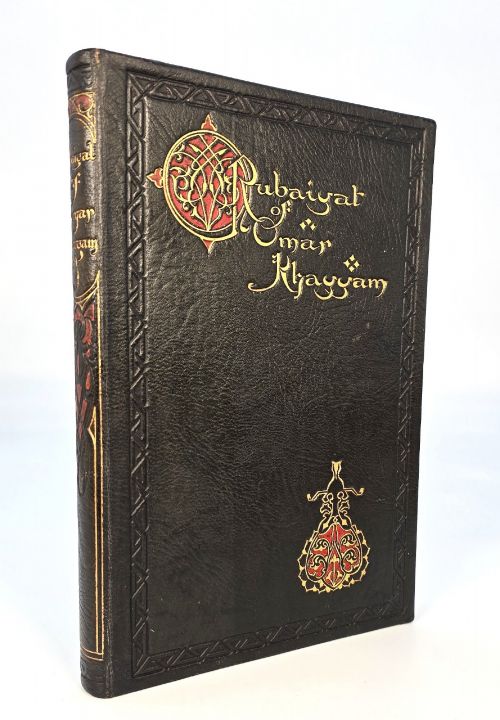
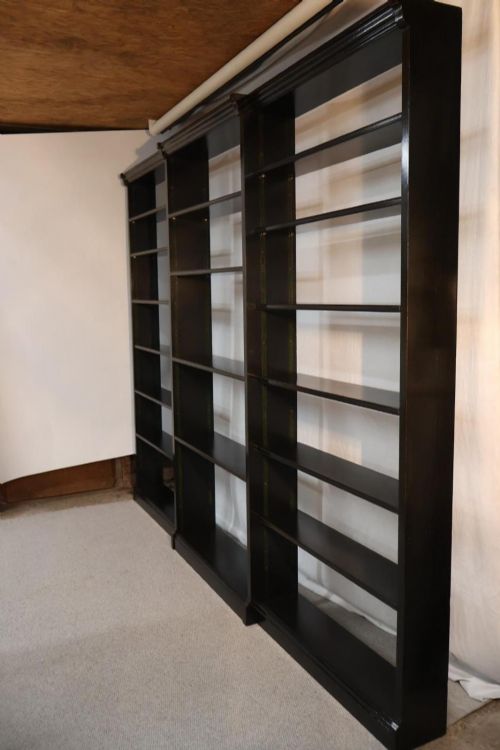
The most common forms you meet on this page are carved wooden bookends from the Black Forest, ebonised bookcases, and individual antique books bound in leather or paper. Alongside these, you find related items such as book slides, desk accessories, and tables.
Originating from English, European, and international workshops, these pieces combine practical storage with decorative craftsmanship. They reflect the interior tastes of the nineteenth and early twentieth centuries through their choice of dark materials.
Materials and construction
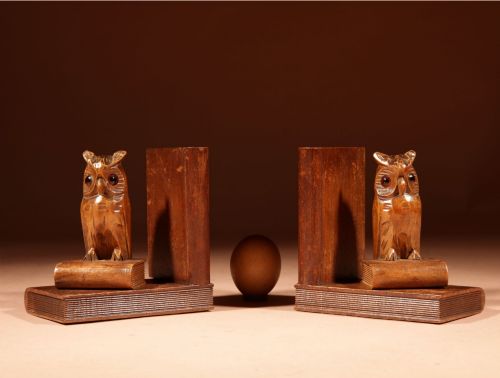
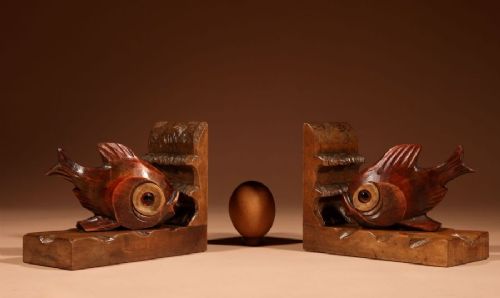
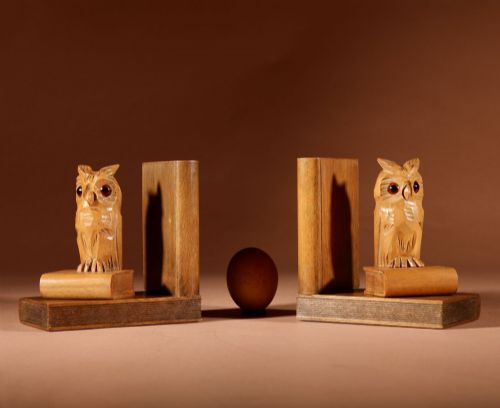
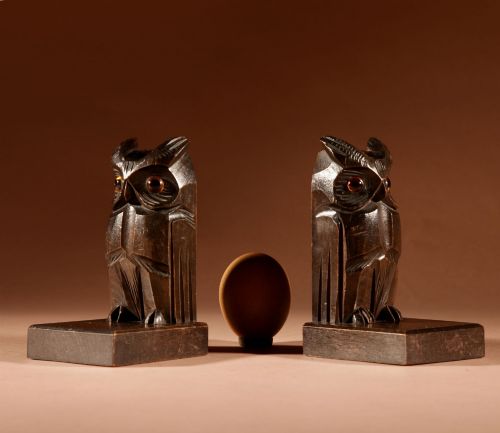
Makers utilised wood, linden wood, and ebonised wood as the primary substrates for carved bookends, furniture, and reading stands. These woods were frequently carved in high relief, as seen in Black Forest animal studies featuring owls, bears, and elephants.
Metal components in brass, bronze, cast iron, pewter, and gold leaf provide structural support and decorative contrast on book presses, slides, and bookcases. Glass and paper complete the construction of bound volumes and display shelving.
Several carved wooden owls wear expressions of mild indignation while holding up your library.
Variations in quality
Quality rests on the precision of the carving and the integrity of the materials, particularly in hand-carved linden wood items where facial expressions and anatomical details define the work. Higher-grade pieces maintain crisp lines in ebonised finishes and secure joinery on extending book slides and breakfront bookcases.
The sophistication of secondary materials, such as heavy cast iron in book presses or fine brass mounts on open bookcases, separates standard items from exceptional examples. Original bindings and authentic period patination on leather and wood further distinguish superior specimens.
The Black Books Glossary
- Ebonised
- Wood treated with a dark finish or stain to imitate ebony. This technique was popular in Victorian and later furniture to create a uniform black appearance.
- Book slide
- An adjustable rack designed to hold a row of books upright on a desk or table. These often feature extending mechanisms in wood and brass.
- Pietra dura
- An artistic technique using cut and fitted polished coloured stones to create geometric or pictorial designs on tabletops.
- Breakfront
- A cabinet or bookcase whose central section projects forward from the flanking wings. This architectural form appears in nineteenth-century library furniture.
- Pewter
- A malleable metal alloy historically used for decorative items and desk accessories. It provides a dull grey finish that contrasts with dark wood.
Black Books: Frequently Asked Questions
What are black antique books?
They are historical bound volumes, ebonised furniture items, and dark wooden accessories produced during the Georgian, Victorian, and early twentieth-century periods. These items combine reading material with functional decor.
They reflect the dark wood aesthetics favoured in period libraries and studies, utilising materials such as ebonised wood, leather, and cast iron.
How were antique bookends used?
Bookends supported rows of heavy volumes on desks, mantelpieces, and open shelves to keep them upright and organised. Carved wooden examples from the Black Forest also served as decorative ornaments.
Their substantial weight, often reinforced with metal or dense timber, allowed them to stabilise large numbers of books effectively.
How do I identify Victorian ebonised furniture?
Victorian ebonised pieces feature timber stained or painted black to emulate expensive ebony wood. They frequently incorporate contrasting brass mounts, inlay, or gilt highlights.
Examining the construction methods, such as dovetail joints and period fixings, helps confirm nineteenth-century origin.
Where were Black Forest carvings made?
Black Forest carvings originated in the mountainous region of central Europe, particularly Switzerland and Germany, during the nineteenth and early twentieth centuries. Local artisans specialised in detailed animal woodcarvings.
Subjects included bears, owls, and elephants utilised in practical objects like bookends, inkstands, and letter racks.