



Black and White Dogs
Black and white dogs bring the heavy weight of nineteenth-century hearths and studies into modern rooms through pottery, oil, and print.
Black and White Dogs
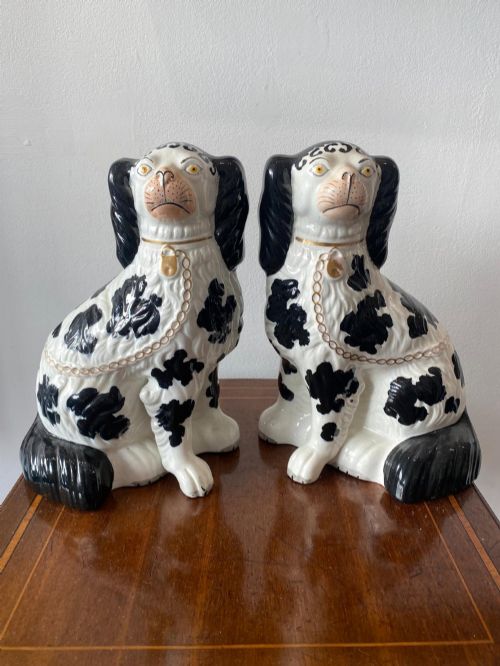
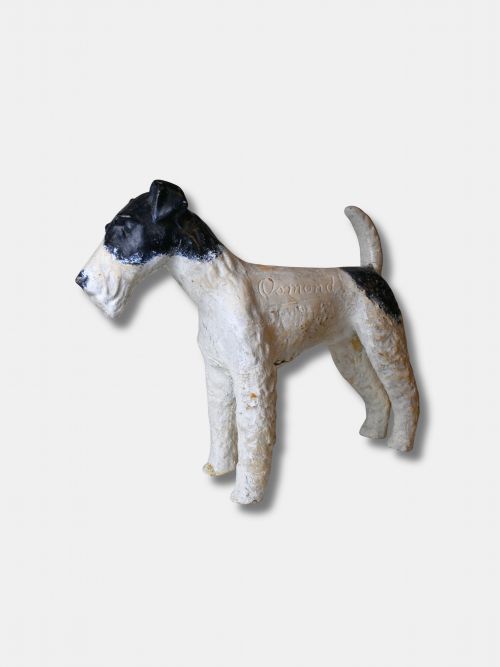
When searching for black and white dogs, buyers encounter a diverse mix of Staffordshire pottery figures, original etchings, and nineteenth-century oil paintings. The Staffordshire ceramic pairs sit alongside large composition advertising figures and finely carved Black Forest side tables shaped as seated hounds.
The version most commonly met on this page is the Staffordshire earthenware dog, often modelled as a seated spaniel or pair of mantelpiece figures. These ceramic dogs emerge from the Victorian era, spanning dates from the mid-nineteenth century up to early twentieth-century interpretations.
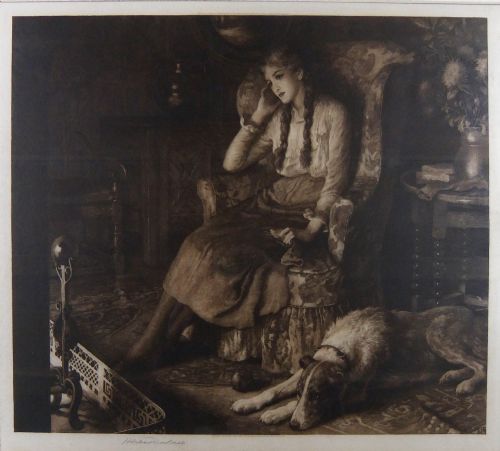
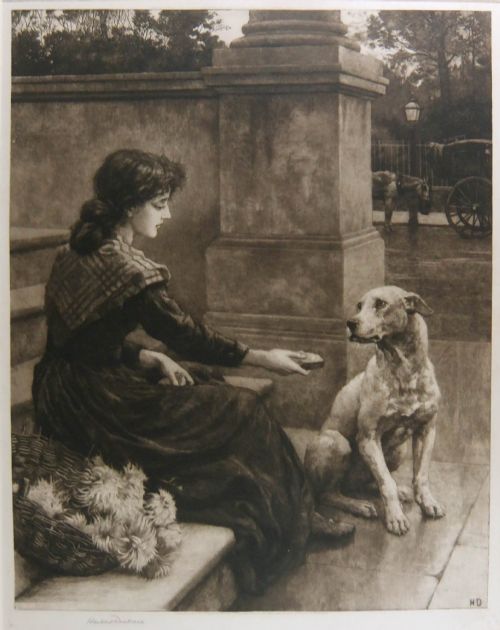
Beyond pottery, the category includes framed prints and drypoint etchings capturing domestic canines in realistic or sentimental poses. Oil paintings on canvas portray spaniels and bulldogs within rustic interiors or country landscapes from the nineteenth century.
Materials and Techniques
Ceramic pieces utilise earthenware and porcelain bodies finished with hand-applied glaze, sometimes accented with gilt details. Staffordshire potters moulded these figures in sections before firing and painting the characteristic black patches.
Works on paper employ ink and paper through etching and drypoint techniques, capturing fine texture in the fur of spaniels and terriers. Oil paintings layer pigment onto canvas to depict dogs in interior rooms or expansive countryside settings.
Carved wooden items involve dense timber shaped into functional forms like side tables depicting seated hounds. Composition material provides rigid structure for life-size advertising display figures intended for commercial use.
Black and White Dogs Retail Price Guide 2026
Typical asking prices for black and white dogs among the pieces listed under this phrase on Sellingantiques today, from the lower quarter to the upper quarter. They describe what is for sale here now, not the wider market.
The documented periods span the nineteenth century, eighteen-sixties, eighties, nineties, nineteen-hundreds, nineteen-twenties, and nineteen-forties.
Assessing Quality and Execution
In works on paper, the strength of the impression and the preservation of the delicate ink lines distinguish superior etchings. Oil paintings gain distinction through anatomical accuracy, convincing depth in the background, and skilled handling of light on the animal's coat.
Carved wooden furniture pieces rely on the depth of the carving and the stability of the timber form to separate standard production from master craftsmanship.
Herbert Dicksee·Sir Edwin Landseer·Charles Bilger Spalding·Samuel John Carter·Beswick
The Black and White Dogs Glossary
- Staffordshire pottery
- Earthenware figures produced in the Staffordshire potteries of England during the nineteenth century. These decorative mantelpiece ornaments frequently depict spaniels and poodles.
- Drypoint etching
- A printmaking process where an artist scratches a design directly onto a metal plate with a sharp needle. This technique creates a rich, velvety burr that holds ink during printing.
- Composition
- A moulded material made from a mixture of ingredients like chalk, resin, and paper pulp. It serves to create durable advertising display figures and decorative objects.
- Black Forest carving
- Intricate woodwork originating from the mountainous region of central Europe, noted for realistic animal sculptures. Furniture and side tables often take the form of seated hounds.
- Quill holder
- A small ceramic desk accessory featuring an integrated inkwell or pen rest. These practical pottery items often take the shape of seated dogs.
Black and White Dogs: Frequently Asked Questions
What periods do these dogs cover?
The pieces span from the early nineteenth century through the Victorian and Edwardian eras up to the nineteen-forties. Staffordshire earthenware and oil paintings dominate the earlier decades.
Later periods introduce detailed etchings and composition advertising figures. This broad timeline reflects changing domestic tastes for canine ornamentation.
How were Staffordshire dogs displayed?
Staffordshire pottery dogs were traditionally placed on mantelpieces facing inward toward each other. They served as domestic ornaments in Victorian parlours and living rooms.
Smaller porcelain versions and quill holders found placement on writing desks and side tables. Larger advertising figures stood in commercial spaces to attract customers.
What is the difference between an etching and a painting?
Etchings are printed works on paper created by biting lines into a metal plate with acid or scratching them directly with a tool. They showcase fine tonal gradations in monochrome ink.
Oil paintings are unique works executed with coloured pigments suspended in oil on canvas. They provide full colour representation of dogs within detailed interior or landscape settings.
How do I care for antique ceramic figures?
Antique earthenware and porcelain require gentle dusting with a dry, soft cloth to prevent surface accumulation. Avoid using water or chemical cleaners that might compromise the glaze or painted details.
Keep pottery figures away from direct sunlight and areas subject to sudden temperature shifts. Stable indoor conditions protect the ceramic body and surface finish over time.