



Black and White Dog Art
Black and white dog art brings centuries of canine character into your rooms through masterly prints, etchings, and oil paintings.
Black and White Dog Art
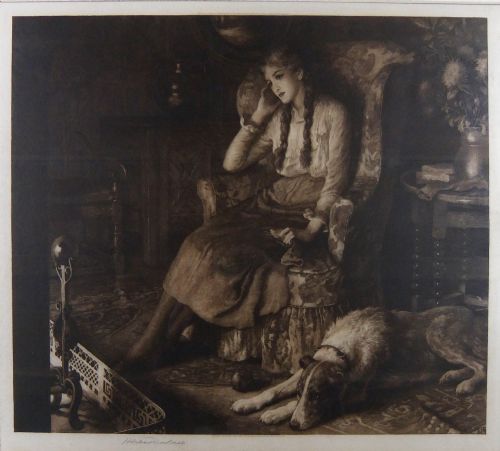
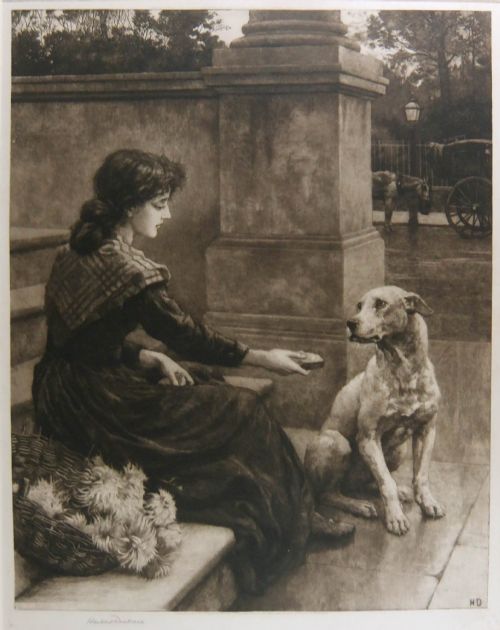
Black and white dog art encompasses framed prints, etchings, and oil paintings created across the nineteenth and twentieth centuries. These works capture spaniels, bulldogs, and working hounds through the skilled hands of Victorian and later artists.
You will most commonly meet original etchings from the early twentieth century alongside nineteenth-century oil paintings and period prints. The selection ranges from intimate framed wall art to detailed drypoint prints featuring multiple dogs.
The subjects span from country house spaniels to patriotic wartime bulldogs, reflecting the changing role of dogs in British domestic life. Each piece offers a direct connection to historical canine portraiture executed in monochrome or restrained palettes.
How these pieces were made
Etchings and drypoint prints rely on fine ink applied to paper plates, capturing delicate lines and tonal depth through meticulous press work. Artists like Herbert Dicksee utilised these printmaking techniques to render the soft texture of canine fur.
Oil paintings on canvas employ rich pigments framed in wood and gilded wood, often enhanced by gilt accents. Painters built up layers of oil to depict interior scenes and landscape backgrounds behind their canine subjects.
Black and White Dog Art Retail Price Guide 2026
Typical asking prices for black and white dog art among the pieces listed under this phrase on Sellingantiques today, from the lower quarter to the upper quarter. They describe what is for sale here now, not the wider market.
Works span from the Victorian period through Edwardian times and into 1940s patriotic British art.
What varies in quality
Quality rests in the precision of the draughtsmanship and the expressive rendering of the animal's form. The finest works capture distinct canine anatomy and personality rather than generic animal shapes.
The sophistication of the framing and the preservation of the paper or canvas distinguish superior examples. Original artist signatures and crisp plate impressions elevate individual pieces above standard decorative prints.
Herbert Dicksee·Sir Edwin Landseer·Charles Bilger Spalding·Samuel John Carter
The Black and White Dog Art Glossary
- Etching
- A printmaking method where acid bites lines into a metal plate to hold ink. This technique allows for remarkable detail in animal hair and expression.
- Drypoint
- A printmaking process where an artist scratches directly onto a plate with a sharp needle. It produces characteristic soft burrs that hold ink for velvety lines.
- Oil on canvas
- Pigments bound in oil medium applied to stretched woven fabric. This traditional painting method permits subtle blending of light and shadow.
- Gilded wood
- Timber frames finished with a thin layer of gold leaf or metallic powder. Such framing enhances the presentation of period artworks.
Black and White Dog Art: Frequently Asked Questions
What is an original etching?
An original etching is a print pulled from a plate that the artist personally worked on, rather than a later mechanical reproduction. These pieces show distinct plate marks where the press pressed into the paper.
Collectors prize original etchings for their direct connection to the printmaker's hand and the distinct velvety quality of the ink lines.
How do I date a dog painting?
Dating relies on examining the stretcher frames, canvas preparation, clothing styles in any background figures, and the artist's recorded working years. Victorian and Edwardian works often carry specific stylistic markers in their brushwork and framing.
Comparative study of period signatures and known artist biographies helps narrow down the exact decade of creation.
Where should I hang these artworks?
These pieces suit studies, libraries, and hallways where their detailed monochrome or oil textures can be viewed closely. Avoid placing them in direct sunlight to protect paper etchings and oil pigments from fading.
Pairing framed prints with traditional wooden furniture complements their historical origins.
What dog breeds appear most often?
Spaniels and bulldogs dominate this selection, reflecting their popularity in British homes and art history. Spaniels often appear in country settings or domestic interiors, whilst bulldogs frequently carry patriotic symbolism.
These breeds were favoured by nineteenth and twentieth-century artists for their distinct facial expressions and loyalty.