


Black and Gold Sign
A black and gold sign brings striking contrast to a room, offering functional trade history or period advertising through rich gilding.
Black and Gold Sign
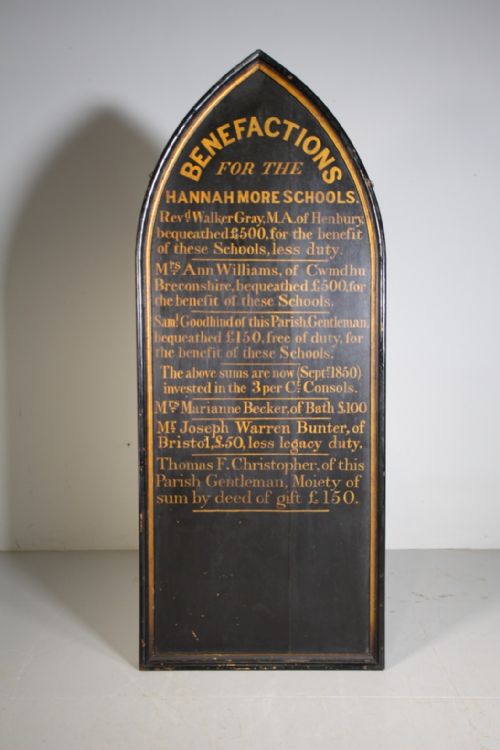
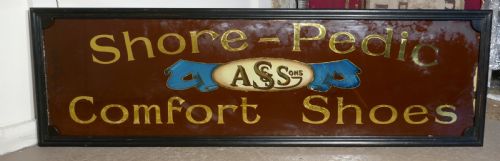
When you search for a black and gold sign, you encounter a varied selection of antique trade signs, advertising mirrors, and hand-painted shop panels spanning the nineteenth and twentieth centuries. These pieces originate from distinct commercial and domestic contexts, recording eras of high street retail and domestic trade.
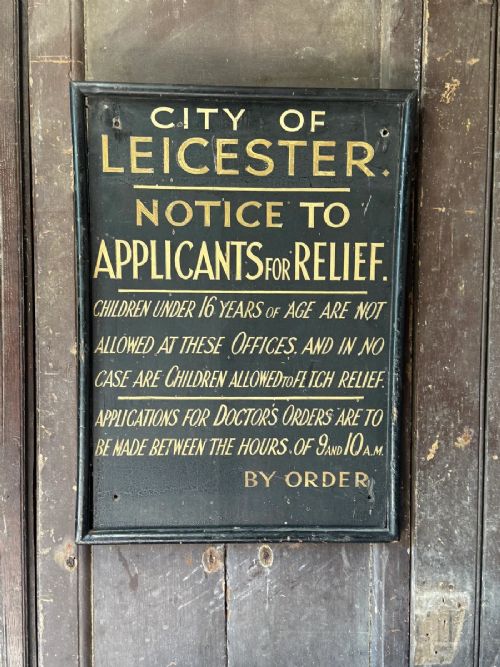
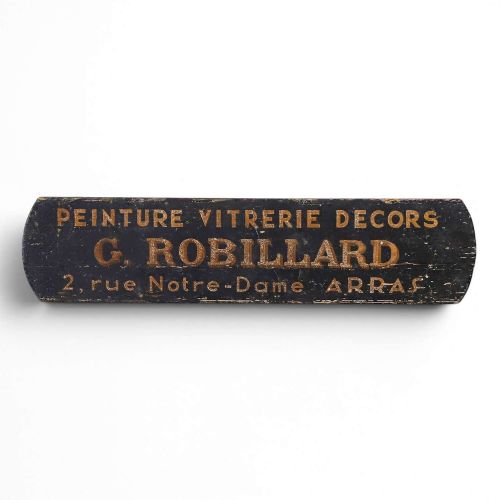
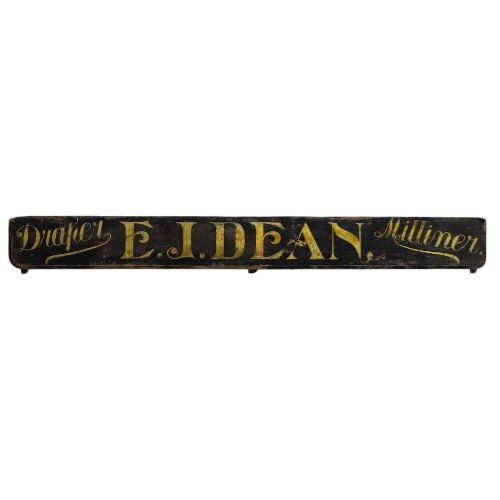
The selection you meet most frequently on this page includes Victorian and Edwardian timber and glass panels, alongside interwar advertising mirrors. Artisans produced these items for apothecary shops, milliners, and drapers, utilising bold lettering to catch the eye of the passing public.
How they were made
Makers applied gold leaf and paint directly onto surfaces of pine, glass, or paper to achieve high legibility and durability for daily commercial use. Reverse glass painting and gilding techniques created reflective, gleaming finishes that resisted fading inside busy shops and street-facing windows.
Traditional framing in timber or papier mâché supported these panels, ensuring stability for wall hanging or counter display. Artisans combined hand-lettering with pictorial elements, fusing practical trade communication with decorative craftsmanship.
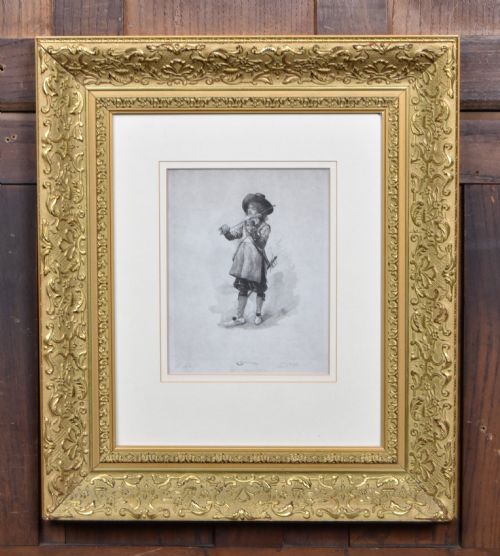
Objects range from Victorian trade signs and Edwardian shop panels to interwar advertising mirrors.
What varies in quality
Quality rests upon the crispness of the hand-painted lettering and the preservation of the original gold leaf against the dark background. Superior pieces display confident brushwork and intact gilding that retains its luminosity without excessive modern restoration.
The integrity of the original substrate, whether pine timber, glass, or papier mâché, dictates the overall character of the piece. Stronger examples maintain their original framing and retain clear traces of their commercial provenance.
The Black and Gold Sign Glossary
- Gold leaf
- Hammered gold beaten into extremely thin sheets, utilised for lettering and decorative highlights on signs and frames. This material provides a lasting metallic sheen that does not tarnish.
- Reverse glass painting
- An artistic technique where the image and lettering are applied to the back of a glass pane, viewed from the front through the glass. This method produces a glossy, protected surface.
- Trade sign
- A board or panel displayed outside or inside a shop to advertise a specific trade, service, or commodity. These items document the commercial history of the high street.
- Gilt
- A thin layer of gold applied to the surface of wood, metal, or glass to simulate solid gold. It enhances the visual contrast against dark painted backgrounds.
Black and Gold Sign: Frequently Asked Questions
Where were these signs displayed?
Shopkeepers mounted these boards above doorways, inside windows, or upon interior walls to attract customers and advertise specific goods. Apothecaries, milliners, and grocers relied on them for daily commerce.
Domestic spaces also accommodated smaller painted panels and mirrors, blending commercial utility with interior decoration.
How do I clean an antique sign?
Dust surfaces gently with a dry, soft cloth to prevent abrasion to fragile paint layers and delicate gold leaf. Avoid liquid cleaners and modern chemicals that lift historic finishes.
Consult a professional conservator if the surface requires deeper intervention or shows active flaking.
How do I date a painted sign?
Examine the typography, substrate materials, and construction methods to establish the period of production. Victorian and Edwardian examples often feature distinct lettering styles and pine framing.
Compare the commercial subject matter and manufacturing techniques with documented trade ephemera from the same decade.
Can I hang these signs outdoors?
Historic painted and gilded panels require indoor placement to protect them from moisture and temperature fluctuations. Exposure to the elements damages fragile gold leaf and degrades pine or paper substrates.
Keep them away from direct sunlight to prevent the dark background paint from fading over time.