



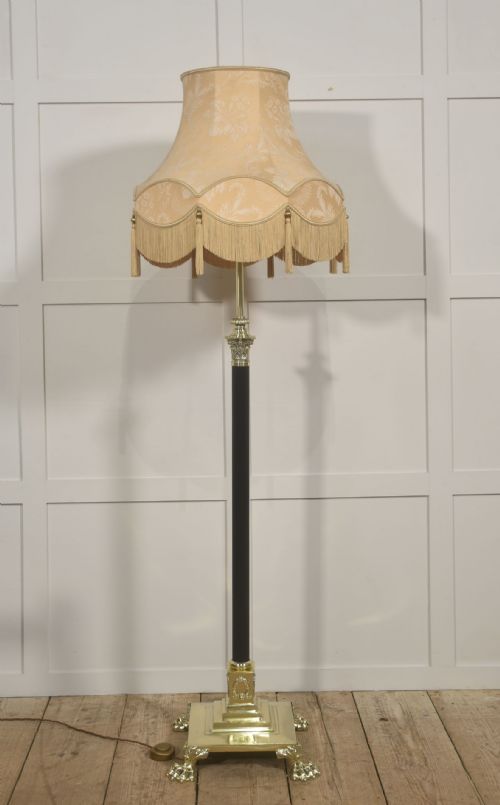
Black and Brass Lamp
A black and brass lamp brings a grounded, high-contrast silhouette to a room, pairing dark metal or ebonised wood with warm metallic accents.
Black and Brass Lamp
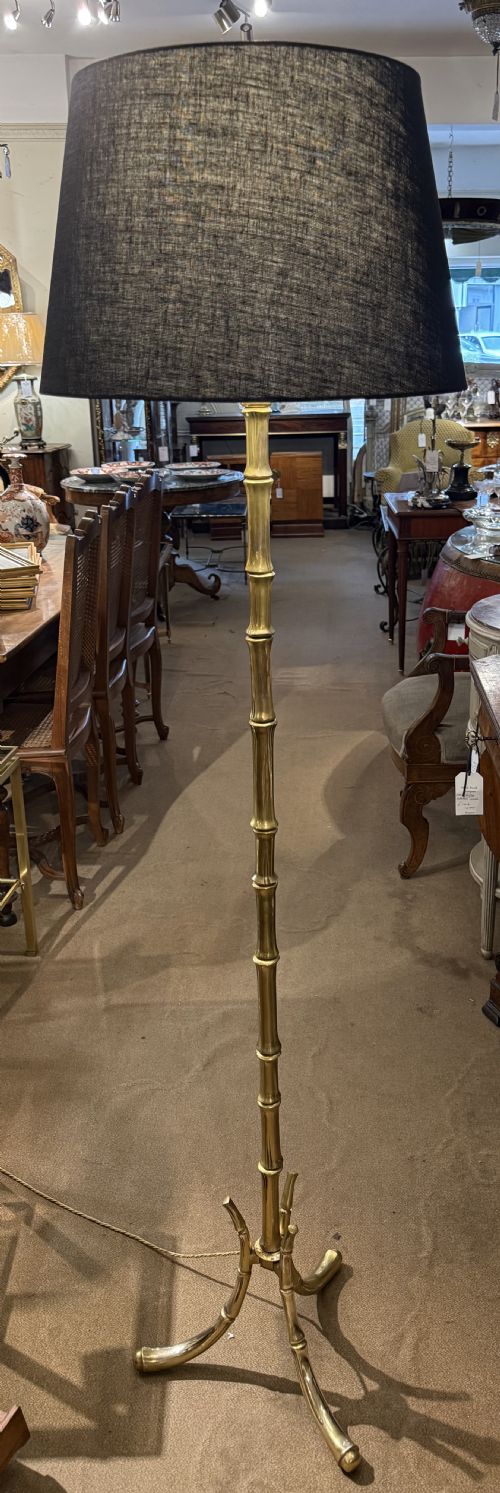
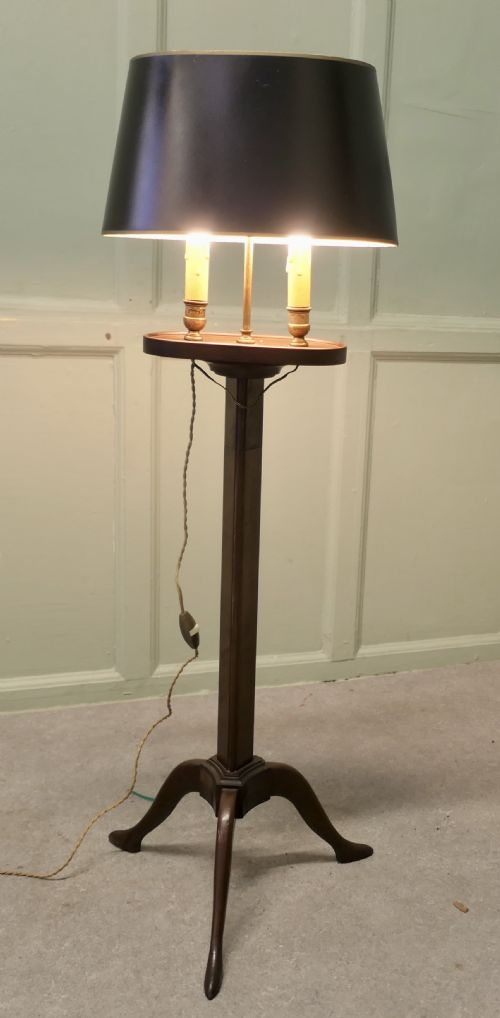
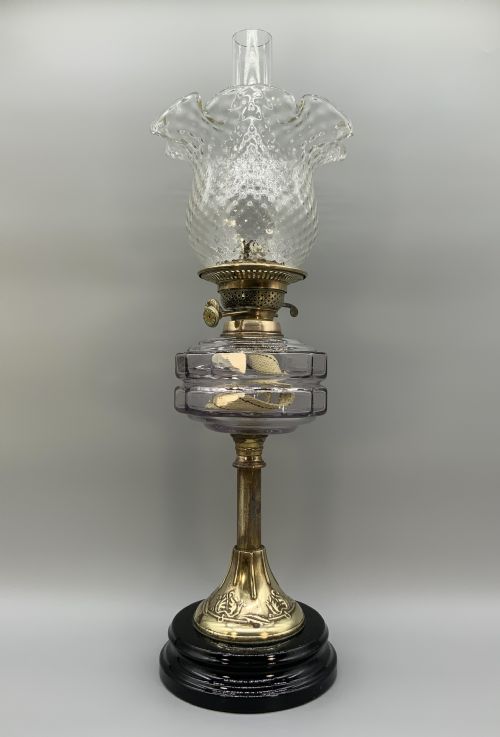
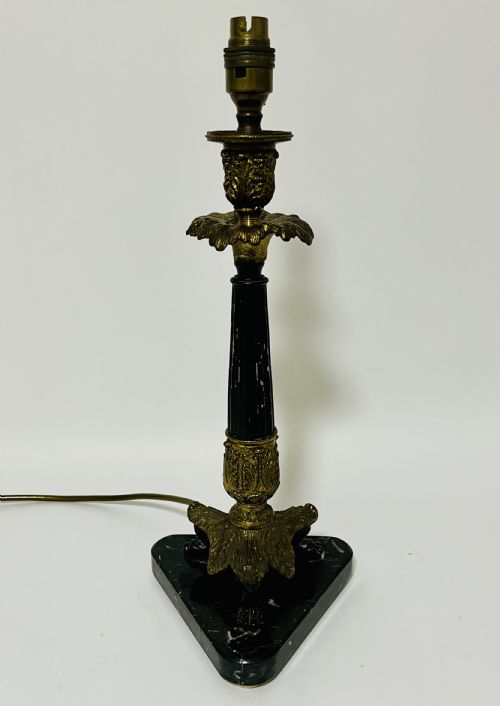
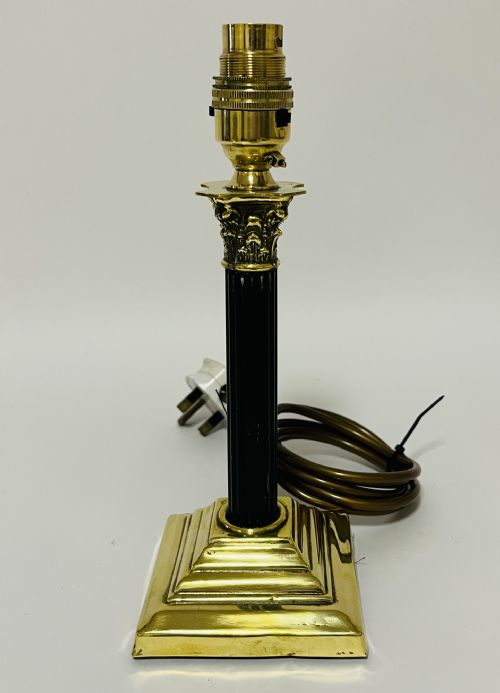
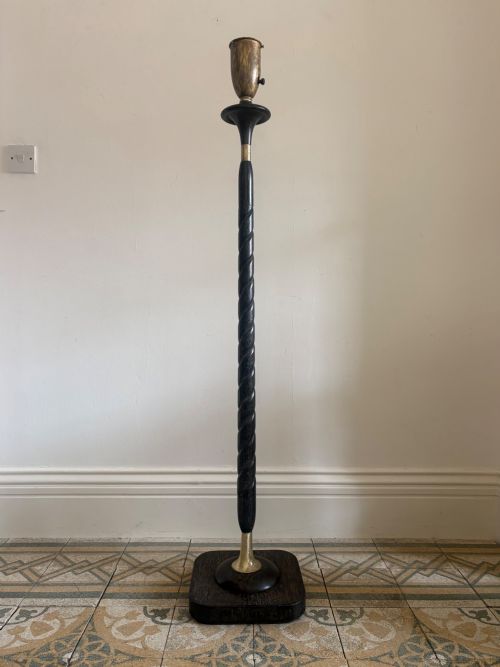
A black and brass lamp combines dark structural elements, such as ebonised wood, toleware, cast iron, or black leather, with polished or gilt brass fittings. These pieces range from converted Victorian oil lamps and adjustable bouillotte desk lights to floor-standing standard lamps.
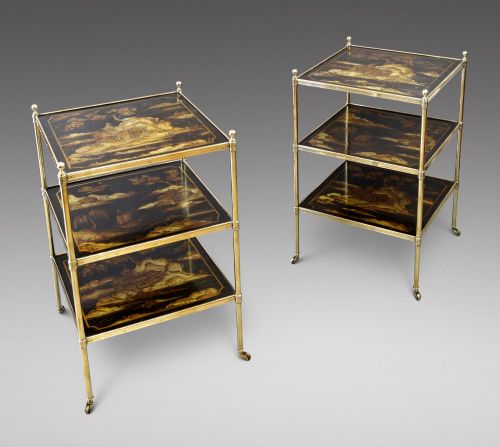
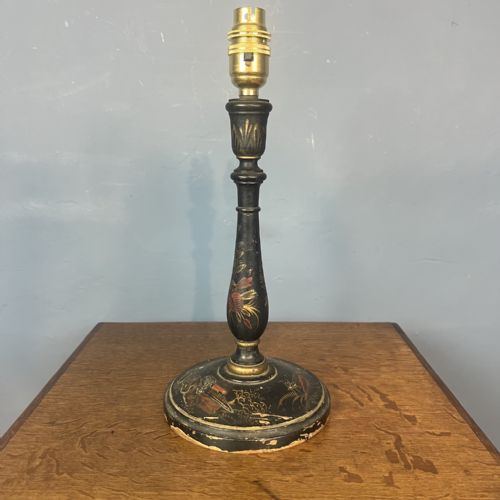
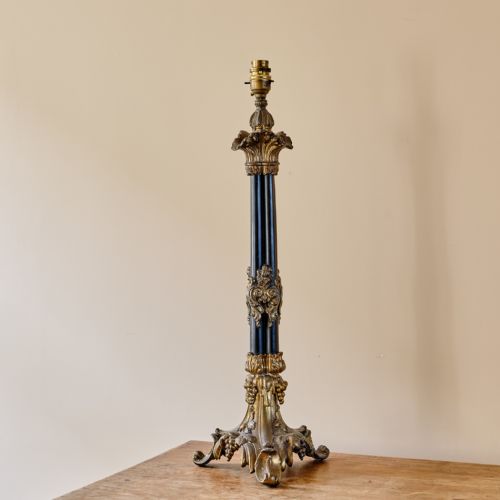
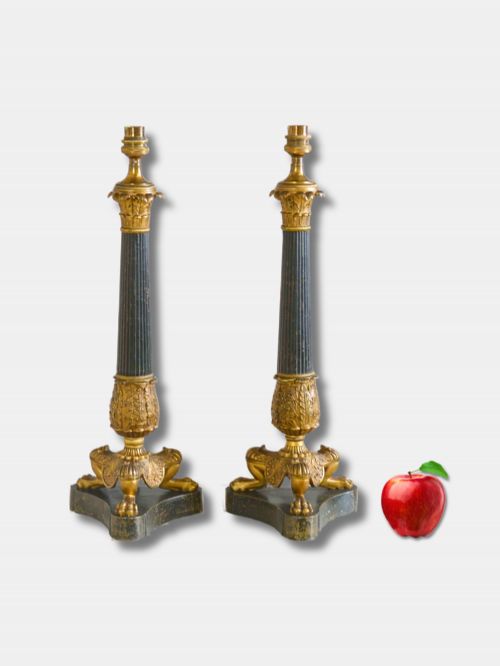
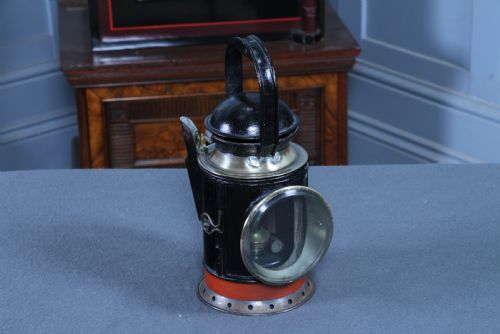
The selection includes utilitarian railway lanterns and ship's gimbal lights alongside decorative French Empire columns and Chinoiserie lacquer designs. Buyers frequently encounter nineteenth-century standard lamps and twentieth-century table forms on this page.
Origins span British and French workshops, encompassing styles from Neoclassical and Art Nouveau to mid-century modern pieces. The dual tones offer versatility across traditional and contemporary interiors.
Materials and construction
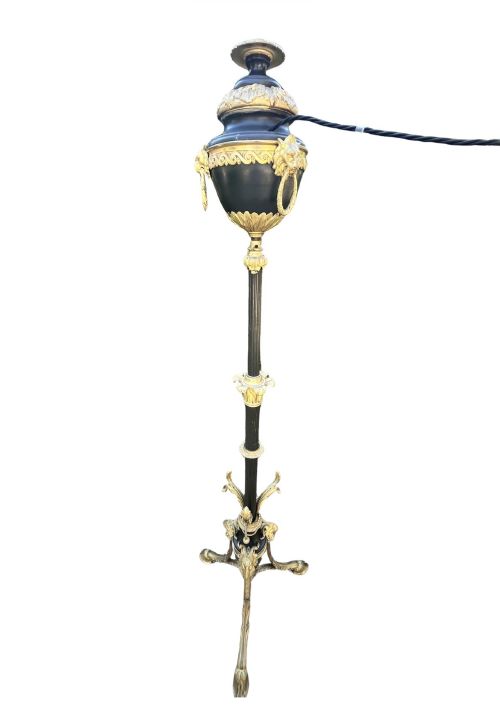
Construction relies heavily on cast and spun brass combined with heavy iron, marble bases, or ebonised timber to provide stability. Toleware shades and lacquered surfaces introduce deep black tones through painted or japanning techniques.
Many items begin life as oil lamps, carriage lights, or railway lanterns before later conversion to electricity. Details like lions' paw feet, Corinthian capitals, and adjustable stems demonstrate traditional metalworking skill.
Materials across these listings include solid brass, gilt bronze, toleware, ebonised wood, marble, and cast iron.
Judging quality in black and brass lighting
Quality rests in the crispness of the casting detail, particularly on column capitals, bases, and mounts. Superior pieces display substantial weight in their metal components and genuine hand-finished patination rather than uniform modern spray paint.
The integrity of the original components, such as weighted bases, period burners, and intact glass or tole shades, distinguishes high-grade examples. Evidence of maker craftsmanship, clean proportions, and thoughtful conversions preserves the integrity of the piece.
Maison Bagues·Rene Mathieu·Daris
The Black and Brass Lamp Glossary
- Bouillotte lamp
- A traditional adjustable desk or table light featuring a central shaft, multiple candle arms, and a distinctive toleware shade.
- Toleware
- Enamelled or japanned metalware, frequently painted black and decorated with gilt accents in French and English designs.
- Gimbal
- A pivoted ring mounting that allows a ship's lamp or lantern to remain level despite the rolling motion of a vessel.
- Ebonised wood
- Timber treated with a stain or finish to imitate ebony, providing a deep black surface often seen on nineteenth-century bases.
Black and Brass Lamp: Frequently Asked Questions
How do I choose between a table lamp and a standard lamp?
Table lamps suit sideboards, desks, and smaller tables where they provide concentrated task or ambient lighting. Standard lamps stand directly on the floor to illuminate larger seating areas or dark corners.
Consider the scale of the room and the height of surrounding furniture before deciding on floor placement versus tabletop display.
Were these lamps originally electric?
Many older pieces began as oil lamps, candle lamps, or railway lanterns before being professionally converted to electricity at a later date. This adaptation allows historical metalwork to function safely in modern homes.
Converted pieces often retain original burners, fonts, or side handles that reveal their utilitarian past.
How do I care for black and brass finishes?
Dust brass components gently with a dry microfibre cloth to maintain the metallic sheen without stripping aged patination. Avoid abrasive metal polishes that can damage lacquered or blackened surfaces.
Keep painted toleware and ebonised wood away from direct moisture and strong sunlight to preserve the deep dark finish.
What period styles are most common?
Victorian and Edwardian designs appear frequently, alongside French Empire and Neoclassical interpretations from the nineteenth and early twentieth centuries. These pieces often feature classical architectural motifs like columns and urns.
Later mid-century examples offer cleaner, more minimalist silhouettes while retaining the classic dual-tone palette.