
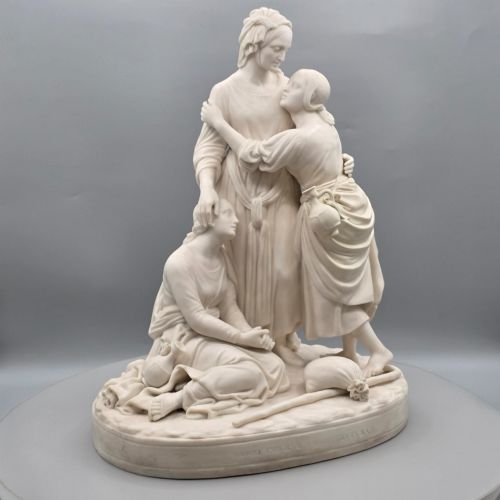
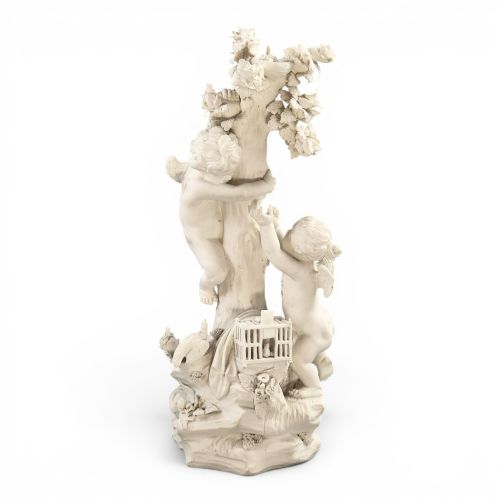


Biscuit Porcelain Figure Group
These biscuit porcelain figure group pieces are unglazed ceramic sculptures capturing classical and figurative scenes for display.
Biscuit Porcelain Figure Group
When you search for a biscuit porcelain figure group, you encounter unglazed ceramic sculptures shaped into multi-figure compositions from several eras. The selection on this page ranges from Georgian works down to pieces made around 1900.
The versions you are most likely to meet span the Georgian period, the Victorian era, and the turn of the twentieth century. These groups depict classical mythology, allegorical subjects, literary narratives, and domestic scenes.
Makers recorded in the listings include Derby, Minton, Copeland, and Triebner Ens & Co, along with Royal Dux. Formats vary from small cabinet figures to large sculptural groups.
How they were made
The manufacturing process relies on firing porcelain without a glaze, leaving a matte, marble-like surface texture. Parian ware, a specific formulation developed in the nineteenth century, imitates carved white marble.
Moulds captured intricate details of drapery, facial expressions, and anatomical forms before the firing stage. Pigment and gilt accents occasionally appear on specific elements of the figures to highlight details.
Listings span periods from Georgian years through to the 1900s, featuring materials such as Parian ware, pigment, and gilt.
What varies in quality
The complexity of the composition also defines the standard of the group. Multi-figure arrangements requiring advanced multipart moulding demand greater skill than simpler single-form sculptures.
Derby·Minton·Copeland·Triebner Ens & Co·Royal Dux
The Biscuit Porcelain Figure Group Glossary
- Biscuit porcelain
- Porcelain fired once without a glaze, producing a matte, porous white surface. This finish is also frequently referred to as bisque.
- Parian ware
- A fine-grained British parian porcelain developed in the nineteenth century to imitate carved marble. It vitrifies at a lower temperature than hard-paste porcelain.
- Neoclassical
- A style drawing inspiration from the classical art and culture of ancient Greece and Rome. It appears across Georgian and Victorian figure groups.
- Neo-Rococo
- A revival style characterised by asymmetrical scrolls, natural motifs, and ornate theatrical movement. It influences the decorative details of several nineteenth-century figures.
Biscuit Porcelain Figure Group: Frequently Asked Questions
What is biscuit porcelain?
Biscuit porcelain is unglazed ceramic ware that has been fired to a matte, porous finish resembling white marble.
This surface treatment allows light to penetrate slightly beneath the top layer, accentuating the sculptural details modelled by the maker.
How do I clean them?
Clean these delicate unglazed surfaces with a dry, soft brush to remove surface dust safely.
Avoid using water or liquid cleaners, as the porous nature of biscuit porcelain absorbs moisture and holds stains.
Are these figures glazed?
These figures lack any protective glass glaze across the body, which distinguishes them from standard finished porcelain.
The absence of glaze creates the characteristic dry, stone-like texture valued by collectors of this medium.
What subjects do they show?
The subjects range from classical mythology and literary narratives to domestic scenes and allegorical figures.
Pieces often depict multi-figure arrangements telling a specific story, such as classical deities or historical allegories.