




Birmingham Hallmarked Silver Frame
These birmingham hallmarked silver frame pieces combine sterling silver fronts with wooden backs, offering a sturdy way to display family portraits.
Birmingham Hallmarked Silver Frame
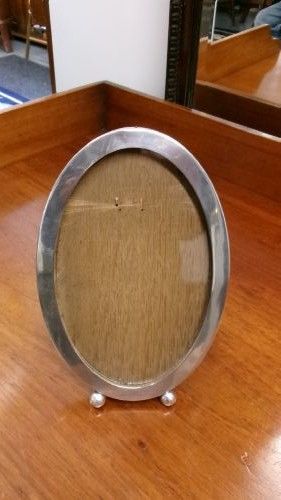
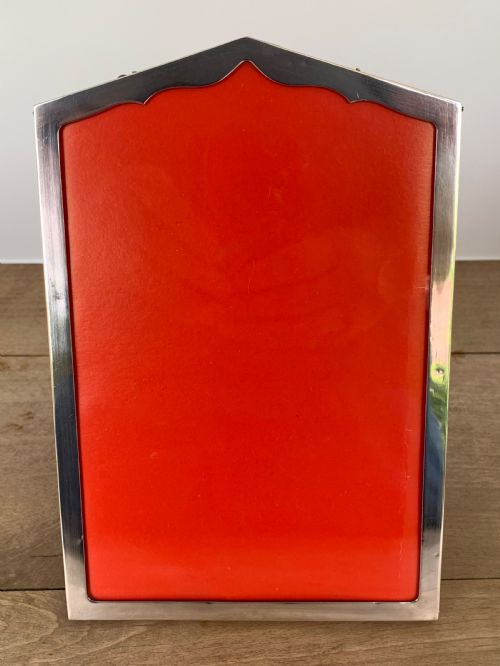
A birmingham hallmarked silver frame is a desk or mantel accessory designed to hold portrait or landscape photographs behind glass. These items span the Edwardian and George V periods, featuring shapes from simple ovals and octagons to rectangular forms.
Most examples you encounter on this page date from the early twentieth century, specifically between nineteen hundred and nineteen thirty. Makers utilised distinct aesthetic movements, resulting in pieces reflecting Edwardian grace, Art Nouveau curves, and geometric Art Deco lines.
The backs are typically constructed from wood, often supported by a hinged stand covered in fabric, velvet, silk, or leatherette. These supporting elements allow the photograph frame to sit securely on desks, tables, or mantelpieces.
How they were made
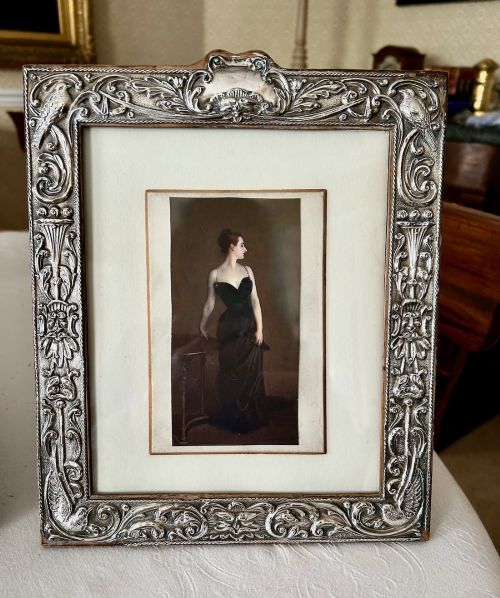
Makers fashioned the front plates from sterling silver, shaping the metal through stamping, piercing, or hand engraving. Surfaces often display planished textures or delicate floral borders stamped directly into the silver sheet.
The silver front is affixed to a wooden inner core or backing board, which provides structural rigidity to the overall object. Glass sits behind the silver aperture window to protect the paper photograph contained within.
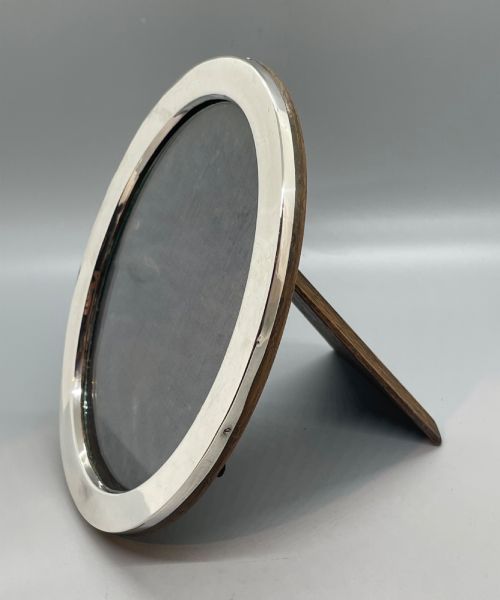
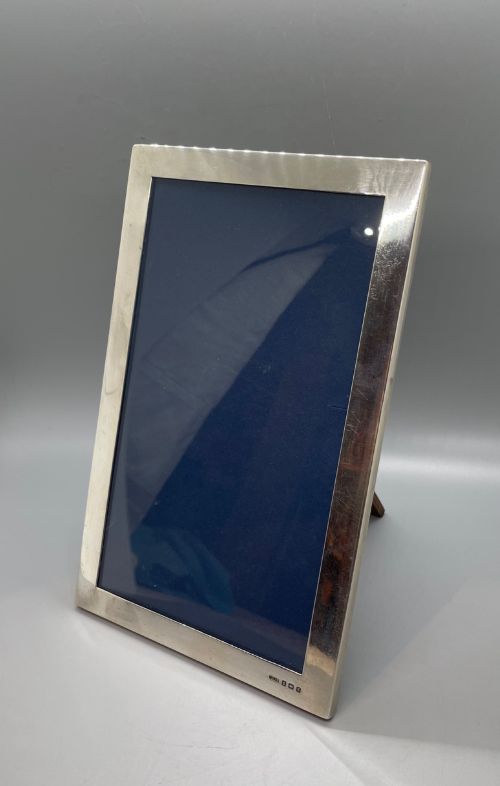
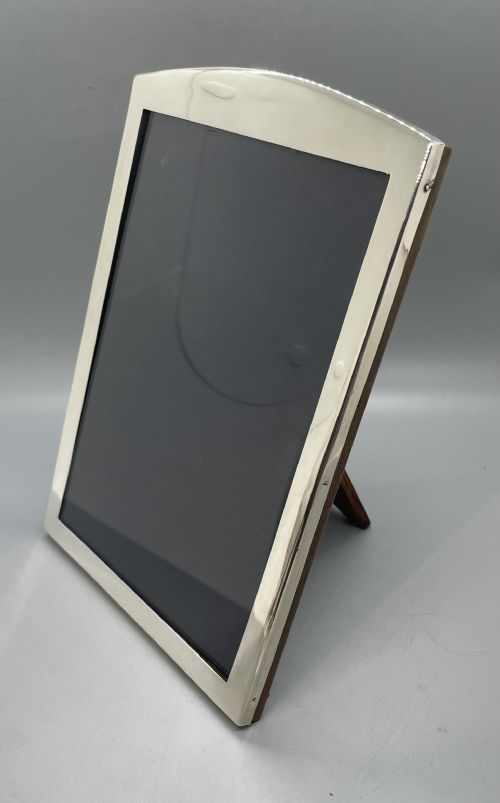
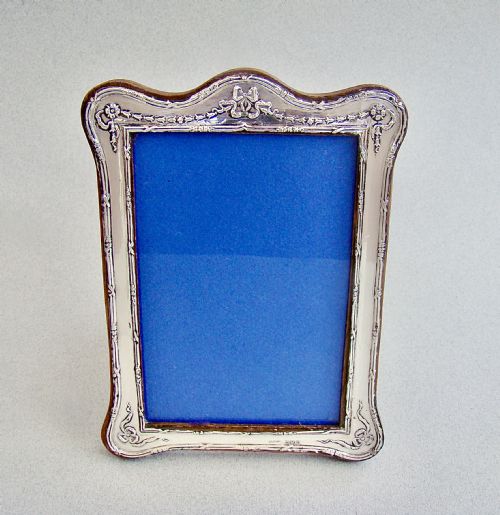
Makers working in Birmingham produced both portrait and landscape photo frames utilising stamped floral borders and smooth oval apertures.
What varies in quality
Quality depends upon the weight of the sterling silver used in the front plate and the crispness of the engraved or stamped decoration. Heavier gauge silver resists bending and maintains structural integrity around the easel hinge.
The condition of the original wooden backing, internal wooden inserts, and supporting easel mechanism influences desirability. Intact fabric, velvet, silk, or leatherette coverings on the reverse add considerable appeal to collectors.
W.I. Broadway & Co·Henry Matthews·Deakin & Francis·Mappin & Webb
The Birmingham Hallmarked Silver Frame Glossary
- Birmingham Hallmark
- An official stamp indicating that an item was tested and assayed at the Birmingham Assay Office. This mark confirms the standard of sterling silver.
- Easel Back
- A hinged wooden support attached to the reverse of the picture frame. It allows the object to stand upright on a flat surface.
- Planished
- A metalworking surface finish created by hammering with a round-faced tool. This technique produces regular, small facet marks across the silver.
- Tortoiseshell
- A mottled brown material derived from the shell of certain turtle species. It occasionally forms contrasting backing panels behind pierced silver frames.
Birmingham Hallmarked Silver Frame: Frequently Asked Questions
How do I date a silver frame?
You can determine the date by examining the Birmingham assay office hallmarks stamped into the silver border. These official marks include a specific letter code that corresponds to the year of manufacture.
Style also offers clues, as Edwardian examples often feature scrolling floral motifs, while Art Deco pieces display geometric lines from the nineteen twenties.
What materials support the silver front?
The front plate of sterling silver sits over a wooden backing board that gives the accessory its physical depth. This wooden core provides the rigid foundation necessary to hold the glass and photograph securely in place.
A hinged wooden strut attached to the rear allows the piece to rest at an angle. This strut is frequently covered in materials like velvet, silk, or leatherette.
How should I clean the silver?
You should use a soft, non-abrasive cloth specifically designed for polishing sterling silver. Take care to avoid getting polish or moisture onto the wooden backing or fabric linings on the reverse.
Gentle cleaning preserves the stamped decoration and keeps the Birmingham hallmarks legible. Avoid harsh chemical dips that can strip the natural patina from older pieces.