
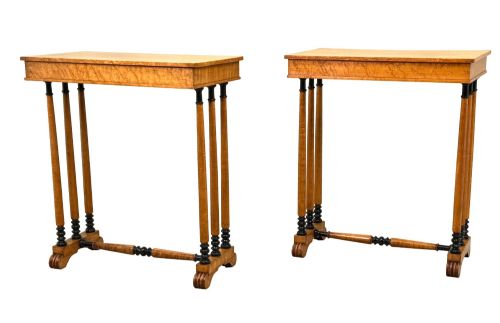
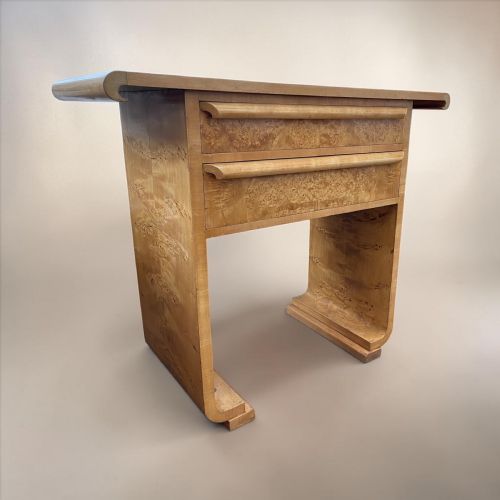


Birdseye Maple Side Table
A birdseye maple side table brings quiet distinction to a room through timber with characteristic swirling eyes.
Birdseye Maple Side Table
A birdseye maple side table encompasses occasional tables, console tables, sofa tables, and bedside cabinets found across this collection. These pieces draw the eye through distinctive figured wood grain and serve practical functions in sitting rooms and bedrooms.
The versions most commonly met span the Regency period through to the Art Deco era and the late nineteenth century. Makers applied this decorative timber to forms ranging from simple occasional tables to elaborate two-tier designs and nests of tables.
Makers often combined birdseye maple with contrasting elements such as ebonised wood or walnut to highlight the natural figure of the timber. Surviving examples demonstrate how cabinet makers utilised this distinctive material for both domestic utility and display.
How they were made
Cabinet makers selected birdseye maple and burr maple veneers for their remarkable figured grain, applying them skillfully to solid timber carcases. They often contrasted the pale, spotted maple with dark ebonised wood or walnut borders to frame the central pattern.
Construction relied upon traditional joinery methods suited to the particular period, from Regency craftsmanship to twentieth-century workshop production. Workshops occasionally incorporated brass fittings and leather inserts to finish writing and serving surfaces.
Materials recorded across the inventory include birdseye maple, burr maple, ebonised wood, walnut, brass, and leather.
What varies in quality
The quality of a birdseye maple side table rests upon the density and visual impact of the figuring across the timber surface. Superior examples display an even, pronounced pattern across the primary planes without awkward joins in the veneer.
Proportion and the handling of secondary timbers, such as walnut or ebonised details, distinguish finer workshop production from standard commercial output. The crispness of turning on legs and the integrity of the underlying construction define the upper tier of pieces.
Fortnum and Mason·The Hille Furniture Company
The Birdseye Maple Side Table Glossary
- Birdseye maple
- A figure in maple wood where the grain swirls in small circular dots resembling bird eyes. This appearance results from local depressions in the annual rings.
- Biedermeier
- A Central European style dating from the nineteenth century characterised by utilitarian comfort and clean lines. Furniture from this period emphasises the natural beauty of wood grain over heavy ornamentation.
- Regency
- An English design period spanning the early nineteenth century noted for classical restraint and architectural lines. Pieces often feature refined proportions and select timber veneers.
- Ebonised wood
- Timber treated with a dark stain or finish to imitate ebony. Cabinet makers used this technique to provide stark visual contrast against lighter woods like maple.
Birdseye Maple Side Table: Frequently Asked Questions
What periods do these tables come from?
The pieces span several distinct eras, notably the Regency period, the late nineteenth century, and the nineteen-thirties.
Art Deco examples sit alongside earlier nineteenth-century designs, reflecting changing domestic tastes for figured wood.
How should I care for the wood?
Keep the timber away from direct heat sources and strong sunlight to prevent the veneer from drying out.
Regular dusting with a soft cloth preserves the polished finish without the need for heavy chemical polishes.
Where were these tables used originally?
Owners placed these compact tables in drawing rooms, hallways, and bedrooms for serving drinks, holding books, or writing.
Their versatile proportions allowed them to fit easily beside seating or against walls as console surfaces.
How do I identify birdseye maple?
Look for small, circular disruptions in the grain pattern that resemble tiny eyes scattered across a pale background.
Cabinet makers valued this distinctive figure for principal display surfaces on high-quality furniture.