



Bird Motif Bronze
Bird motif bronze pieces bring the natural world indoors through enduring metalwork, offering collectors finely detailed avian subjects rendered in lasting metal.
Bird Motif Bronze
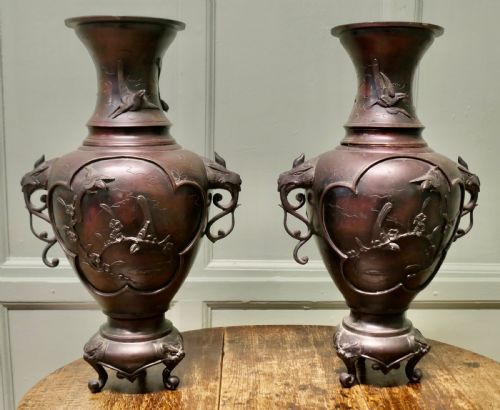
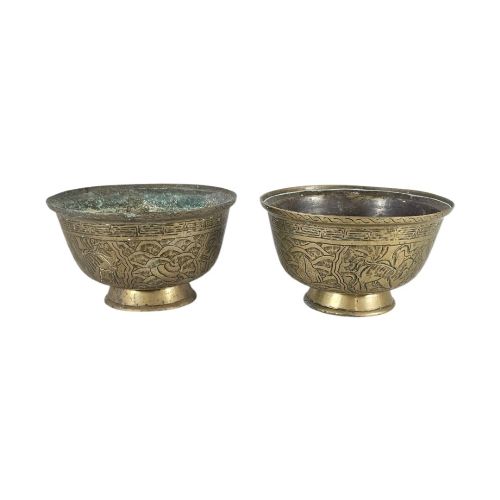
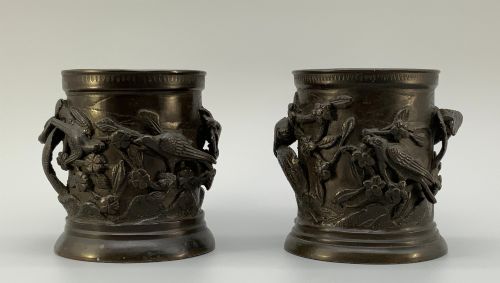
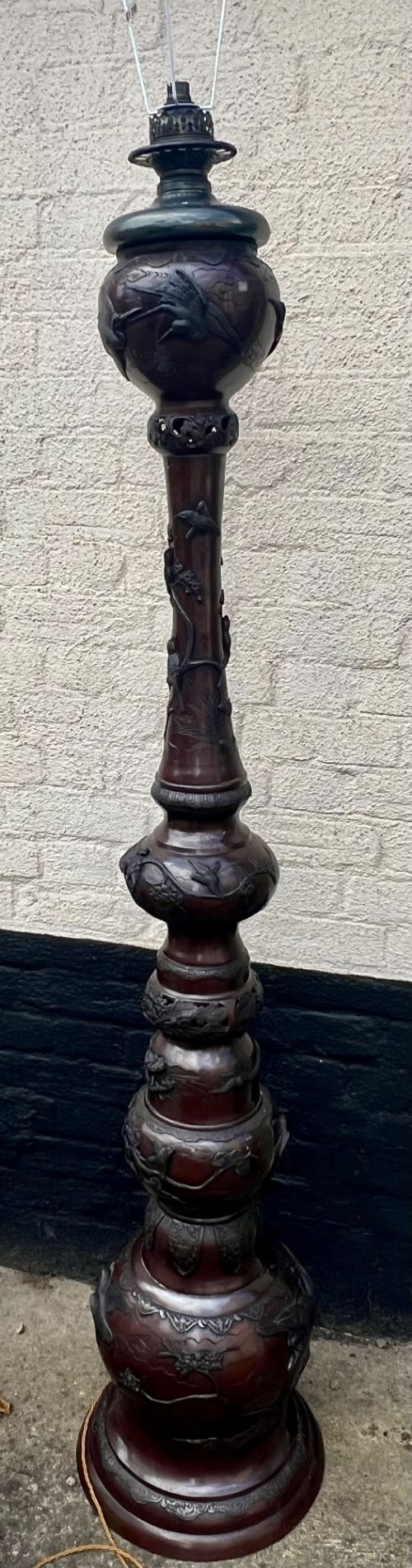
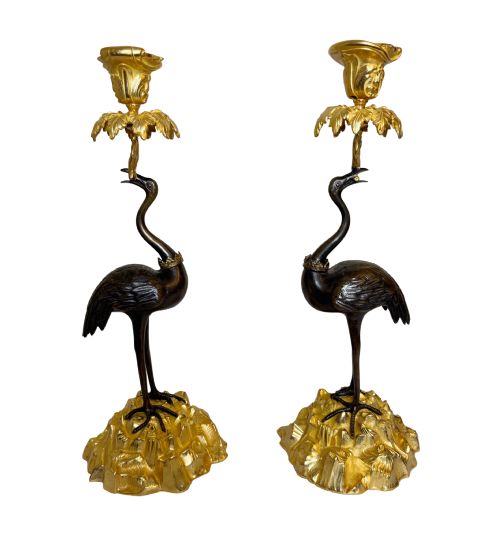
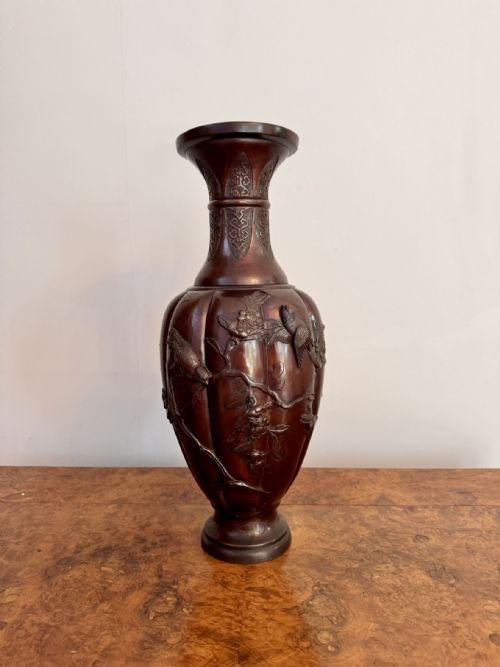
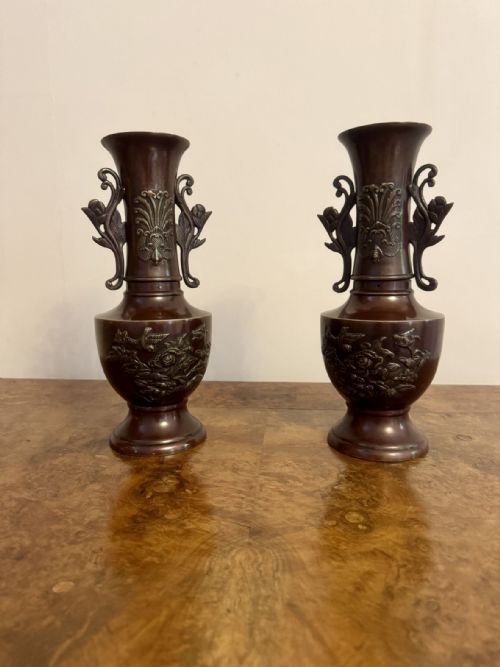
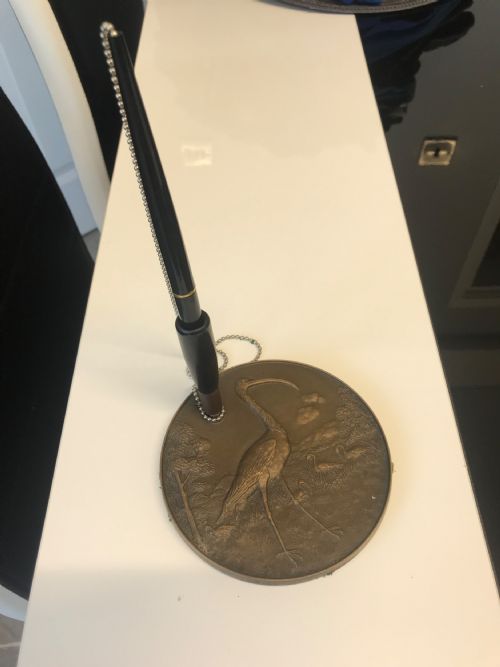
A bird motif bronze encompasses decorative items such as vases, bowls, chargers, floor lamps, candlesticks, and desk accessories featuring avian imagery. These objects bring together functional forms and sculptural metalwork, capturing birds amongst natural elements.
The pieces available here are predominantly of Asian origin, spanning Chinese and Japanese workshops from the nineteenth and early twentieth centuries. Japanese Meiji period examples and late Qing dynasty pieces dominate the selection, alongside Victorian items.
Forms range from large altar vases and twin-handled urns to smaller desk accessories like pen rests and medallion trays. Buyers find both individual items and balanced pairs suitable for display.
How they were made
Makers utilised bronze, brass, patinated bronze, and gilt bronze, often incorporating enamel via cloisonné techniques to add colour to chargers and decorative plates. Metal is cast and worked to shape substantial items like large floor lamps and heavy bowls.
Surface treatments include patination, gilding, and enamelling, which highlight the feathered details of birds such as flamingos, ibises, and other avian subjects. These finishes create contrast against the dark or gilded metal surfaces.
Bird Motif Bronze Retail Price Guide 2026
Typical asking prices for bird motif bronze among the pieces listed under this phrase on Sellingantiques today, from the lower quarter to the upper quarter. They describe what is for sale here now, not the wider market.
What varies in quality
Quality rests in the crispness of the casting and the sensitivity of the avian detail, distinguishing mass-produced commercial items from finer works. Master metalworkers achieved subtle textures in plumage and natural surroundings.
Weight and scale also define the hierarchy of these objects, with substantial pieces like heavy bronze centrepieces and large pairs of altar vases representing greater ambition in design and execution.
A.Cohen & Co Ltd London
The Bird Motif Bronze Glossary
- Patinated Bronze
- Bronze treated with chemicals or heat to alter its surface colour and texture. This process protects the metal while enhancing the visual depth of decorative motifs.
- Cloisonne
- An enamelling technique where wires are soldered to a metal base to create compartments for coloured paste. These are then fired and polished smooth.
- Meiji Period
- A phase in Japanese history spanning from eighteen sixty-eight to nineteen twelve, noted for opening trade with the West and exceptional metalwork. Pieces from this era often feature highly detailed flora and fauna.
- Altar Vases
- Large decorative vessels originally designed for ceremonial placement in temples or domestic shrines. They frequently occur as balanced pairs in metalwork.
- Gilt Bronze
- Metal coated with a thin layer of gold leaf or applied gold paint to produce a rich, luminous surface finish.
Bird Motif Bronze: Frequently Asked Questions
What periods do these bronzes come from?
The listings span the nineteenth and early twentieth centuries, encompassing the Victorian era, the Meiji period in Japan, and the late Qing dynasty in China. Dates cluster around the late nineteenth century.
Items range from eighteenth-eighties altar vases to nineteen-twenties desk accessories, reflecting distinct historical periods of metalworking craftsmanship.
How were these bronze objects used originally?
Many items served domestic decorative purposes, such as vases for floral displays, chargers for wall hanging or table display, and candlesticks for illumination.
Others had specific functions, including desk pen rests, floor lamps, and ritual altar vessels designed for formal spaces.
What materials accompany the bronze in these pieces?
Makers combined bronze with brass, enamel, and gilt finishes to create visual contrast on surfaces. Cloisonné enamel frequently introduces vibrant colour to Japanese chargers.
Patination techniques darken the bronze background, allowing raised bird and blossom motifs to stand out clearly.
How do I care for antique bronze?
Keep bronze objects away from direct moisture and extreme temperature fluctuations to protect the original patination and metal surfaces. Dust gently with a soft, dry cloth.
Avoid abrasive cleaners or metal polishes that can strip away historic patinas and delicate gilt or enamel work.