




Birch Occasional Table
A birch occasional table brings bright, figured wood and practical utility to a room, ranging from Swedish Biedermeier forms to clean Art Deco designs.
Birch Occasional Table
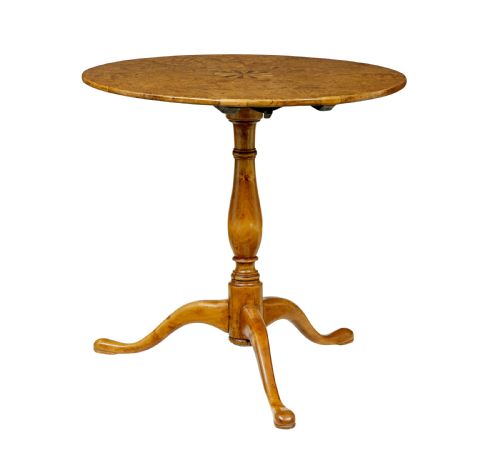
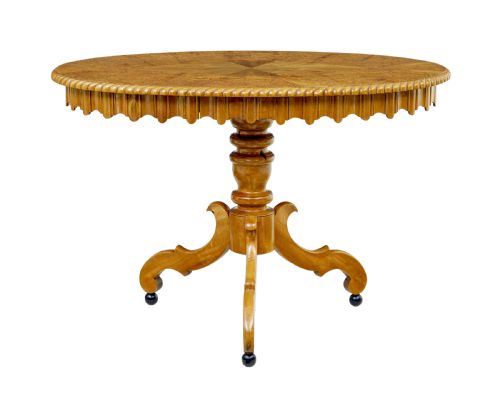
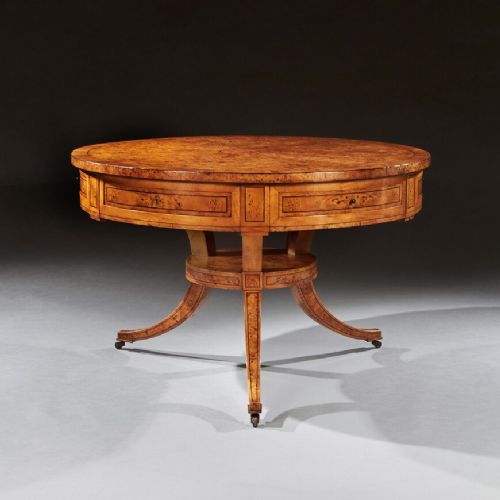
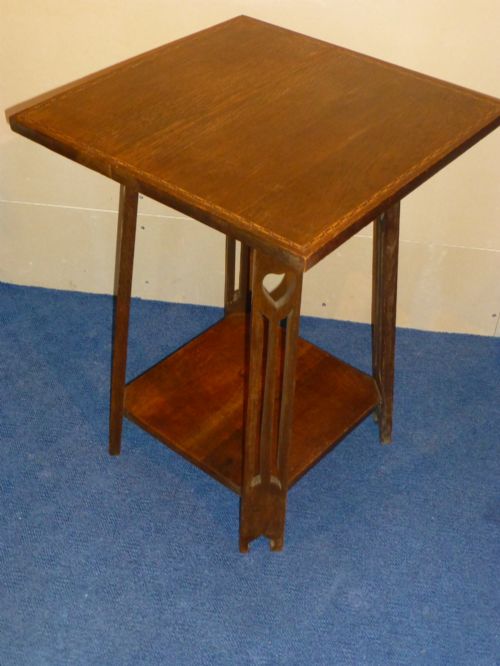
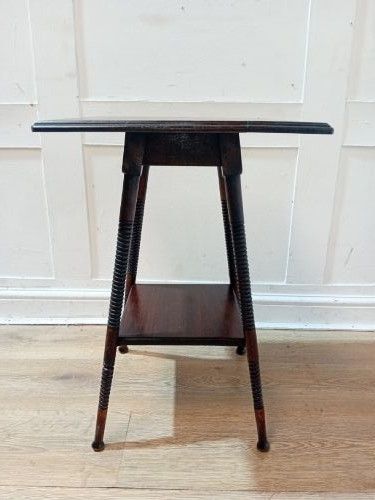
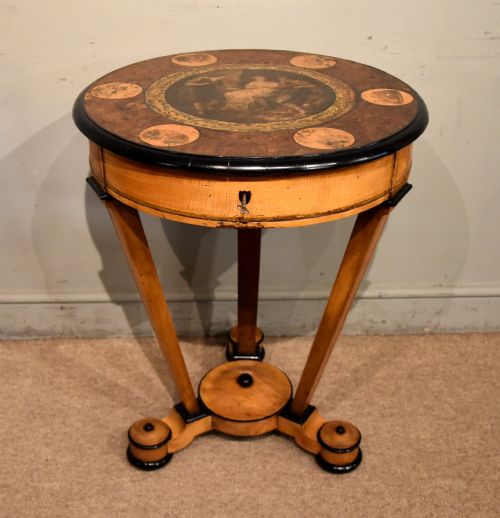
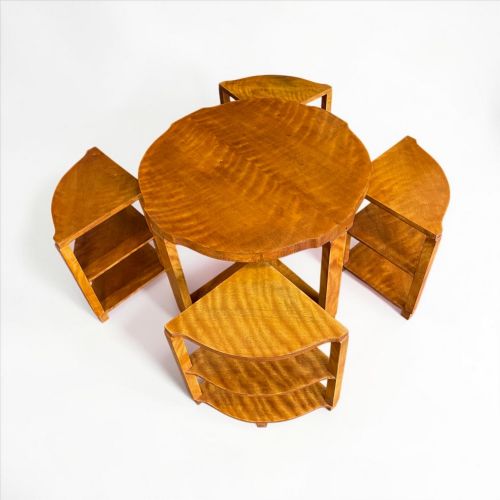
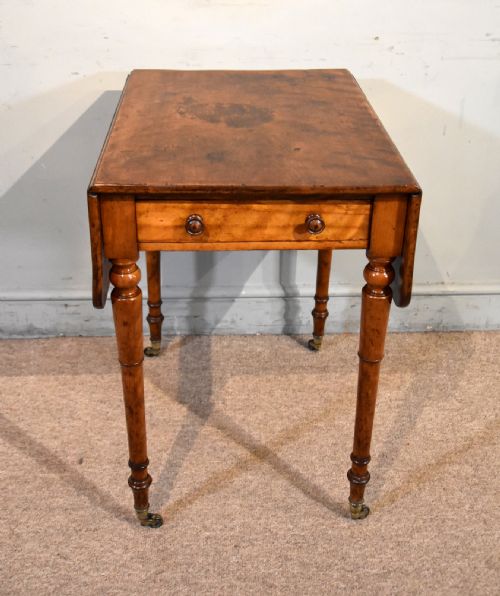
A birch occasional table appears in various guises across this page, including side tables, lamp tables, tripod tables, and larger sofa or centre tables. Most pieces trace their origins to 19th-century Sweden and Britain, spanning styles from Biedermeier and Empire Revival to Arts and Crafts and Art Deco.
The most common formats are the oval or circular occasional table, often supported by a central pillar and tripod base, or straightforward rectangular side tables. Makers adapted the pale timber for domestic duties, producing sewing tables, games tables, and nests alongside simple lamp stands.
Scandinavian workshops favour figured veneers like burr birch and Karelian birch, while British pieces often utilise satin birch or incorporate inlay and ebonised details. The forms remain portable and compact, designed to sit beside seating or in hallways.
Materials and Technique
Cabinetmakers used solid birch for structural frames and turned legs, while selecting highly figured veneers such as burr birch and Karelian birch for table tops to showcase dramatic grain patterns. These veneers were laid over secondary woods like pine or oak, creating stable surfaces less prone to warping.
Surface ornamentation involved contrasting inlays of ebony or chequered woods, alongside painted accents, ebonised wood details, and occasionally cast brass sabots or ormolu mounts. French polishing or clear varnishing protected the pale timber while deepening the natural golden tone of the grain.
Birch Occasional Table Retail Price Guide 2026
Typical asking prices for birch occasional table among the pieces listed under this phrase on Sellingantiques today, from the lower quarter to the upper quarter. They describe what is for sale here now, not the wider market.
One late 19th-century sewing table arrived complete with its original interior contents, ready for forgotten threads.
Evaluating the Craft
Quality rests primarily on the selection and matching of the birch veneer. Top-tier examples display symmetrical, richly figured burr or Karelian birch across the entire top surface, whereas lesser pieces use plain timber or show repetitive grain patterning.
Construction methods distinguish standard production from finer cabinetmaking. Well-made tables feature tight joinery in pedestals and frames, precise inlay work without gaps, and stable sub-structures that prevent movement in the timber over time.
Liberty & Co.·William Birch·Johnstone and Jeanes·Cottier & Co.
The Birch Occasional Table Glossary
- Burr birch
- A growth deformity in the birch tree that produces dense, swirling cluster patterns when sliced into veneer. Cabinetmakers prize this timber for decorative table tops.
- Karelian birch
- A distinct subspecies of birch known for its deep, multifaceted golden figuring resembling crushed ice. It originates primarily from the northern European region of Karelia.
- Biedermeier
- A Central European style dominating the early to mid-19th century, prioritising clean domestic comfort, minimal ornamentation, and striking native wood grains.
- Satin birch
- A term historical makers applied to birch timber finished to a silky, luminous sheen. It often exhibits a natural chatoyant shimmer.
- Sabot
- A protective metal sleeve fitted to the foot of a table leg. Makers cast these in brass or bronze to finish formal designs.
Birch Occasional Table: Frequently Asked Questions
How do I care for a birch table top?
Keep the timber away from direct sunlight and excessive heat sources to prevent the veneer from drying out or splitting. Use coasters and dry cloths for dusting rather than harsh liquid polishes.
Applying a traditional beeswax occasionally helps nourish the polished surface and maintains the natural lustre of the pale wood.
Are these tables sturdy enough for daily use?
Most occasional tables were built for light domestic duties such as holding a lamp, books, or drinks. Tripod models require care on uneven floors, but four-legged side and sofa tables offer robust everyday support.
Their compact size makes them easy to reposition around a room as living arrangements change.
How can I tell a Swedish piece from a British one?
Swedish tables frequently display dramatic burr birch veneers combined with minimalist Biedermeier or Empire Revival silhouettes. They often embrace the pale, unadorned beauty of the timber.
British examples more commonly incorporate contrasting stringing, ebonised details, or distinct stylistic nods to the Arts and Crafts movement or regional cabinet shops.