

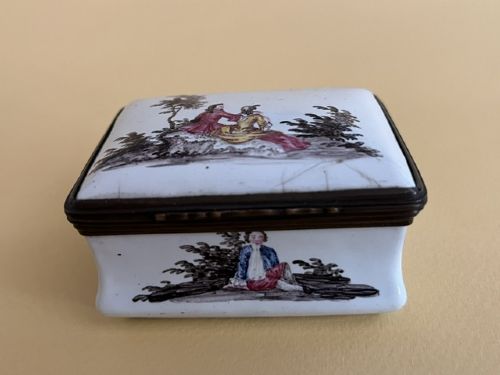


Bilston Enamel Pill Box
A bilston enamel pill box is a small, hinged Georgian container carrying hand-painted scenes and inscriptions that offers a tangible piece of eighteenth-century social history.
Bilston Enamel Pill Box
When searching for a bilston enamel pill box, collectors encounter small, pocket-sized containers used during the Georgian period for cosmetics, snuff or tokens of esteem. The examples on this page primarily take the form of patch boxes, snuff boxes, and bonbonnieres originating from the eighteenth and nineteenth centuries.
Most pieces date from the late eighteenth century, specifically around seventeen-eighty, and are attributed to the South Staffordshire region. Forms range from simple rectangular boxes to novelty shapes, often featuring specific inscriptions or pastoral scenes painted on the lid.
How they were made
These items are constructed from copper coated with an opaque white or coloured enamel, fired in a kiln to achieve a glossy finish. Artisans then hand-painted the surfaces with miniature scenes and inscriptions before mounting the enamel bodies in brass, gilt metal, or copper gilt mounts.
The technique relies on precise temperature control during the enamel firing process to bond the vitreous coating to the metal base without cracking. Metal hinges and rims were then fitted to secure the lid and base together.
Bilston Enamel Pill Box Retail Price Guide 2026
Typical asking prices for bilston enamel pill box among the pieces listed under this phrase on Sellingantiques today, from the lower quarter to the upper quarter. They describe what is for sale here now, not the wider market.
One eighteenth-century box bears the inscription 'a token of esteem', proving that passive-aggressive gift-giving has deep historical roots.
What varies in quality
The standard of a piece is defined by the fineness and detail of the hand-painted decoration on the enamel surface. Crisp execution of pastoral scenes, musicians in parkland, or legible inscriptions separates finer examples from simpler, standard production.
The quality of the metal mounts and the preservation of the enamel glaze also determine distinction within the range. Intact gilding on the brass rims and minimal crazing or loss to the enamel body elevate the overall merit of the object.
The Bilston Enamel Pill Box Glossary
- Bonbonniere
- A small ornamental box intended to hold sweets or sugar plums. They frequently feature hinged lids and detailed painted scenes.
- South Staffordshire
- The English region encompassing Bilston and other towns renowned for eighteenth-century enamel production. This area served as a primary centre for painted copper boxes.
- Gilt metal
- Metal that has been treated with a thin layer of gold or gold-coloured wash. It provides a decorative metallic edge to the enamel body.
Bilston Enamel Pill Box: Frequently Asked Questions
What were patch boxes used for?
Georgian patch boxes held small silk patches that society figures applied to their faces for cosmetic effect or to hide blemishes. They were pocket-sized accessories kept close at hand.
Over time, these versatile containers were also utilised for pills, snuff, or as sentimental tokens given between acquaintances.
How do I date a bilston enamel box?
Dating relies on stylistic clues, mounting techniques, and the type of enamel colours used across different periods. Eighteenth-century examples often feature specific copper-gilt mounts and hand-painted inscriptions.
Later nineteenth-century pieces display variations in the brilliance of the enamel and the execution of the painted miniature scenes on the lid.
Are these boxes made of porcelain?
No, these pieces are constructed from a copper base covered in a melted glass coating known as enamel. This fused material provides a smooth, glossy surface suitable for miniature painting.
The metal base gives the container structural rigidity, distinguishing it from solid ceramic or porcelain wares of the same era.
How should I display enamel boxes?
Enamel boxes benefit from being kept out of direct sunlight to protect the pigments of the hand-painted scenes from fading. Displaying them in a dedicated cabinet safeguards the delicate copper and gilt mounts from accidental knocks.
Handling them gently by the body rather than relying solely on the tiny hinges helps preserve the structural integrity of the piece.