


Bijar Wool Carpet
A bijar wool carpet brings heavy Persian tribal structure and deep wool pile into a room, offering enduring warmth underfoot.
Bijar Wool Carpet
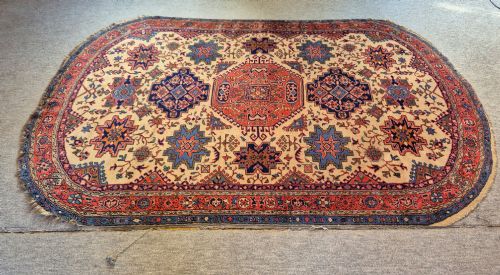
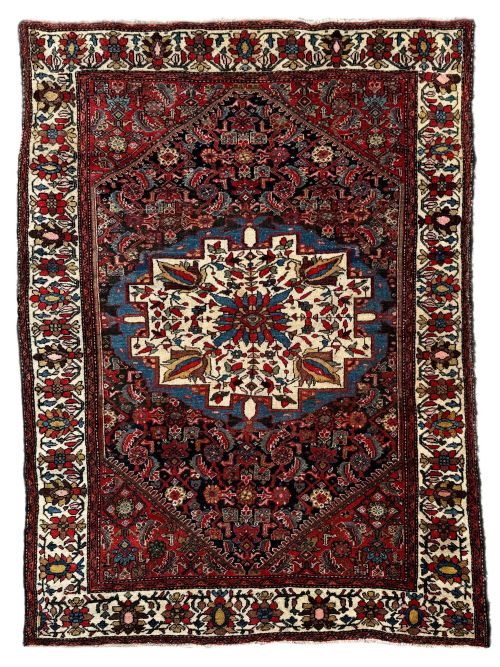
A bijar wool carpet is a heavy woven floor covering originating from West Persia and the Kurdish traditions of Bijar. When you search for this phrase, you meet room-size carpets, large kelleh formats, runners, and smaller tribal rugs spanning the nineteenth and early twentieth centuries.
The pieces on this page include traditional Persian designs, Kurdish village formats, and flatwoven kilims alongside pile rugs. Most examples date from the late nineteenth century up to the 1930s, displaying regional motifs and distinct lemon or deep ground colours.
How they were made
These carpets are built with wool pile knotted tightly onto cotton or wool foundations using traditional Persian techniques. Artisans hammered the weft down firmly between rows of knots, producing a dense, rigid structure known as the iron rug of Persia.
Dyers utilised natural materials to achieve rich field colours, while weavers incorporated hand-spun wool for durability and varied textural depth across the surface.
Listings feature pieces spanning from the 1870s through the 1930s, utilising wool, cotton, and hand-spun wool.
What varies in quality
Quality rests in the density of the weave and the crispness of the drawing within the Persian or Kurdish motifs. Tightly packed knots create the characteristic heavy handle and structural firmness that distinguish robust room-size examples.
The handling of natural dye colours and the precision of geometric or floral layouts separate standard village production from finer workshop pieces.
The Bijar Wool Carpet Glossary
- Kelleh
- A long, room-size carpet format traditionally used in Persian domestic spaces. It provides a narrow rectangular layout well-suited to corridors or large reception rooms.
- Kilim
- A flatwoven textile produced without a knotted pile. These pieces rely on interlocking weft techniques to form sharp geometric patterns.
- Weft
- The horizontal threads passed back and forth across the warp threads to hold the knots in place. In these carpets, the weft is often beaten down forcefully during construction.
- Warp
- The vertical foundation threads stretched tightly on the loom before knotting begins. Cotton and wool serve as the primary materials for these structural elements.
Bijar Wool Carpet: Frequently Asked Questions
How do I clean a bijar wool carpet?
Regular gentle vacuuming without a beater bar removes loose grit from the wool pile. Professional specialist cleaning handles deeper maintenance safely.
Avoid saturation and harsh chemical treatments to protect the natural dyes and traditional foundation structures.
Are these carpets suitable for heavy traffic?
The dense weave and sturdy wool construction make these floor coverings exceptionally durable. They withstand regular footfall in busy hallways and living areas.
Placing a suitable underlay underneath helps cushion the foundation and prevents unwanted sliding on hard floors.
How do I date an antique bijar carpet?
Dating relies on examining the specific wool types, dye palettes, and structural characteristics visible in the weave. Pieces from the nineteenth century often show hand-spun wool and distinct regional Kurdish colour combinations.
Comparing structural details against documented tribal examples helps narrow the period of origin between the 1870s and 1930s.
What is the iron rug of Persia?
This descriptive term refers to the exceptionally dense and heavy construction style of traditional Bijar carpets. The rigorous hammering of the weft creates a rigid, durable fabric.
This tight packing technique allows the carpet to resist heavy wear over generations of daily domestic use.