



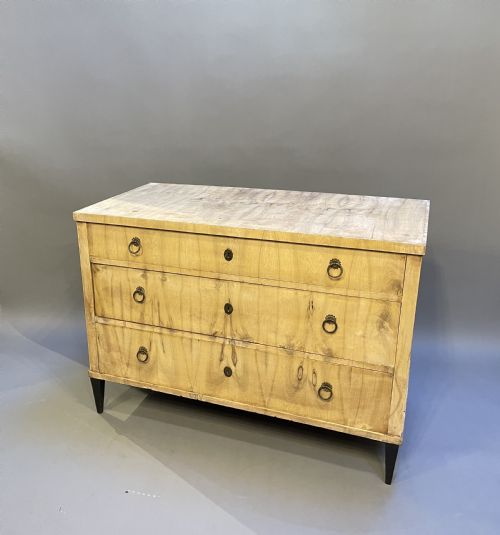


Biedermeier Commode Chest
A biedermeier commode chest brings understated elegance to a room, offering generous storage through clean lines and rich wood veneers.
Biedermeier Commode Chest
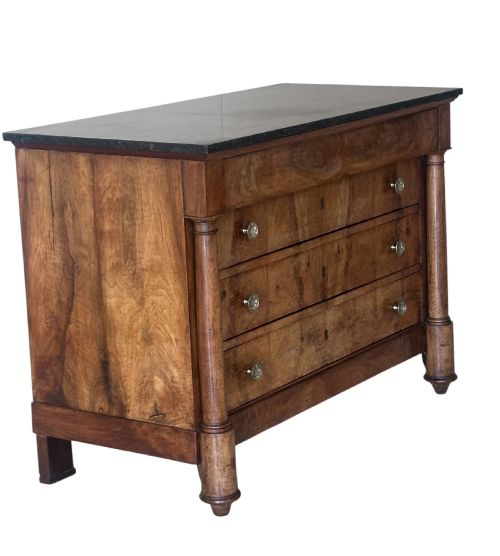
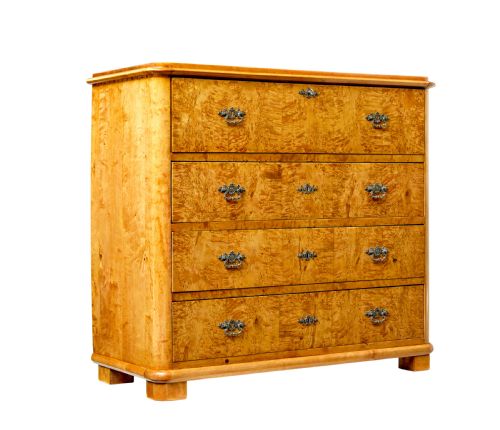
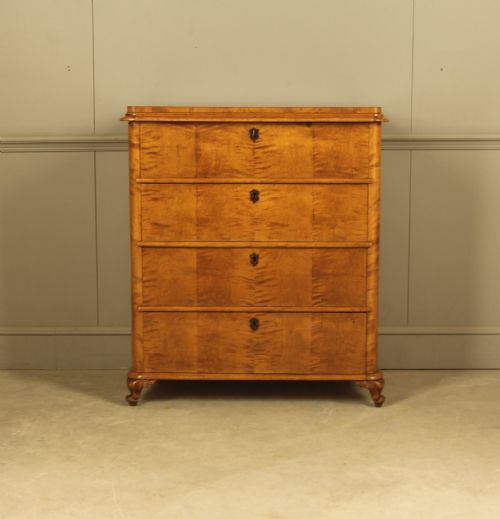
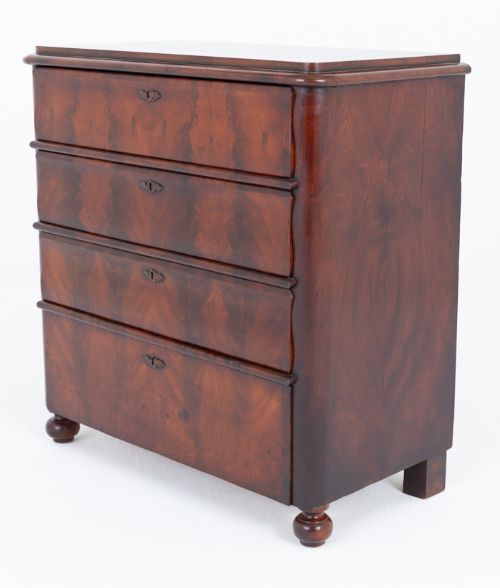
When you search for a biedermeier commode chest, you encounter practical storage furniture designed with architectural simplicity and geometric restraint. These pieces serve as functional chests of drawers or secretaire chests, often featuring multiple straight drawers for domestic use. The most common form on this page originates from nineteenth-century Sweden and continental Europe.
Makers shaped these chests of drawers to highlight the natural grain of timbers rather than relying on heavy ornamentation. Examples range from simple upright chests to sophisticated commodes and secretaire variants with drop-front writing compartments. The prevailing style spans nineteenth-century variants including French Empire, Charles X, and Scandinavian country interpretations.
Materials and construction
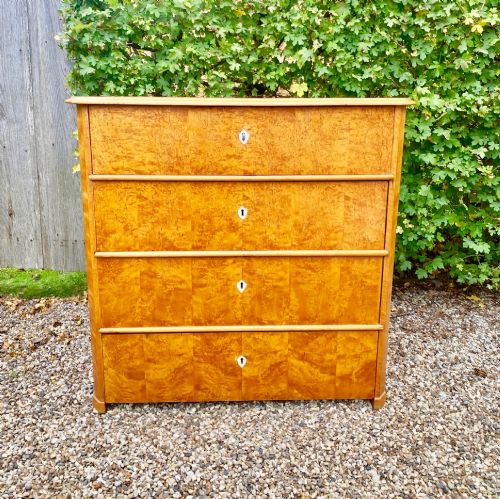
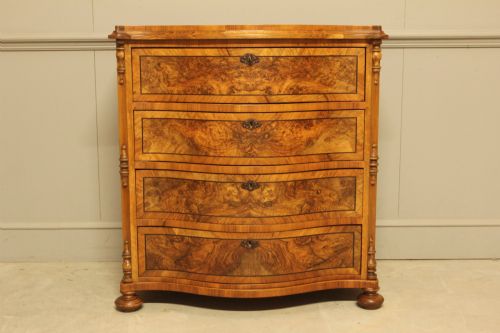
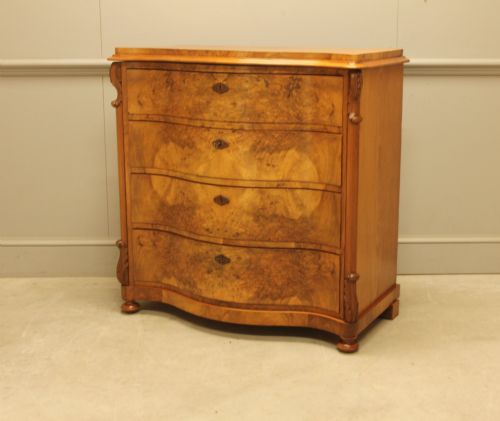
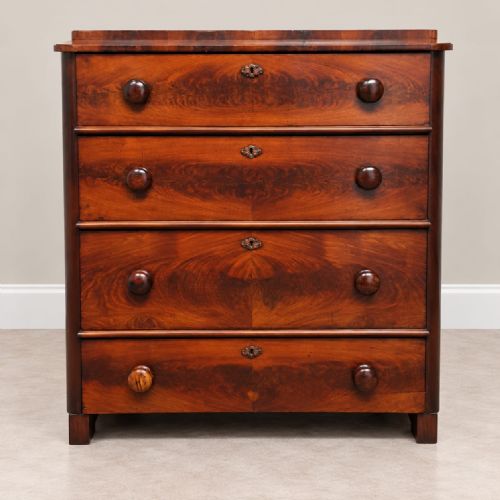
Cabinet makers built these pieces using solid pine or secondary woods as a carcase, applying decorative veneers across the exterior surfaces. Birch, flame birch, burr birch, and mahogany dominate the construction, selected for their striking natural figures and warmth. Walnut and elm also appear frequently, providing depth and variety in colour.
Surfaces often receive careful polishing to accentuate the grain patterns of tiger birch, satin birch, or burr walnut. Selected examples incorporate marble tops, metal mounts, or bone details to complement the woodwork. Construction methods rely on traditional joinery to ensure stability across large drawer fronts and carcase sides.
Biedermeier Commode Chest Retail Price Guide 2026
Typical asking prices for biedermeier commode chest among the pieces listed under this phrase on Sellingantiques today, from the lower quarter to the upper quarter. They describe what is for sale here now, not the wider market.
The listings span the nineteenth and twentieth centuries, incorporating periods such as Victorian and nineteen-thirty alongside primary materials like birch, mahogany, and walnut.
Evaluating quality and execution
Quality rests primarily on the selection and matching of wood veneers across the drawer fronts and carcase. Finer examples display symmetrical flame or burr patterns that wrap continuously around the chest, while simpler pieces utilise plainer timbers. The depth of the timber finishing and the crispness of any carved or inlaid details further distinguish standard production from superior work.
Proportion and structural integrity define the architectural success of each chest. Better pieces maintain balanced proportions between the carcase height and the arrangement of drawers, including specialised secretaire compartments. The integration of secondary materials, such as fitted marble tops or subtle brass hardware, marks the distinction between everyday utility and high-end craftsmanship.
Gemla Fabrikers
The Biedermeier Commode Chest Glossary
- Secretaire chest
- A chest of drawers incorporating a specialised fold-down writing drawer with internal pigeonholes and small compartments. This dual-purpose form provides both a desk surface and general storage.
- Flame birch
- A highly decorative wood veneer displaying undulating, flame-like grain patterns. Cabinet makers prized this figured timber for prominent exterior surfaces.
- Marble top
- A solid stone slab fitted to the upper surface of a chest. It offers a durable and decorative finish often seen on continental European examples.
- Caddy top
- A raised or stepped upper moulding on a chest of drawers. This profile adds subtle architectural dimension to the top edge.
Biedermeier Commode Chest: Frequently Asked Questions
What is a biedermeier commode chest?
A biedermeier commode chest is a nineteenth-century storage piece characterised by clean structural lines and prominent wood veneers. These chests provide practical drawer space while prioritising minimalist elegance over heavy ornamentation.
Most examples originate from Sweden or continental Europe and utilise native timbers like birch alongside imported mahogany and walnut. Their restrained aesthetic allows them to blend easily into contemporary and traditional interiors alike.
How were these chests used originally?
These pieces served primarily as bedroom or parlour storage for clothing, linens, and personal documents. Secretaire variants offered the added benefit of a fold-down writing surface for correspondence.
Their sturdy construction and deep drawers made them essential household items for daily organisation. Today, they continue to function effectively as living room sideboards or bedroom storage.
How do you date a nineteenth-century chest?
Dating relies on examining construction techniques, hardware styles, and the specific choice of wood veneers. Mid-nineteenth-century pieces often feature distinctive birch or mahogany grain patterns aligned with Swedish and French regional preferences.
Changes in drawer linings and carcase assembly methods help narrow down the period of manufacture. Consulting the listed periods provides a reliable guide to when a specific chest was built.
How do I care for a wood veneered chest?
Maintain wood veneers by keeping the chest away from direct sunlight and sudden temperature fluctuations. Regular dusting with a soft, dry cloth preserves the polished finish without damaging the timber.
Avoid placing damp items directly onto wood or marble surfaces to prevent staining. Occasional treatment with appropriate furniture wax helps nourish the vintage grain.