
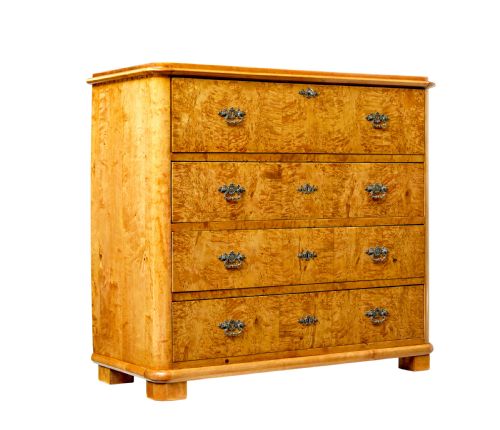
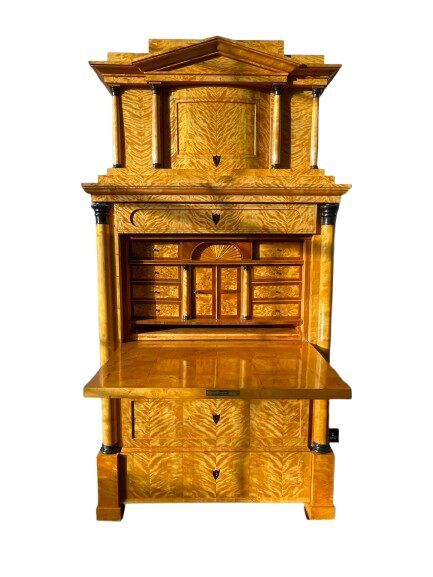


Biedermeier Birch Cabinet
These pieces of biedermeier birch cabinet bring warm wood tones and clean architectural lines into a room, offering practical storage with distinct continental style.
Biedermeier Birch Cabinet
A biedermeier birch cabinet represents a tradition of northern European furniture making that prioritises utility and timber figure over excessive ornament. The pieces found here span the nineteenth century and into later revival periods, bringing distinct proportions to domestic spaces.
You will most commonly meet secretaire chests of drawers, upright bookcases, and cupboards originating from Sweden. These examples utilise pale wood grains to brighten interiors while providing substantial concealed storage.
The selection ranges from mid-nineteenth century originals to early twentieth century Empire revival interpretations. Each form displays the characteristic restraint of the style, relying on the natural beauty of the timber rather than carved decoration.
What Varies in Quality
The distinction between pieces rests largely on the selection and matching of the birch veneer. Master makers arranged burr and figured grains symmetrically across the facade to create harmonious patterns.
Construction methods and the finesse of secondary timbers also separate standard utility furniture from finer workshop output. Well-executed interior fittings, such as fitted secretaire drawers and integrated pigeonholes, indicate higher execution standards.
Materials recorded across the inventory include standard birch, satin birch, burr birch, and Karelian birch alongside ebonised wood details.
The Biedermeier Birch Cabinet Glossary
- Biedermeier
- A style of central and northern European furniture from the nineteenth century focused on domestic comfort and clean lines. It rejects heavy historical ornamentation in favour of simplicity.
- Secretaire
- A cabinet or chest featuring a pull-down writing flap that conceals small drawers and pigeonholes. This form combines a writing desk with everyday storage.
- Satin Birch
- A variety of birch timber exhibiting a lustrous, smooth grain with a soft sheen. It was widely utilised in Scandinavian cabinet making.
- Burr Birch
- Wood taken from a tree growth or excrescence, producing a swirling, knotted grain pattern. Cabinet makers valued this timber for decorative veneer panels.
- Ebonised Wood
- Timber treated with a black finish to resemble ebony. It provides sharp contrast against pale birch veneers on mouldings and trims.
Biedermeier Birch Cabinet: Frequently Asked Questions
What is a biedermeier birch cabinet?
A biedermeier birch cabinet is a nineteenth-century storage piece originating mainly from Sweden, constructed with pale birch veneers over a pine carcass. These items include secretaires, chests of drawers, and bookcases designed for practical home use.
The aesthetic focuses on clean architectural forms and the natural figure of the wood rather than applied carving. They provide functional storage while brightening rooms with their light timber tones.
How do I identify nineteenth-century pieces?
Nineteenth-century examples show traditional construction methods, hand-cut dovetails on internal drawers, and patinated timber surfaces. The core materials typically consist of solid pine with carefully applied birch veneers.
Later twentieth-century revivals often display machine-made elements and different interior secondary woods. Examining the backboards and drawer linings helps clarify the period of production.
Where were these cabinets made?
The majority of the pieces recorded here originate from Sweden, reflecting Scandinavian interpretations of continental European design. Swedish workshops developed a distinct local character using native birch timbers.
This regional tradition embraced both the functional Biedermeier aesthetic and later revival styles. The resulting furniture balances formal continental planning with northern simplicity.
How do I care for birch veneer?
Birch veneer requires stable environmental conditions away from direct sunlight and excessive heat sources. Maintaining consistent humidity prevents the thin decorative wood layers from drying or lifting.
Cleaning should be limited to dusting with a soft, dry cloth. Traditional wax polishes can be applied sparingly to nourish the timber surface over time.