
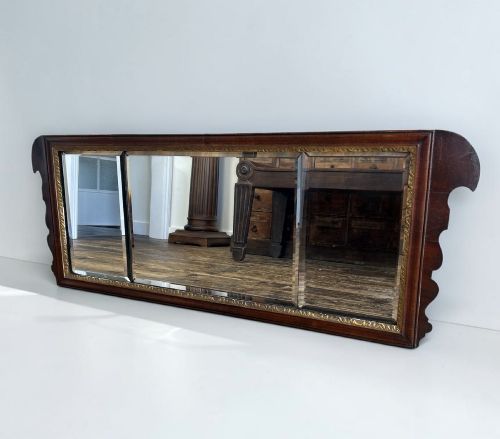
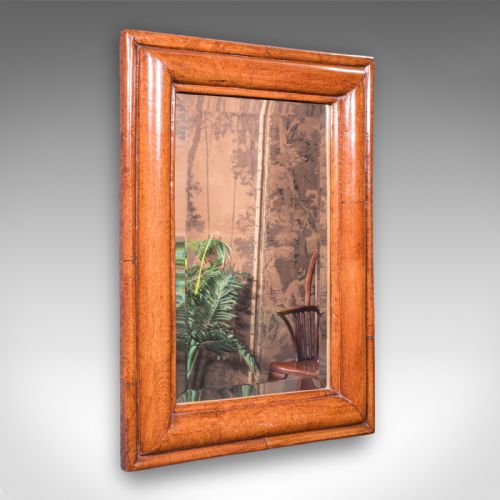


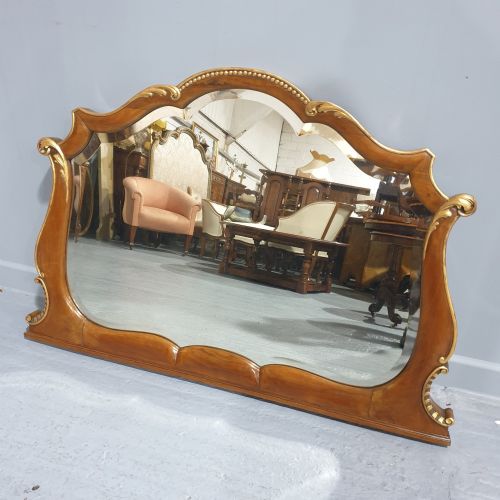

Bevelled Walnut Wall Mirror
A bevelled walnut wall mirror brings warmth and depth to a room through dark timber and angled glass edges.
Bevelled Walnut Wall Mirror
A bevelled walnut wall mirror combines rich brown timber with reflective glass designed to hang in reception rooms, hallways and parlours. You will encounter various forms on this page, ranging from compact Edwardian hall mirrors with valets to large nineteenth century overmantel mirrors and eighteenth century pier mirrors.
The selection spans several centuries and styles, showing distinct influences from Queen Anne, George I and Art Deco periods. Many examples date from the Edwardian era and the nineteen twenties, offering substantial walnut frames suited to period and eclectic interiors alike.
How they were made
Craftsmen built these frames using solid walnut and wood veneers applied to a supportive wooden carcase, sometimes incorporating carved details. Parcel gilt accents and gold leaf highlight specific mouldings on certain Georgian style and nineteenth century pieces.
Mirror glass is hand cut with a sloping bevel around the perimeter, a technique that catches the light and adds a finished edge to the plate. Metal fixings and wooden backing boards secure the heavy glass within the timber frame.
Some Edwardian hallway mirrors included built-in valet hooks for gentlemen to hang their hats while checking their appearance.
What varies in quality
Quality rests upon the choice of timber veneer figure and the depth of the carving across the frame. Richly grained walnut and crisp hand carving distinguish finer examples from plain or heavily restored pieces.
The clarity and original condition of the bevelled glass plate also determine the character of the mirror. Silvering that has aged evenly with gentle foxing holds more visual charm than a modern replacement glass.
The Bevelled Walnut Wall Mirror Glossary
- Bevel
- An angled edge ground and polished around the perimeter of the mirror glass. This sloping border creates a refractive sparkle when light hits the surface.
- Pier mirror
- A tall, narrow looking glass traditionally hung on the wall space between two windows. These pieces often feature classic proportions suited to high ceilings.
- Overmantel mirror
- A wide looking glass designed to be positioned directly above a fireplace mantelpiece. They frequently span significant horizontal lengths to reflect the room.
- Parcel gilt
- A decorative treatment where specific carved details or mouldings are partially covered in gold leaf. It contrasts sharply against the dark brown walnut timber.
- Veneer
- A thin layer of figured wood applied to a stable secondary timber carcase. This method allows cabinetmakers to display striking grain patterns across flat surfaces.
Bevelled Walnut Wall Mirror: Frequently Asked Questions
Where should I hang a walnut wall mirror?
These pieces suit entrance halls, living rooms and above fireplaces where they can bounce natural light around the space. Choose a wall strong enough to support the combined weight of timber and glass.
Ensure you hang the mirror at eye level to make the most of the reflection and balance the surrounding furniture proportions.
How do I clean an antique mirror glass?
Use a soft microfiber cloth and a mild glass cleaner sprayed onto the cloth rather than directly onto the plate. This prevents liquid from seeping behind the bevel into the silvered backing.
Take care to avoid harsh chemical ammonia products that can damage both the historic glass and the surrounding walnut finish.
How can I tell an Edwardian mirror from a Georgian one?
Edwardian examples often feature simpler utility functions like built-in clothes valets for reception hallways and lighter framing proportions. Georgian style pieces tend to display more formal architectural pediments and parcel gilt enrichments.
Examining the construction methods and the backing boards helps confirm whether a piece belongs to the early eighteenth century or later revivals.
Can these mirrors be hung horizontally as well as vertically?
Most wall mirrors are constructed with specific hanging brackets designed for either portrait or landscape orientation. Overmantel mirrors are typically built wide for horizontal placement above fireplaces.
Check the reverse of the frame for original brass rings or wire before attempting to change the hanging direction of heavy timber pieces.