


Bevelled Glass Table Clock
A bevelled glass table clock brings solid weight and bright reflection to a room, housing intricate brass and enamel work within thick transparent panels.
Bevelled Glass Table Clock
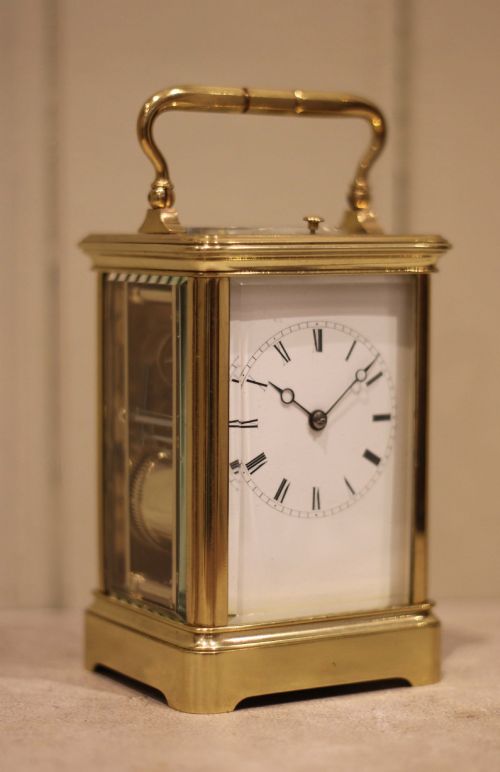
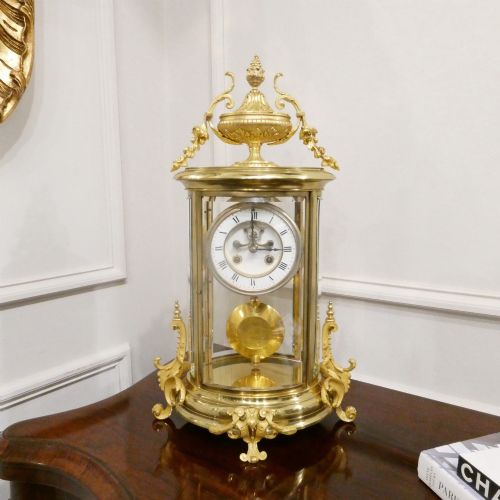
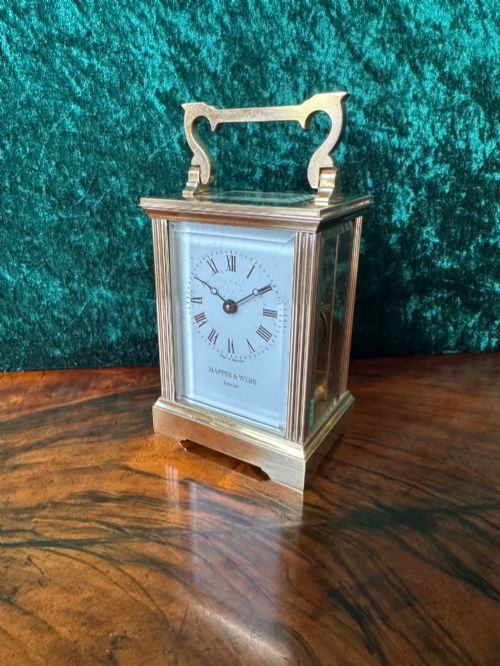
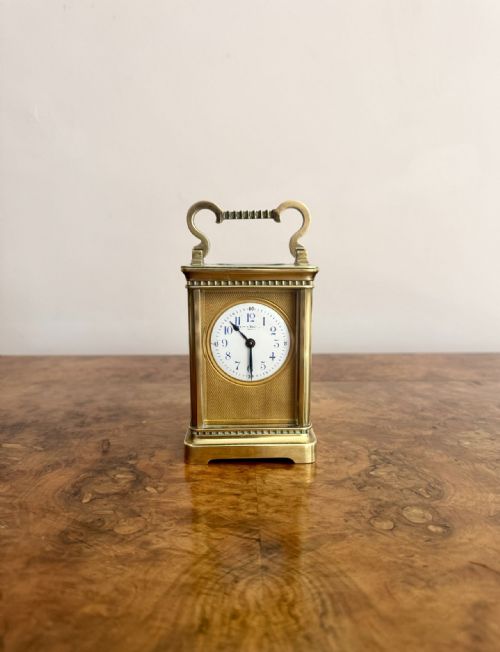
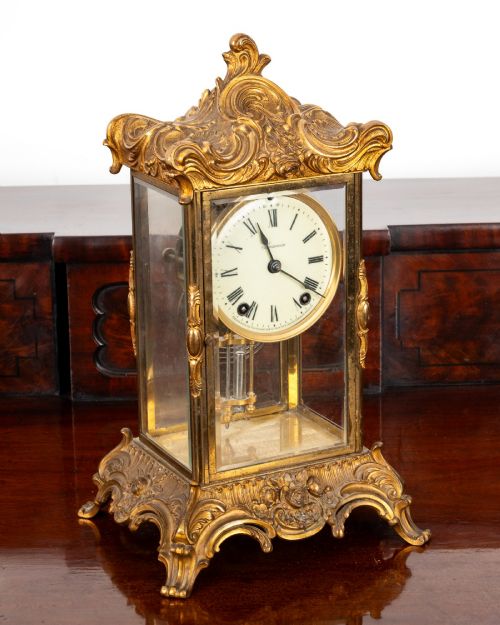
A bevelled glass table clock encompasses both substantial four glass mantel clocks and portable carriage clocks designed for desks and side tables. These pieces originate predominantly from nineteenth and early twentieth century French and British workshops, spanning periods from the Victorian era through to later twentieth century production.
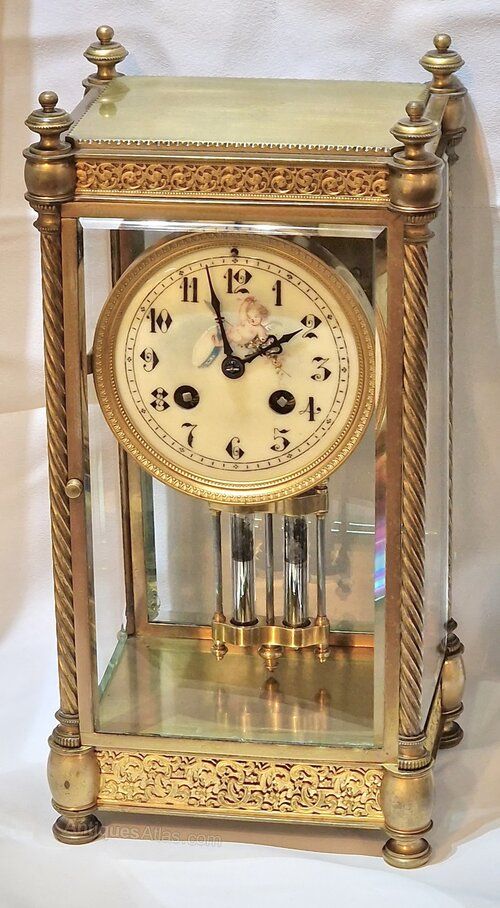
The most frequent form encountered on this page is the four glass mantel clock, which displays the swinging pendulum and moving escapement clearly through transparent panels on every side. Alternatively, buyers meet brass cased carriage clocks featuring bevelled crystals set into the top and sides to reveal the inner platform escapement.
Makers housed these movements within gilt brass, gilt bronze, or polished brass housings, sometimes incorporating enamel dials, paste stones, or marble bases. The resulting objects function simultaneously as reliable timekeepers and decorative desk furniture.
Materials and Construction
Heavy brass and gilt bronze form the structural frames of these clocks, cast and polished to support the thick glass panels under tension. Smiths ground and polished the edges of the heavy glass sheets to create the characteristic sloping bevels that catch and refract light.
Movements utilise brass plates, steel pinions, and delicate escapements, often driven by coiled springs housed within brass barrels. Dials incorporate white enamel with painted Roman or Arabic numerals, occasionally decorated with hand-painted floral motifs or blue enamel panels.
Some nineteenth century makers placed tiny ships wheel pendulums inside their glass clocks, letting you watch the miniature spokes spin round as time ticks by.
Assessing Quality and Execution
Quality rests upon the crispness of the cast brass or gilt bronze mounts and the thickness of the bevelled glass panes. Finer examples display hand-engraved gilt masks around the dial and complex striking or repeating mechanisms signed by established makers.
The integration of the movement within the glass case demonstrates the maker's skill, where heavier bezels and substantial mercury or ships wheel pendulums elevate the piece above standard production. The clarity of the enamel dial and the presence of original escapement platforms further distinguish superior specimens.
Samuel Marti·Mappin and Web·Tiffany·Ansonia New York·AD Mougin·Le Roy et Fils·Drocourt·L Epee·Garrard and Co
The Bevelled Glass Table Clock Glossary
- Carriage clock
- A small, portable spring-driven clock originally designed for officers travelling in carriages during the nineteenth century. These pieces usually feature a handle on top and glass panels on all sides.
- Crystal regulator
- A mantel clock housed in a brass frame with four glass panels, allowing an unobstructed view of the mechanical movement and pendulum from all angles. They frequently incorporate mercury-filled pendulums for temperature compensation.
- Platform escapement
- The tiny horizontal spring-driven escapement assembly mounted visibly on top of the movement in carriage clocks, replacing the traditional pendulum. This allows the clock to keep accurate time while resting on uneven surfaces.
- Repeating movement
- A clock mechanism that chimes the hours and quarters upon demand when a plunger or cord is pulled by the user. This function was particularly useful during dark winter nights before electric lighting.
- Gorge case
- A stepped, architectural brass carriage clock case style characterised by multiple recessed mouldings along the top and base. It represents a sturdier and more costly method of case construction.
Bevelled Glass Table Clock: Frequently Asked Questions
How do I wind a carriage clock?
Insert the appropriate winding key into the arbour holes located on the backplate or underneath the base of the clock. Turn the key gently clockwise until you feel resistance, taking care not to over-wind the mainspring.
Ensure you handle the heavy brass case carefully by its sides rather than the pivoting handle alone during the winding process. Setting the correct time involves moving only the minute hand forward.
Where should I place a four glass clock?
Position the clock on a stable, level surface away from direct sunlight and drafts that might affect the delicate balance wheel or pendulum. Heavy mantel clocks require solid wooden furniture that can support their considerable brass and glass weight.
Because glass panels reveal the interior from all angles, placing the piece where natural light catches the bevelled edges enhances its visual appeal. Avoid high traffic areas where the clock might be accidentally knocked.
How do I identify the period of these clocks?
Examine the style of the brass case, the shape of the dial numerals, and any signatures stamped onto the rear movement plate. Mid-nineteenth century examples often display heavier mercury pendulums and classical architectural mounts.
Later pieces from the turn of the century frequently adopt lighter gilt brass frames or incorporate art nouveau details on the enamel dial masks. Maker marks and registration numbers stamped into the brass also provide reliable chronological anchors.