

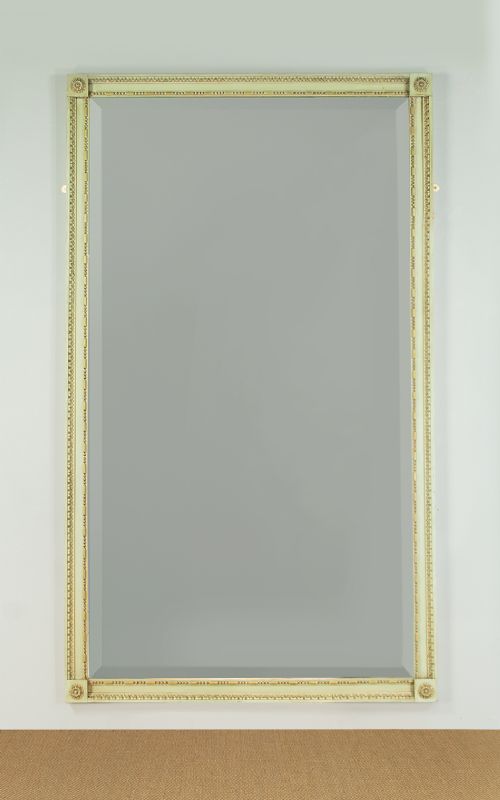
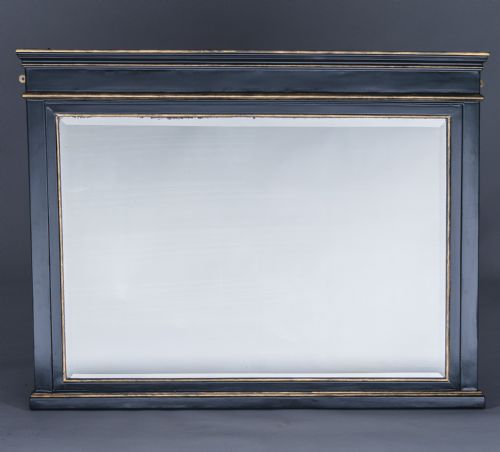
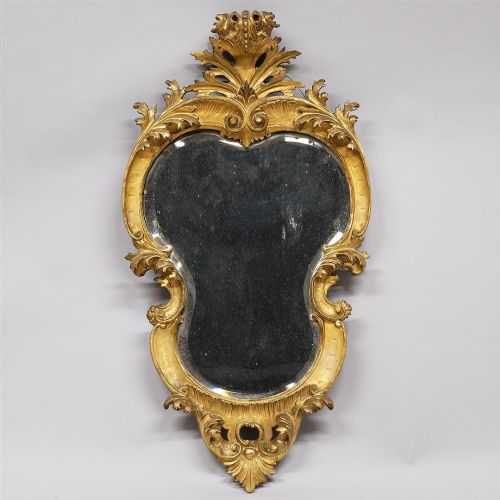

Bevelled Glass Gilt Mirror
A bevelled glass gilt mirror brings light and warmth to a room through reflective glass set inside gilded wooden frames.
Bevelled Glass Gilt Mirror
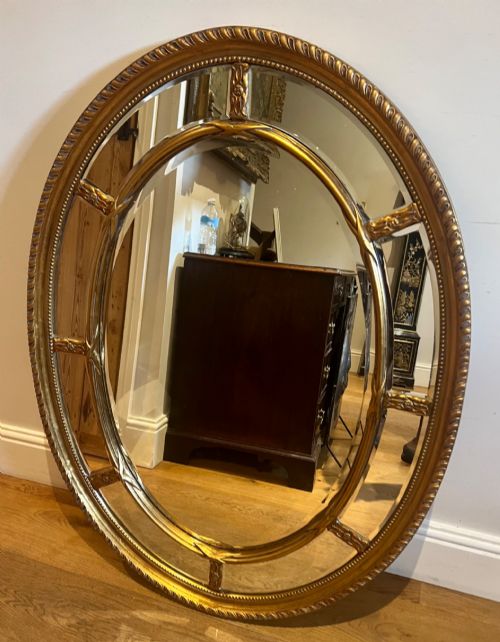
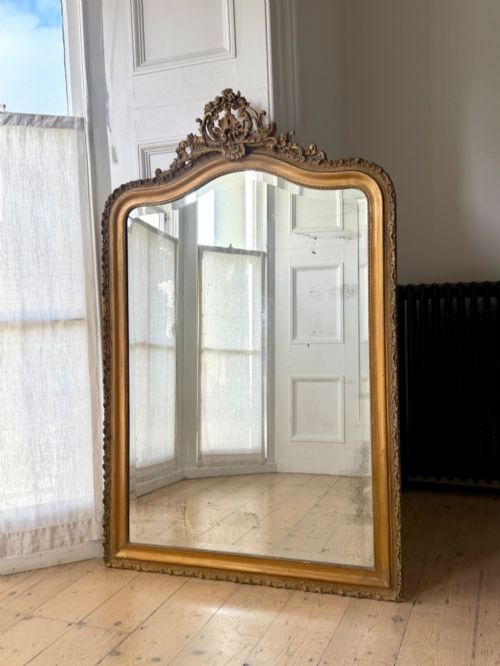
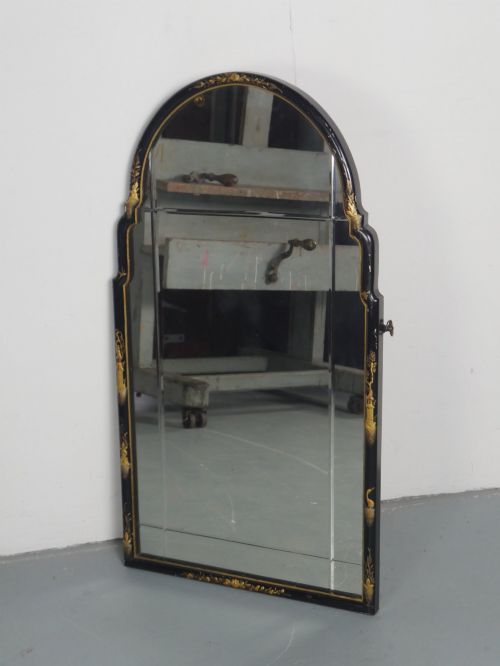
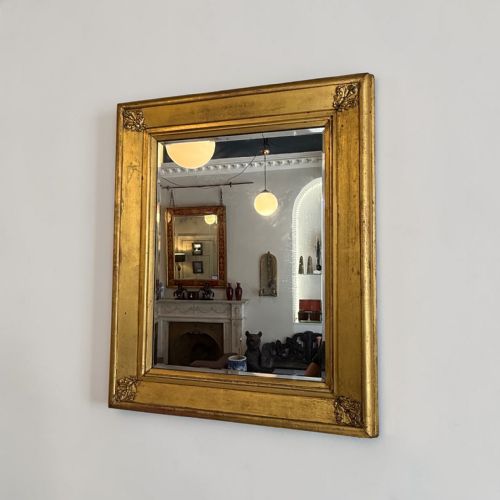
A bevelled glass gilt mirror combines reflective glass with a gilded frame, spanning wall mirrors, overmantles, and pier glasses. These pieces emerge from the nineteenth century into the early decades of the twentieth, drawing on Victorian and Edwardian domestic spaces as well as French stylistic revivals.
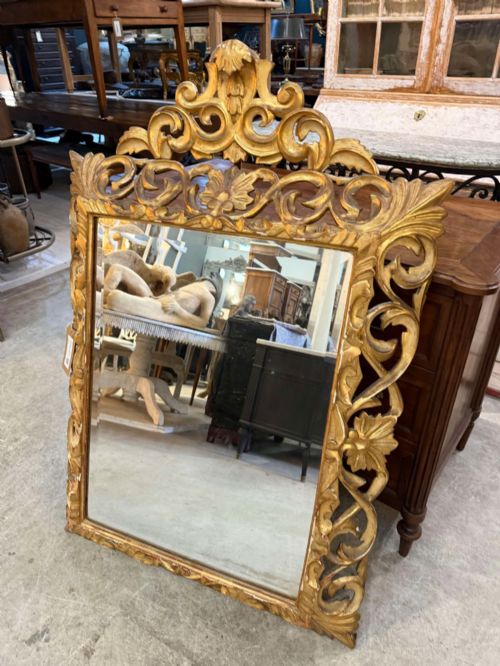
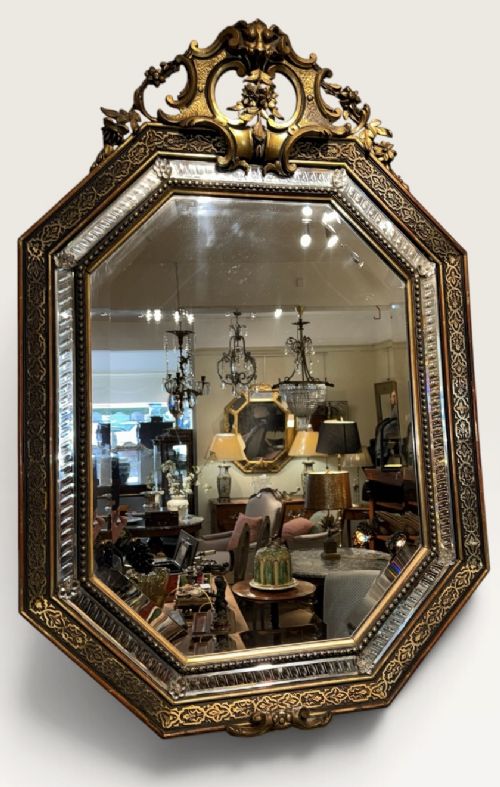
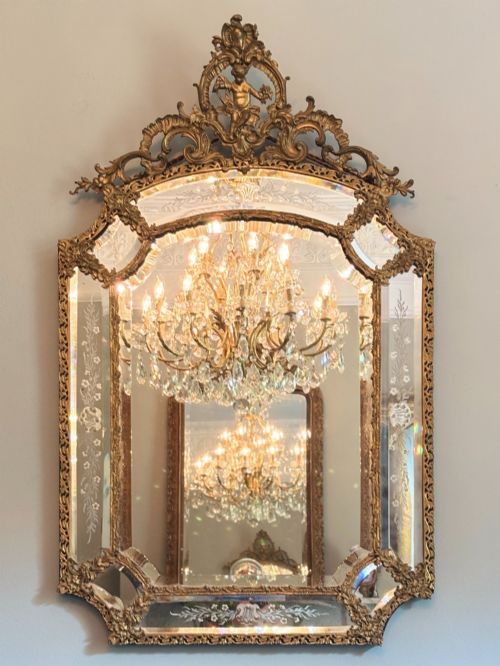
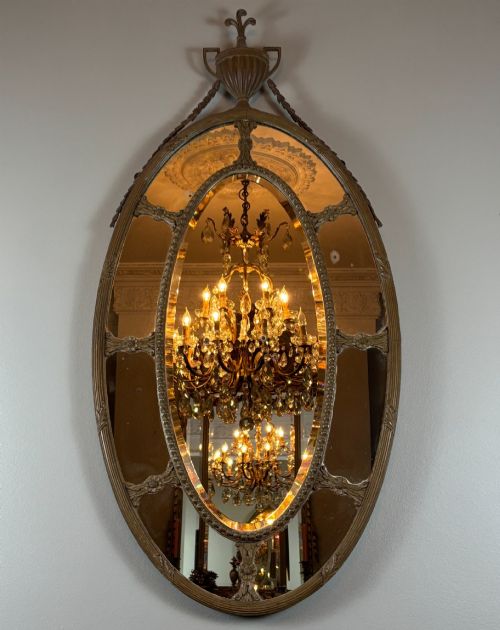
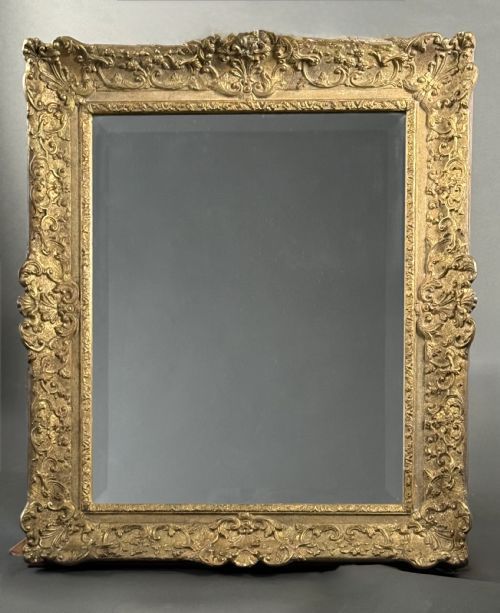
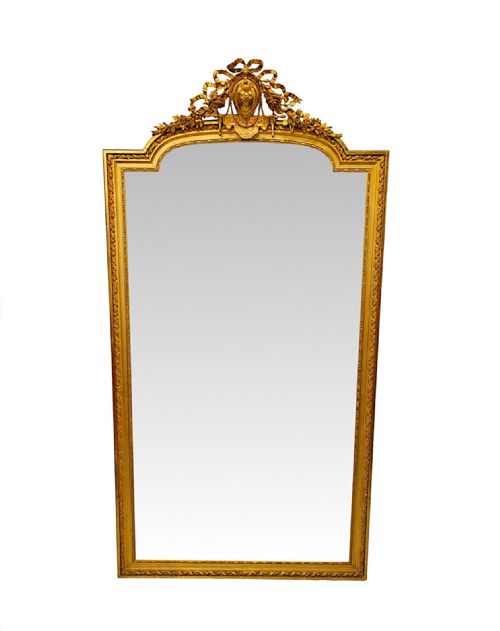
The most common examples on this page are nineteenth-century French and Victorian overmantle or wall mirrors. They frequently display Rococo Revival curves or Louis XVI restraint alongside carved wooden frames finished in gold leaf or gesso.
How they were made
Makers constructed the structural frames using timber such as oak, walnut, or mahogany before applying layers of gesso to build up decorative relief. Carved details and moulded ornamentation received gold leaf or gilt finishes over the prepared ground.
Glass plates were silvered and hand-bevelled along the outer edges to create an angled border that catches ambient light. Some early pieces utilise mercury glass plates, whilst later nineteenth and twentieth-century examples employ standard silvered mirror plates.
Bevelled Glass Gilt Mirror Retail Price Guide 2026
Typical asking prices for bevelled glass gilt mirror among the pieces listed under this phrase on Sellingantiques today, from the lower quarter to the upper quarter. They describe what is for sale here now, not the wider market.
Listings feature eighteenth-century designs alongside nineteenth-century Victorian and Edwardian interpretations, constructed in wood, gesso, and giltwood.
What varies in quality
The crispness of the gesso moulding and the depth of hand-carved wooden details separate superior frames from simpler production pieces. Finer mirrors retain their original fire-gilded surfaces or gold leaf rather than later overpainting.
The clarity and integrity of the original bevelled glass plate also dictate value, with older mercury plates showing characteristic soft foxing and age spots. Frames maintaining their original untouched gilding and structural joins command greater interest.
The Bevelled Glass Gilt Mirror Glossary
- Gesso
- A plaster-like mixture applied to wood frames to create a smooth surface for gilding or carving. It is built up in thin layers before being shaped and painted.
- Giltwood
- Timber that has been coated with thin sheets of gold leaf or gold powder. This technique protects the underlying wood whilst providing a bright metallic finish.
- Bevelled glass
- A mirror plate with edges cut and polished at an angle. This process creates a prism effect that catches light around the perimeter.
- Overmantle mirror
- A large horizontal mirror designed to hang above a fireplace mantelpiece. These pieces often feature extended frames suited to grand Victorian and French interiors.
- Pier glass
- A tall, narrow mirror made to hang on the wall space between windows. They frequently match console tables placed below them in eighteenth and nineteenth-century rooms.
- Mercury glass
- An early type of mirror plate made by pouring a mercury-tin amalgam behind glass. It produces a distinctive misty reflection and dark speckling over time.
Bevelled Glass Gilt Mirror: Frequently Asked Questions
How do I hang a heavy gilt mirror?
Heavy nineteenth-century mirrors require secure wall fixings distributed across the main wooden frame structure rather than relying solely on the hanging wire. Professional wall anchors suited to the specific wall type ensure the weight is supported safely.
Placement should account for the substantial mass of giltwood and gesso frames. Fixing the mirror directly into wall studs provides the stability needed for larger overmantle pieces.
Are these mirror plates original?
Many surviving pieces retain their original bevelled glass plates, which often display subtle surface wear, minor scratching, or foxing. These age characteristics confirm the period of the mirror.
Replacement glass plates appear cleaner and lack the soft, uneven reflection typical of older silvering or mercury backing. Examining the edges behind the frame reveals how the glass was secured.
How do I clean antique gilt frames?
Giltwood and gesso surfaces require gentle dusting with a soft, dry brush to remove particles without disturbing delicate raised ornamentation. Moisture can damage old gesso and lift the gold leaf.
Chemical cleaning solutions must be avoided entirely on antique gilding. Professional conservation is recommended if the surface accumulates stubborn grime or shows signs of flaking.
What is the difference between Rococo Revival and Louis XVI styles?
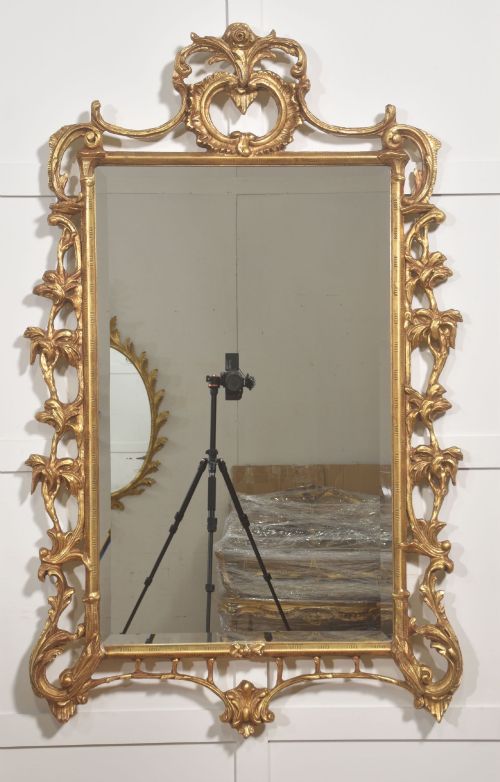
Rococo Revival mirrors feature asymmetrical scrolls, C-scrolls, floral motifs, and flowing organic lines derived from mid-eighteenth-century French design. The frames feel energetic and heavily sculpted.
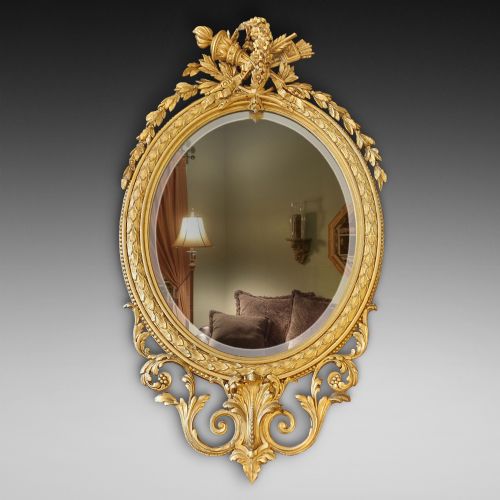
Louis XVI style pieces emphasise neoclassical symmetry, straight lines, ribbon ties, and geometric architectural proportions. They offer a more restrained and formal appearance compared to Rococo curves.