
Bentwood Hall Tree Stand
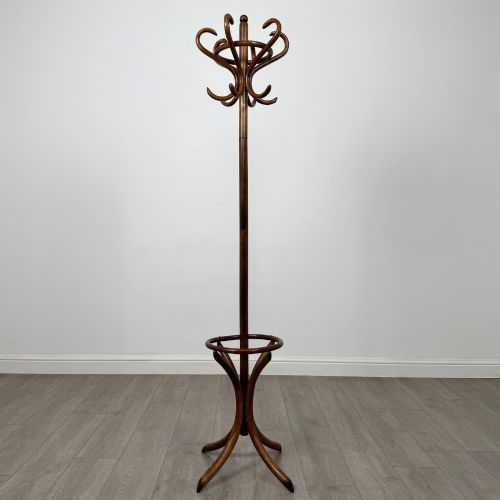
A bentwood hall tree stand brings lightness and practical grace to an entrance hall.
Bentwood Hall Tree Stand
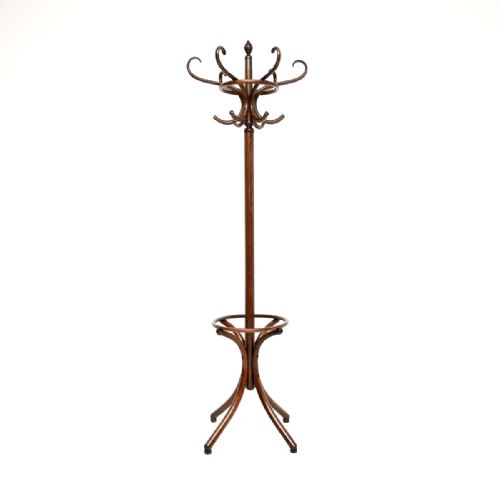
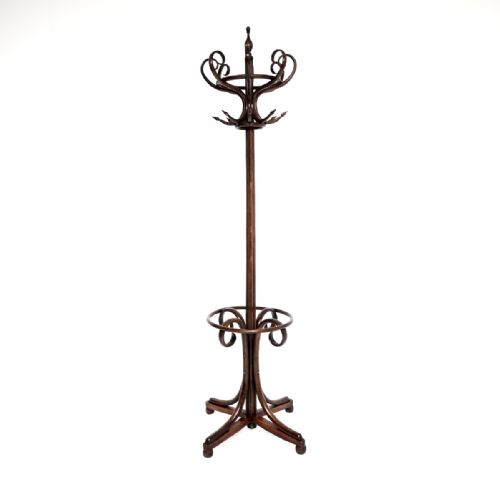
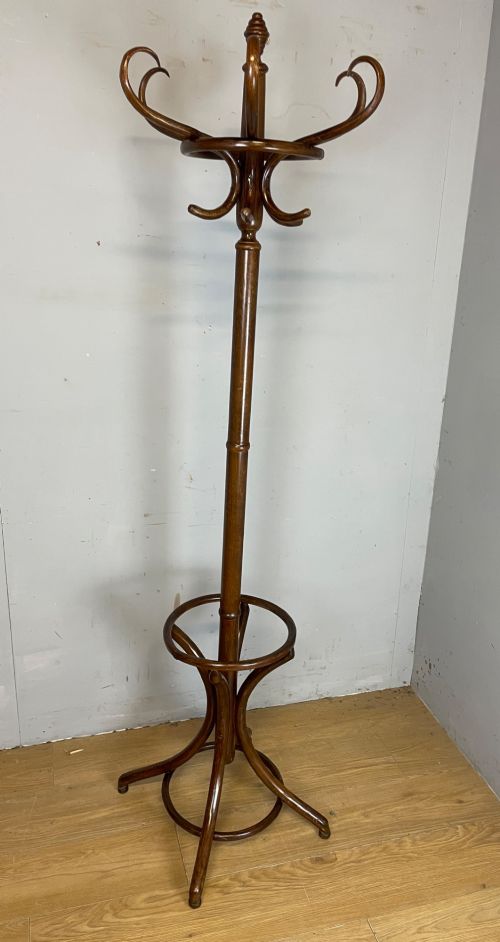
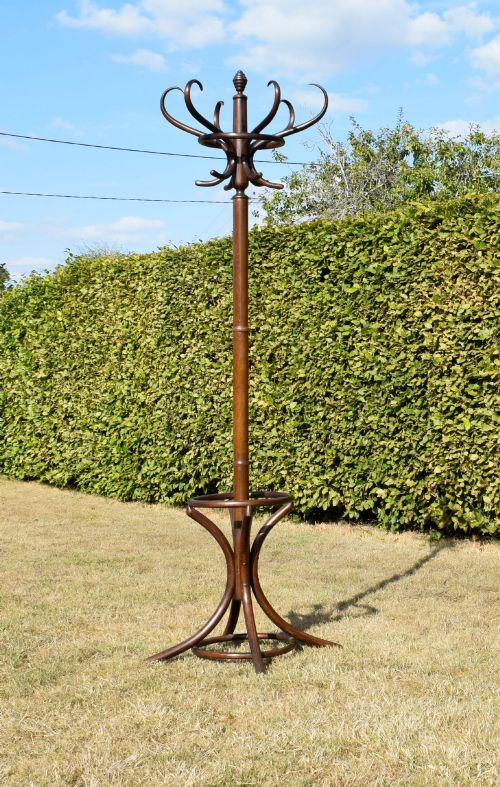
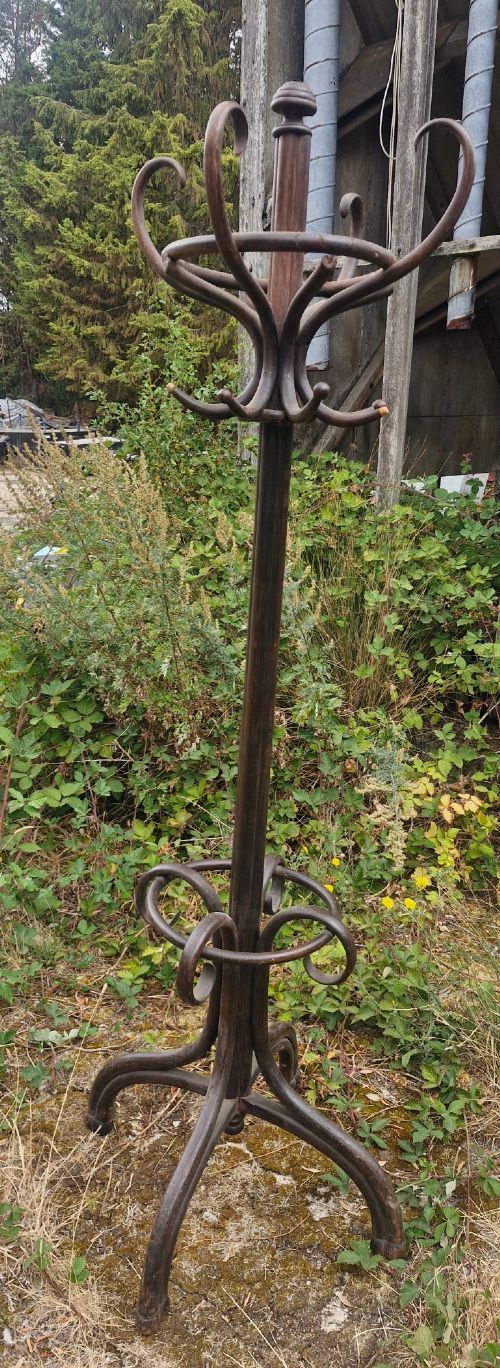
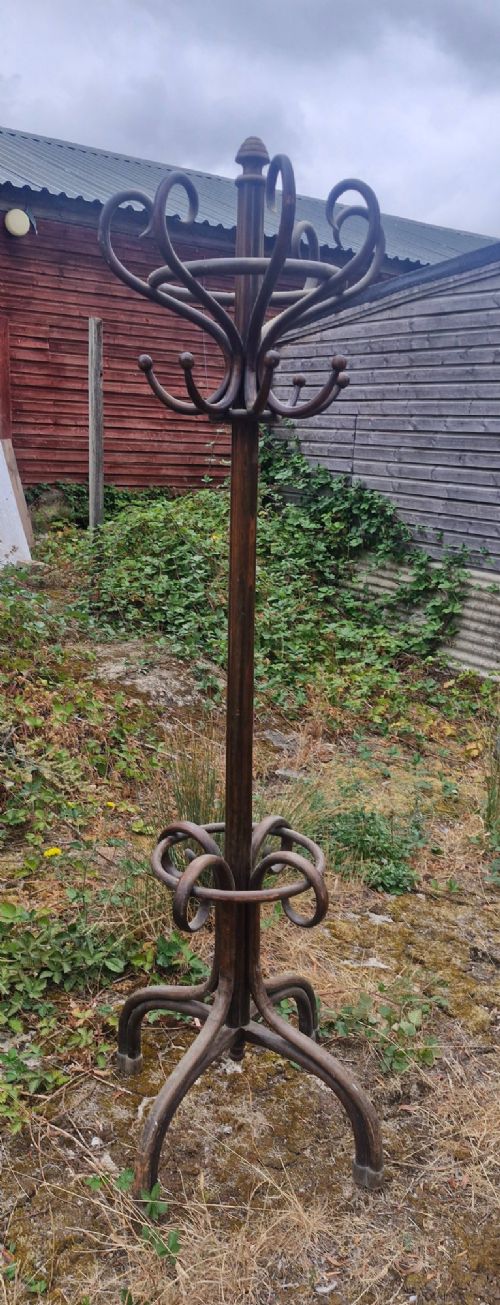
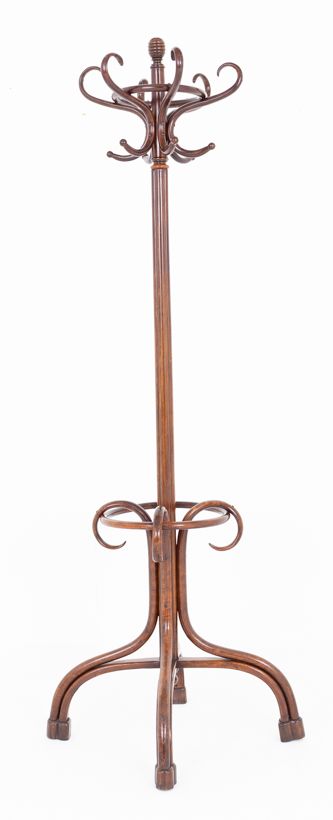
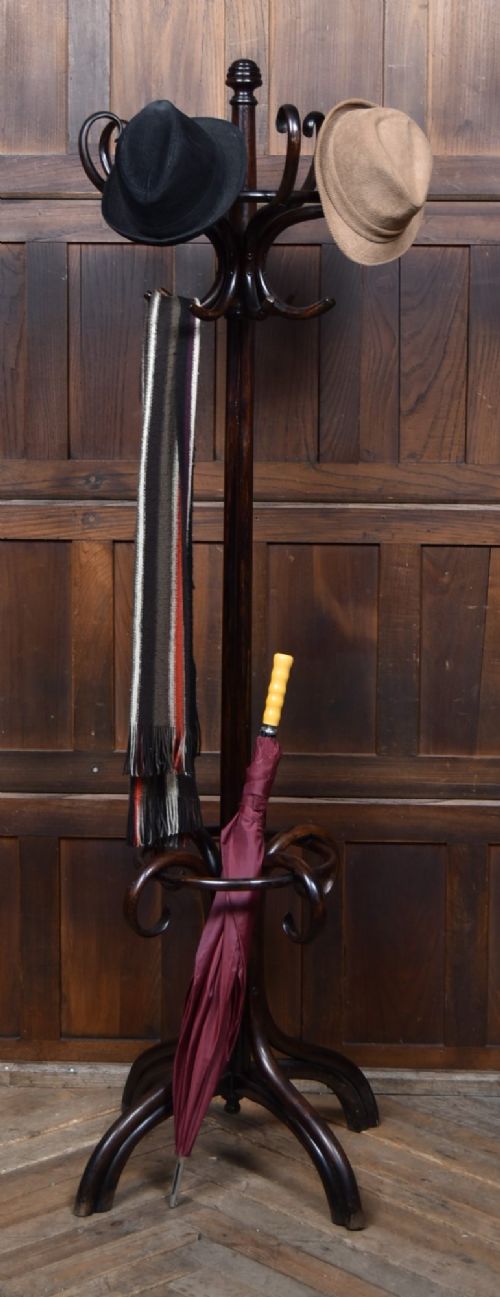
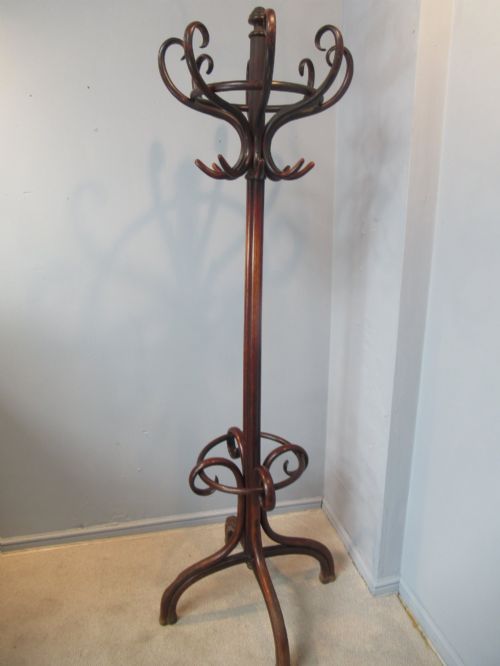
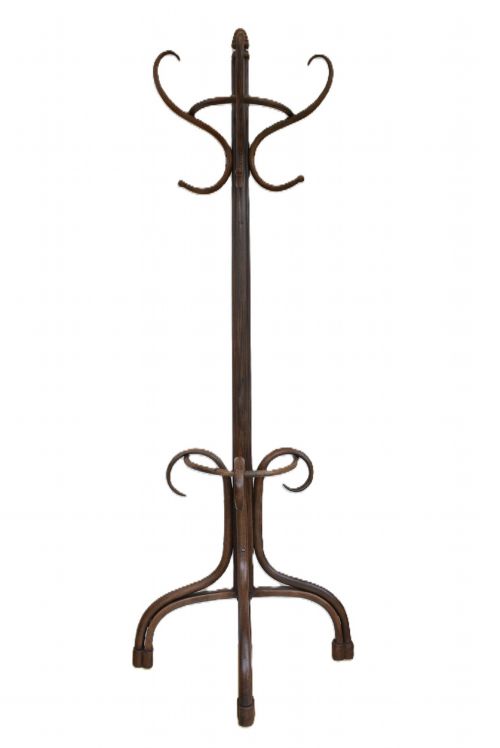
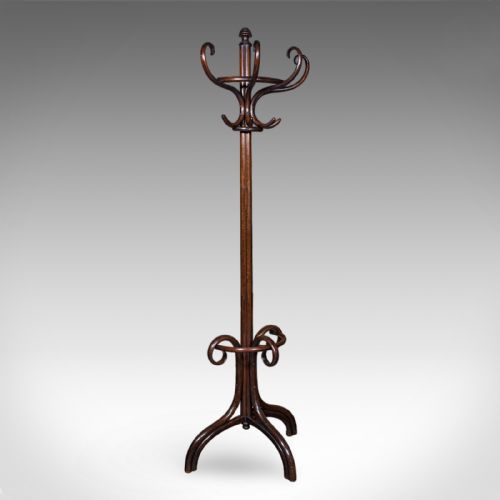
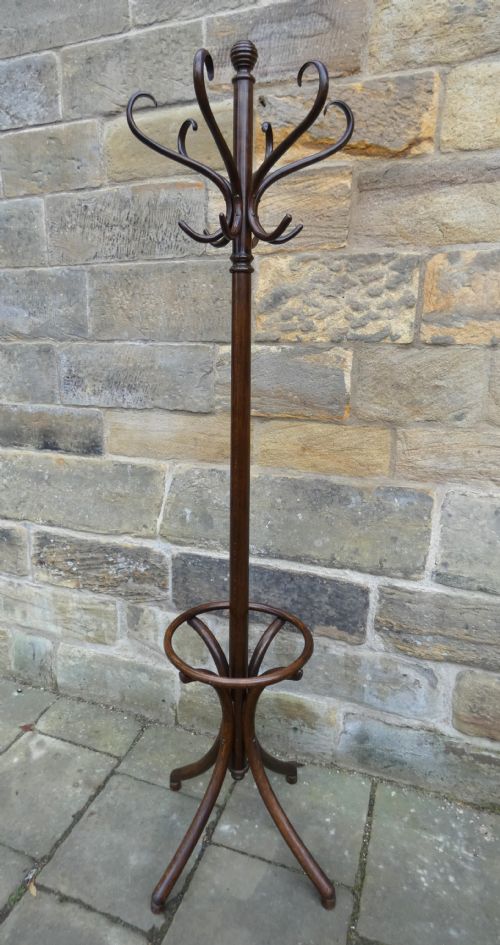
A bentwood hall tree stand is a vertical piece of furniture designed for hats, coats, and walking sticks in hallways and vestibules. The pieces found here span from the late nineteenth century through to the 1930s, encompassing Victorian, Edwardian, and early twentieth-century examples.
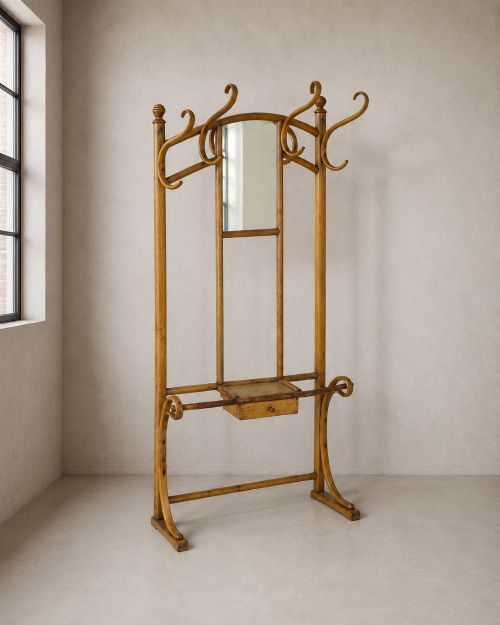
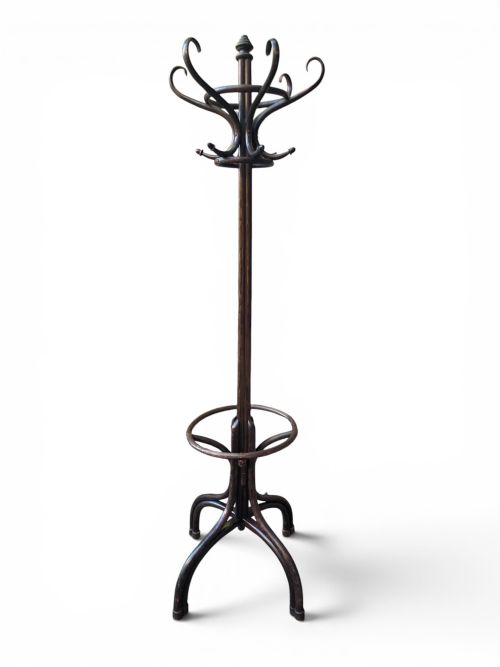
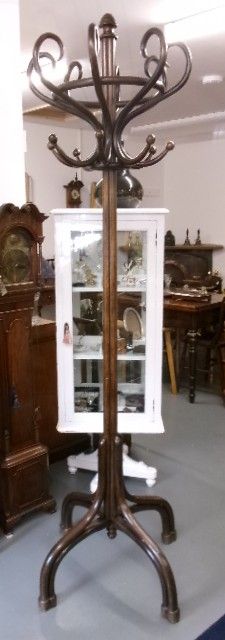
The most common forms on this page are freestanding vertical coat and hat stands, alongside specialised half-round or demi-lune designs intended to sit flush against a wall. Many feature revolving top sections and designated lower rings for umbrella and stick storage.
These items originate primarily from Austrian and continental workshops, reflecting the dominant manufacturing methods of the era. Buyers seeking a functional hallway centrepiece will find examples ranging from simple utility stands to large, elaborate designs.
How they were made
The construction relies on solid beech and beechwood subjected to steam heating, which softens the timber and allows it to be bent into flowing, continuous curves under pressure. This technique creates strong yet remarkably lightweight structural frames without the need for heavy joinery.
Makers finished the shaped wood using transparent wood stains to highlight the natural grain, often producing warm honey tones. Glass elements occasionally appear in associated components, while specialised metal brackets and hooks secure the upper tier to the central shaft.
A revolving top lets you spin your winter coat in a circle like a merry-go-round while searching for your car keys.
What varies in quality
Quality in a bentwood hall tree stand depends on the weight and gauge of the steamed timber used for the main uprights and curved scrollwork. Heavier, thicker sections provide greater stability and resistance to the daily load of heavy winter coats.
Refinement in the turning of the central column and the symmetry of the steam-bent loops distinguish standard production pieces from finer workshop outputs. Maker identification via stamps or labels also separates ordinary items from notable workshop productions.
Thonet·Fischel
The Bentwood Hall Tree Stand Glossary
- Bentwood
- Wood that has been shaped by heating it in steam until pliable and then bending it into curves. This process defines the entire structural vocabulary of these stands.
- Hall tree
- A piece of furniture designed for hanging coats, hats, and storing umbrellas in an entrance hall. These vertical stands maximise storage while occupying minimal floor space.
- Demi-lune
- A half-moon or semi-circular shape. Hall stands in this form stand flat against a wall to fit narrow corridors.
- Thonet
- The pioneering firm associated with mass-produced steam-bent furniture. Michael Thonet and his sons perfected the industrial bending of beech.
- Revolving top
- An upper tier designed to rotate around the central shaft. This feature allows easy access to multiple hats and coats without moving the entire piece.
Bentwood Hall Tree Stand: Frequently Asked Questions
How do I date a bentwood hall stand?
Dating relies on stylistic markers, construction details, and occasional manufacturer stamps or paper labels left on the wood. Pieces from the nineteenth century often display heavier proportions and distinct maker signatures.
Later Edwardian and 1930s examples tend toward lighter frames and simpler turning on the central shaft. Comparing the complexity of the scrollwork helps determine the approximate period of manufacture.
Are these stands strong enough for heavy coats?
Bentwood stands utilise steam-formed beech to achieve high tensile strength despite their slender appearance. Substantial nineteenth-century and early twentieth-century examples handle daily use effectively.
Heavier quality models distribute weight evenly across multiple upper hooks and stable base rings. Proper placement on an even floor ensures the structure remains balanced under a full load.
What is the difference between a coat stand and a hall stand?
In historical listings, the terms often overlap to describe vertical furniture used in entranceways for outdoor garments. A coat stand typically emphasises hanging space for hats and coats.
A hall stand often includes integrated lower rings or compartments specifically shaped for walking sticks and umbrellas. Some specific half-round designs are also built to sit directly against hallway walls.
How should I care for a stained beech stand?
Maintenance requires keeping the wood away from direct heat sources and dramatic humidity fluctuations that can affect the steam-bent joints. Regular dusting with a soft cloth preserves the polished stained finish.
Application of appropriate wood wax occasionally helps nourish the beech surface without building up residue. Checking the tightness of any connecting hardware ensures the frame stays rigid.