

Beige Armchairs
Beige armchairs bring quiet warmth to a room, spanning periods from the eighteenth century to art deco with upholstered comfort.
Beige Armchairs
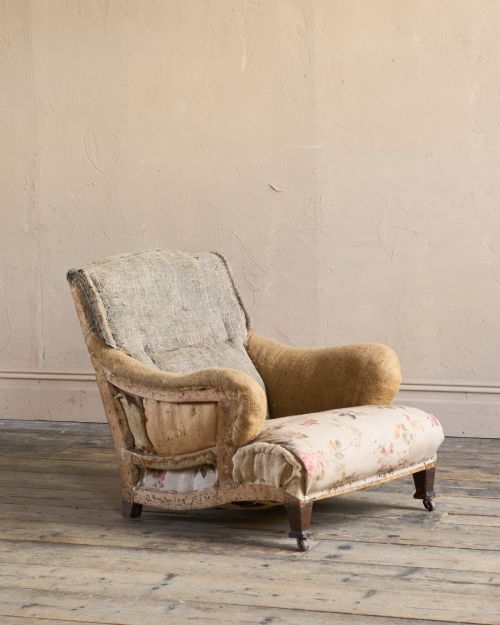
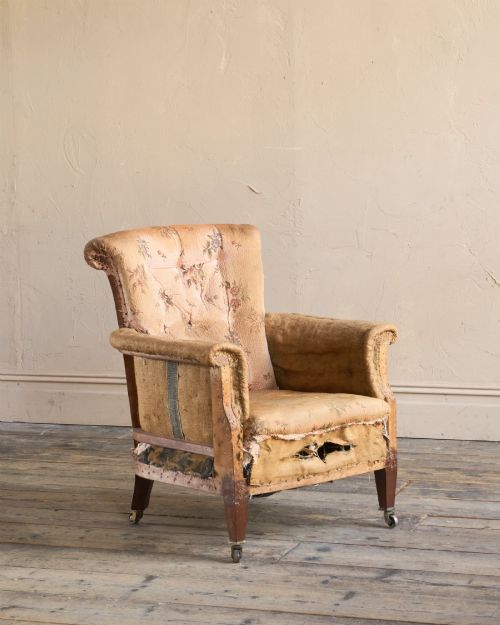
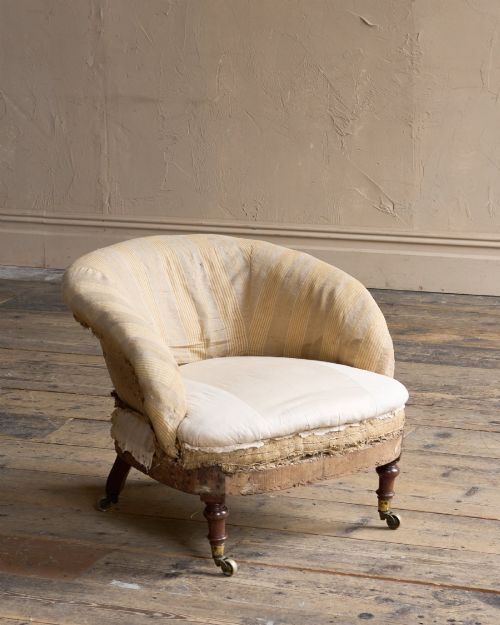
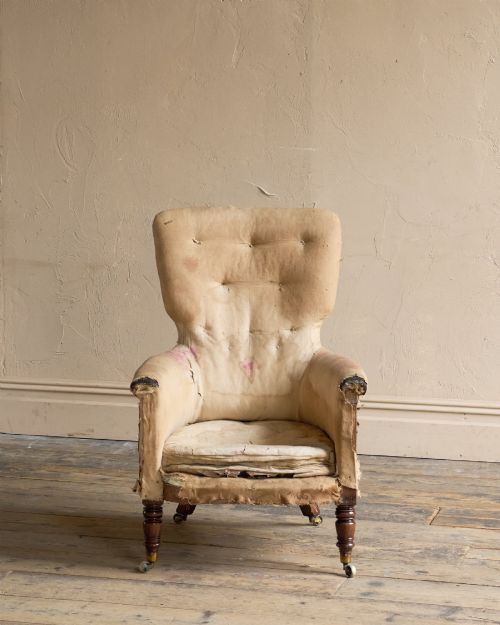
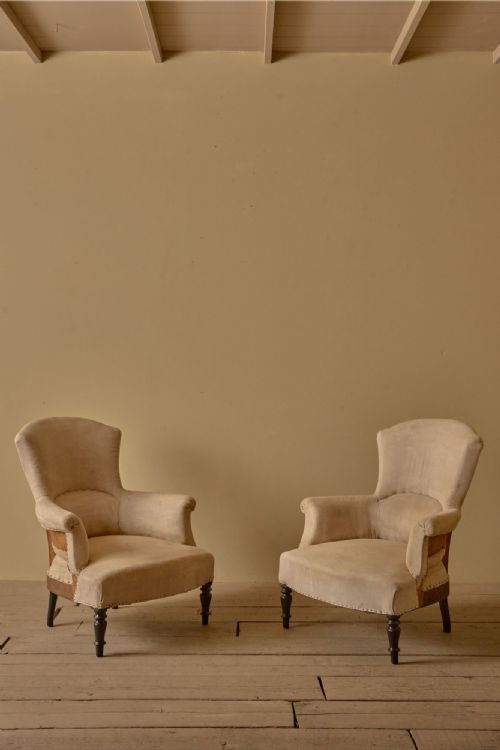
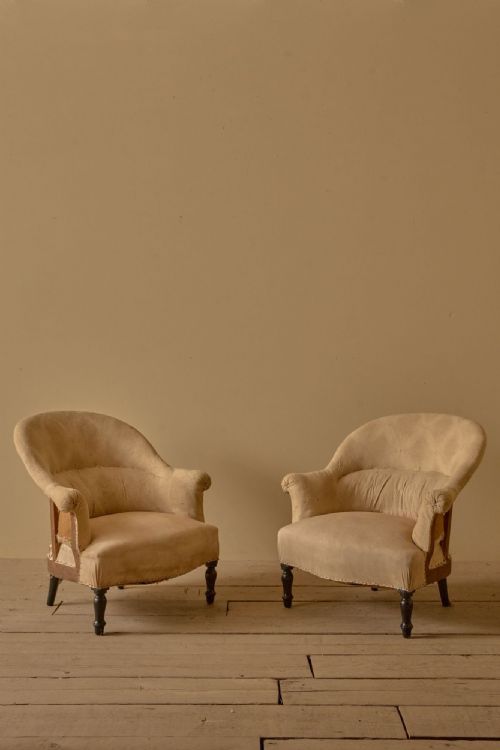
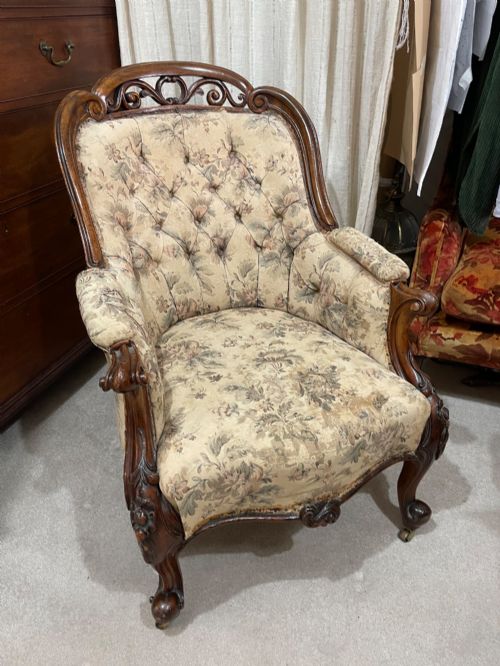
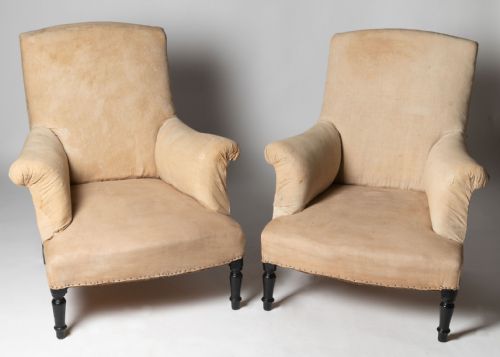
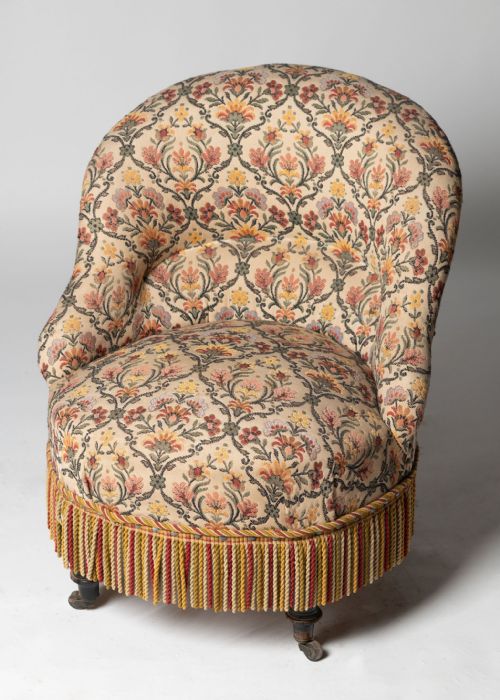
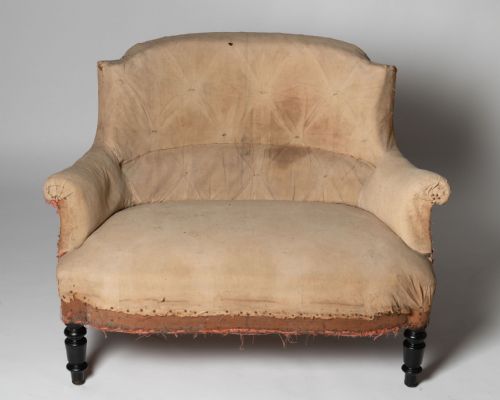
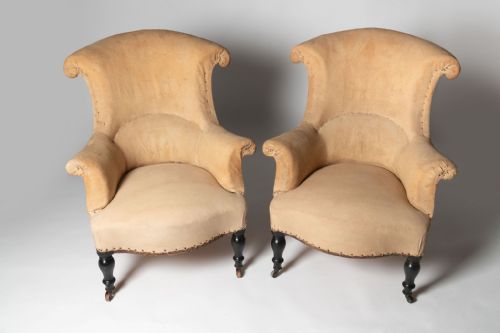
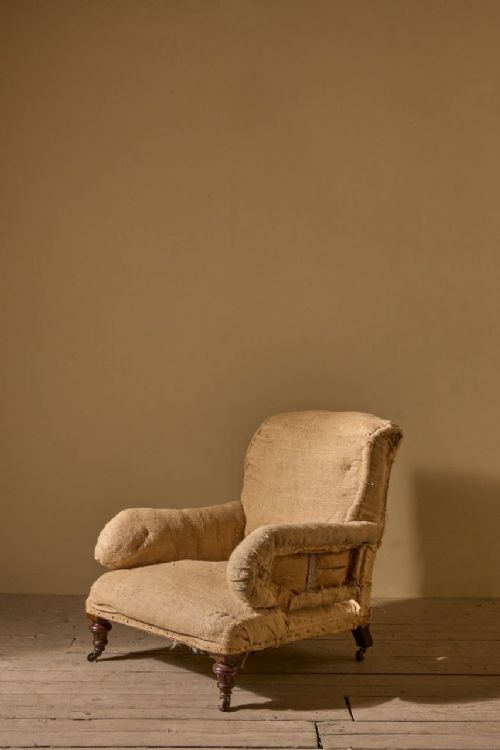
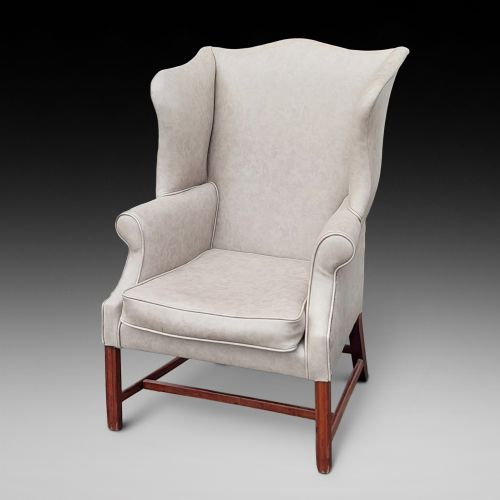
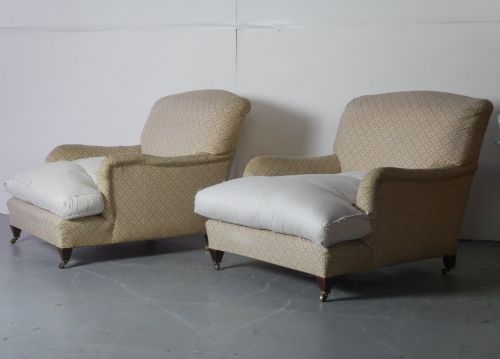
Beige armchairs cover a broad sweep of history, appearing across eighteenth, nineteenth and early twentieth century forms. You will find wingbacks, library chairs, club chairs and tub chairs upholstered in neutral tones.
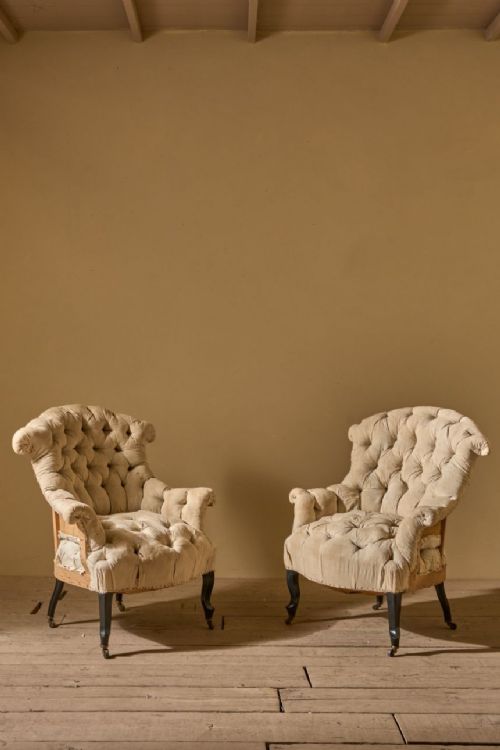
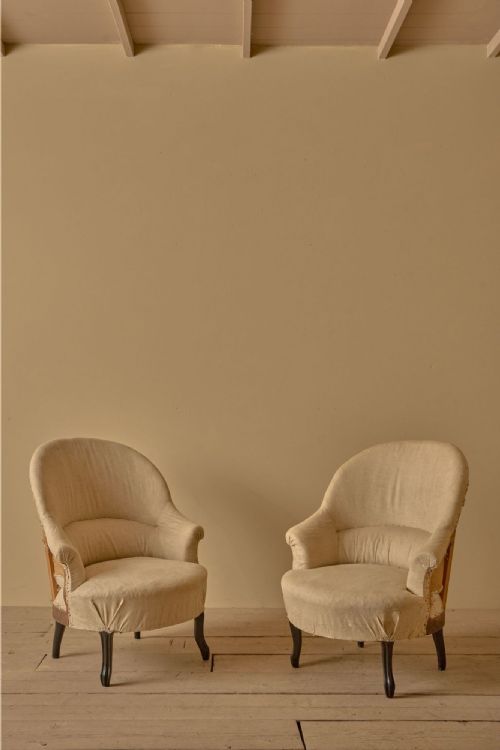
The nineteenth century provides many examples here, particularly French Napoleon III styles with spoon backs, pillow arms and buttoning. English country house pieces and art deco loungers also populate the selection.
Makers and workshops range from defined nineteenth century cabinet makers to twentieth century firms like Whytock and Reid. These seating forms served libraries, bedrooms and grand reception rooms.
How they were made
Frames rely on solid timbers such as mahogany, walnut and oak, providing robust structural skeletons for upholstered seating. Brass details occasionally appear on castors or reading stands.
Upholstery employs traditional materials including hessian and velvet, finished with buttoning, piping and decorative tape. Calf suede and contemporary fabrics like Robert Kime designs also clothe the later frames.
Beige Armchairs Retail Price Guide 2026
Typical asking prices for beige armchairs among the pieces listed under this phrase on Sellingantiques today, from the lower quarter to the upper quarter. They describe what is for sale here now, not the wider market.
Listings feature eighteenth century mahogany wing chairs alongside 1930s art deco lounge seats in velvet, hessian and suede.
What varies in quality
Frame integrity distinguishes the finer seating, depending on the timber selection and the precision of the joinery beneath the upholstery. Robust construction ensures the chair retains its rigidity over generations.
Upholstery execution reveals the standard of craftsmanship, from the tension of the springs and webbing to the neatness of the buttoning and fabric alignment. Proportion and silhouette also dictate whether a piece holds a commanding presence in a room.
Whytock and Reid·Gillows
The Beige Armchairs Glossary
- Napoleon III
- A nineteenth century French revival style known for buttoned backs, serpentine frames and rich upholstery. It draws heavily on earlier rococo and neoclassical design vocabularies.
- Wingback
- An armchair featuring protective side panels designed to shield the sitter from drafts. Early examples date to the eighteenth century with sturdy mahogany frames.
- Bergere
- An enclosed upholstered armchair with wooden framing exposed around the sides and back. These French inspired seats often utilise cane or fabric panels.
- Tub chair
- A rounded armchair where the back curves continuously into the arms. They offer a neat, enclosing profile suited to smaller spaces.
- Club chair
- A deep, comfortable armchair typically upholstered in leather or heavy fabric. Twentieth century examples often display low profiles and generous proportions.
Beige Armchairs: Frequently Asked Questions
Where should I place a beige armchair?
These neutral seats fit easily into sitting rooms, libraries and bedrooms where a softer palette is desired. They pair well with darker wood furnishings and patterned textiles.
Larger wingbacks suit firesides and reading corners, while smaller tub chairs and bedroom chairs occupy tighter spaces without dominating the room.
How do I identify a Napoleon III armchair?
Napoleon III chairs often feature distinct buttoned upholstery, spoon backs and serpentine wooden frames. They frequently appear in pairs with ornate shaping.
Look for nineteenth century French design cues such as pillow arms, fishtail contours and exposed walnut or mahogany structures.
What is the difference between a wingback and a club chair?
Wingbacks feature high backs with projecting side panels intended originally to block cold drafts. Their frames often reflect eighteenth or nineteenth century revival periods.
Club chairs offer a lower, deeper profile with padded arms designed purely for lounging. Twentieth century iterations favour clean, rounded lines upholstered in leather or thick fabric.
How do I care for antique upholstery?
Protect antique fabrics by keeping chairs away from direct sunlight to prevent fading. Regular gentle vacuuming with a soft brush attachment removes surface dust.
Treat leather and wood frames with appropriate natural waxes or conditioners periodically. Avoid harsh chemical cleaners on vintage textiles and delicate wooden surfaces.