




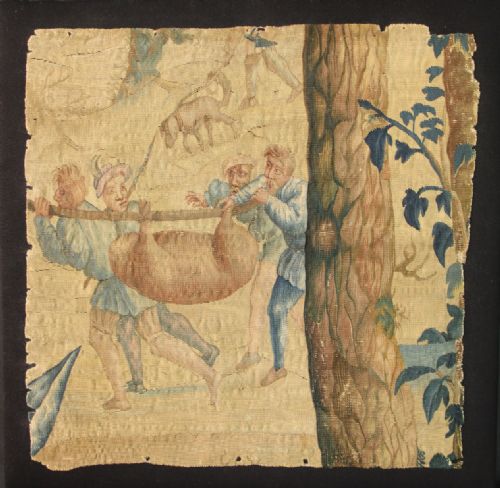
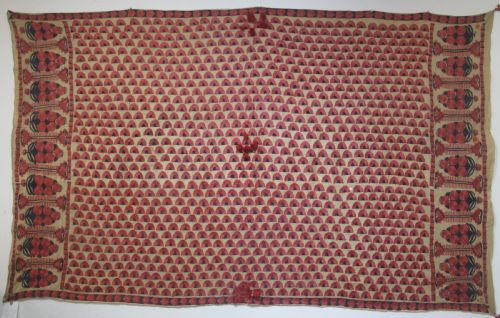


Beige Wall Hanging
A beige antique wall hanging brings centuries of textile artistry into a room, offering tactile warmth and layered history through woven tapestries and embroideries.
Beige Wall Hanging
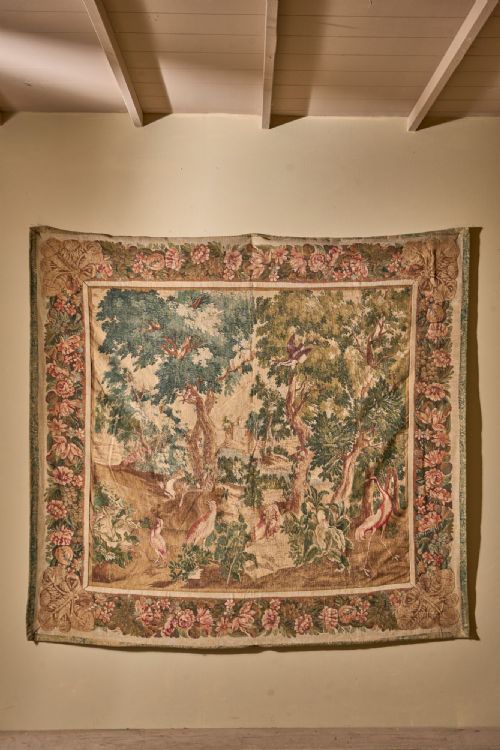
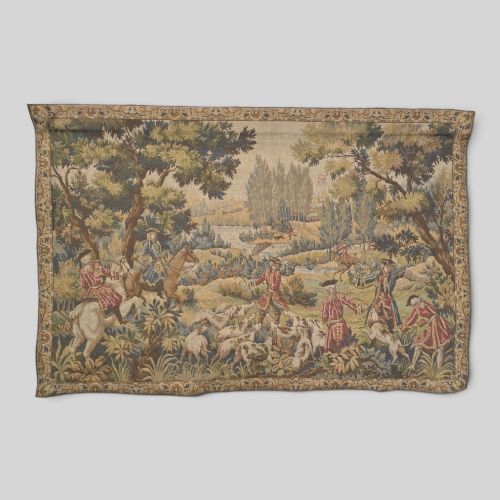
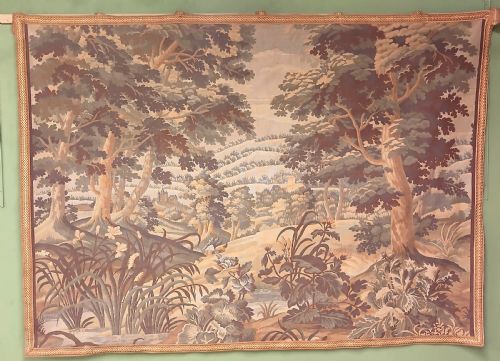
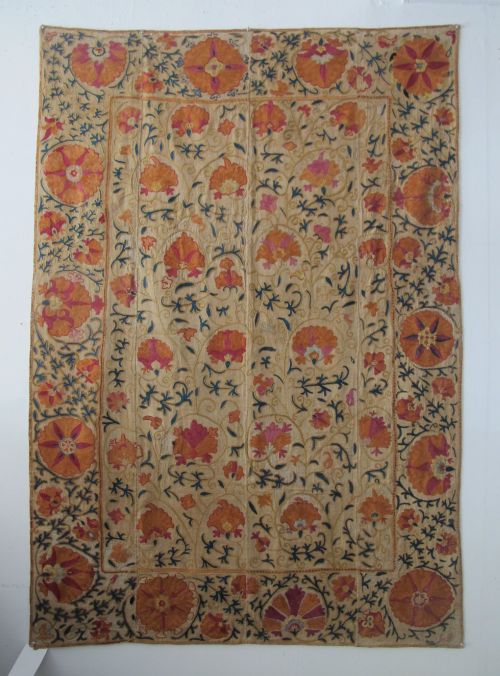
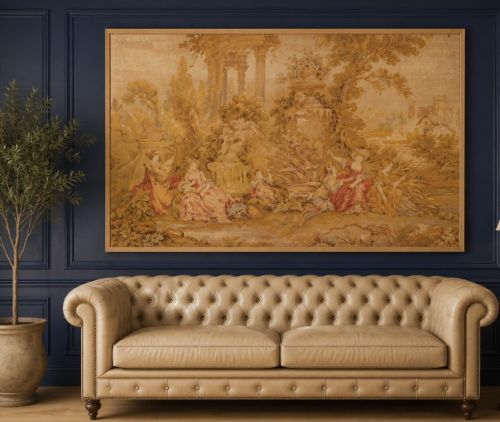
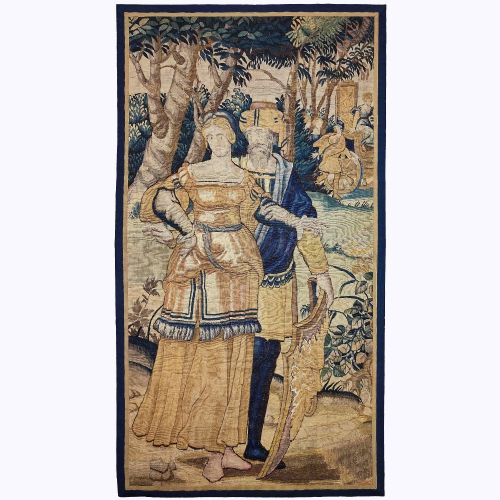
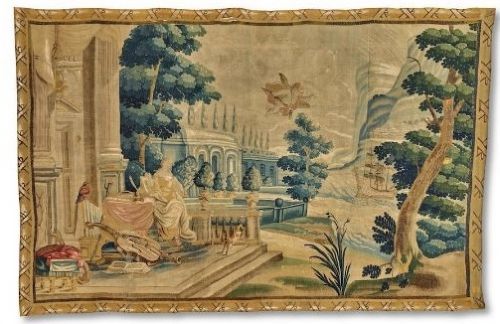
A beige antique wall hanging encompasses large woven tapestries, framed textile panels, and embroidered Suzanis spanning from the seventeenth century through to the early twentieth century. Buyers seeking a beige antique wall hanging typically encounter French Aubusson styles, Flemish mythological scenes, and Central Asian needlework panels rendered in muted neutral palettes.
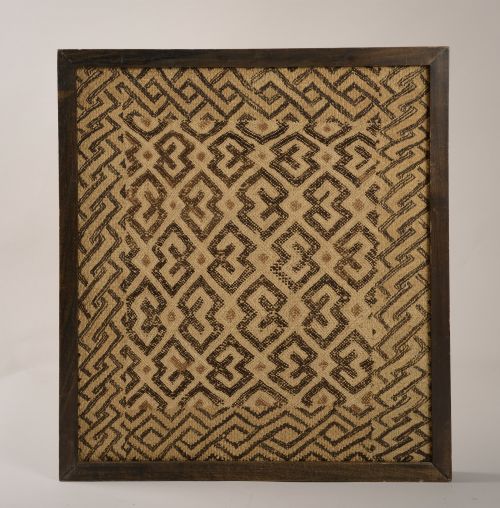
The assortment on this page ranges from monumental grand scale Flemish works down to smaller framed fragments and entre-fenêtre panels designed for narrow wall spaces. Pastoral scenes, floral compositions, and figural subjects dominate the woven examples, alongside intricate silk embroideries from Uzbekistan and Pakistan.
Origins stretch across Europe and Asia, uniting French chateau aesthetics, Brussels workshops, and traditional Central Asian textile crafts into a cohesive group of wall art. These pieces function as acoustic dampeners and visual anchors, transforming plain plaster into a textured historical focal point.
Materials and construction
Woven examples rely on wool and silk threads interlocked on traditional looms, often structured around sturdy timber frames or mounted onto board for display. Tapestry weavers built up pictorial depth by combining dyed animal fibres, creating subtle tonal gradations in beige, cream, and soft brown without relying on surface printing.
Embroidered textiles utilise fine cotton, linen, and silk grounds worked with needle-spun threads in dense chain or satin stitches. Central Asian Suzanis and regional shawls demonstrate specialised hand-embroidery techniques where individual makers executed complex botanical and geometric motifs directly onto woven backings.
Listings feature French tapestries spanning from the 17th century through to the 1930s, alongside Central Asian Suzanis and anatomical charts.
Judging quality and execution
Quality rests upon the density of the weave or stitchwork and the sophistication of the pictorial design, separating ambitious workshop output from simpler domestic output. Finer examples display meticulous shading, expressive figural drawing, and secure structural integrity across large expanses of fabric.
The preservation of the original fibres and the subtlety of the colour palette dictate the standing of a piece within its period. Tonal harmony and clarity in the drawing indicate superior artisan skill during the initial creation, whereas compromised structural support alters how a textile hangs and ages.
The Beige Wall Hanging Glossary
- Aubusson
- A style of tapestry originating from the French town of Aubusson, known for pastoral scenes and floral motifs woven without a pile. These pieces typically lack backing and hang flat against walls.
- Suzani
- A type of embroidered tribal textile originating from Central Asia, traditionally made by brides as part of their dowry. They feature bold floral designs worked in silk on cotton or linen foundations.
- Entre-fenetre
- A narrow vertical tapestry panel designed specifically to fit the wall space between two windows. These tall, slender formats often incorporate formal classical or floral arrangements.
- Flemish tapestry
- Woven wall art produced in the Flanders region during the sixteenth and seventeenth centuries, celebrated for complex mythological or historical narratives. They utilise high-warp or low-warp loom methods with wool and silk.
Beige Wall Hanging: Frequently Asked Questions
How do I hang a heavy textile safely?
Large woven tapestries require weight-distributing support methods such as a stitched-on linen sleeve through which a flat wooden batten or metal rod passes. Distributing the tension evenly across the top edge prevents distortion of the wool and silk fibres.
Smaller framed panels utilise standard picture-hanging hardware attached directly to secure wall studs. Ensure the hanging system matches the overall weight of the timber frame and backing board.
How should I clean an antique wall hanging?
Routine maintenance involves very gentle surface dusting using a soft brush or a low-suction vacuum cleaner fitted with a mesh screen. Professional textile conservators should handle any deeper wet cleaning or stain removal.
Avoid vigorous shaking, beating, or applying chemical detergents directly to fragile historical fibres. Keeping the textile away from direct heat sources and open fireplaces prevents the dry rot of wool and silk.
Can these textiles hang in direct sunlight?
Direct sunlight accelerates the fading of natural dyes in antique wool, silk, and cotton textiles. Positioning a wall hanging on a shaded interior wall preserves the subtle beige and neutral tones.
UV-filtering glass or window films offer additional protection if the room receives abundant daylight. Rotating pieces periodically also helps balance any environmental exposure over time.
How do I identify a Flemish tapestry?
Flemish tapestries from the seventeenth century often feature dense compositions filled with mythological figures, architectural elements, and lush botanical borders. The weave typically incorporates heavy wool yarns combined with fine silk highlights.
Examination of the reverse side reveals interlocking weave structures and hand-tied knots characteristic of European workshop production. Finer examples maintain high thread counts that allow for intricate facial expressions and realistic shading.