
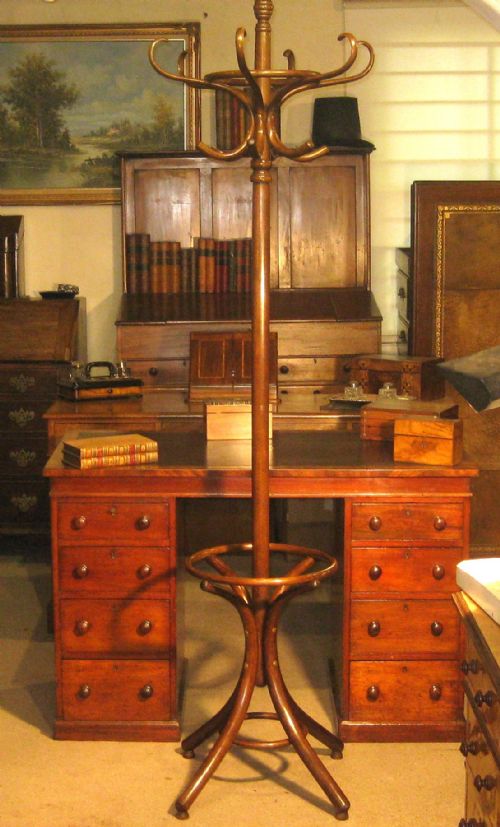


Beech Coat Tree
A beech coat tree offers practical hallway storage through lightweight steam-bent frames.
Beech Coat Tree
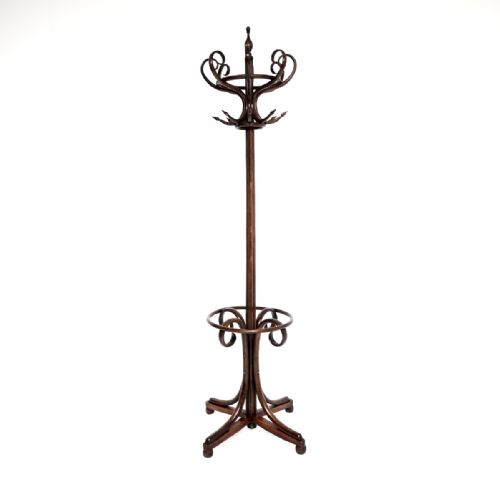
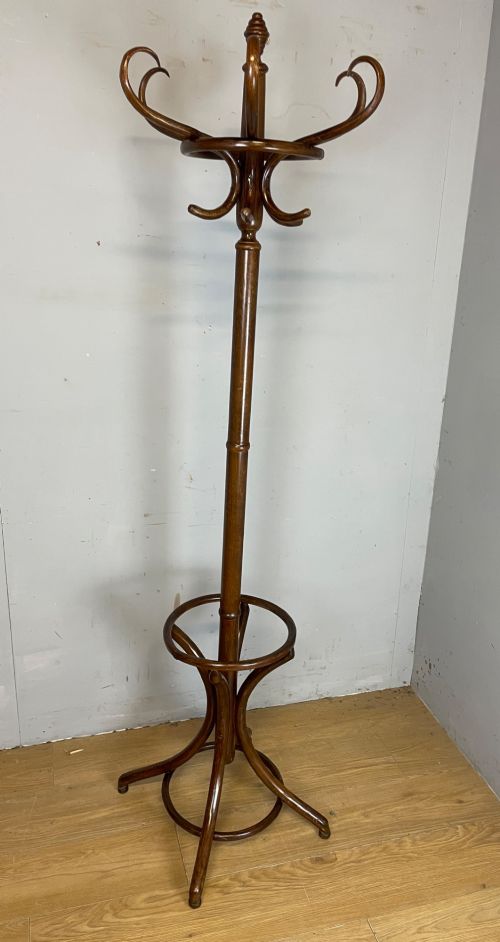
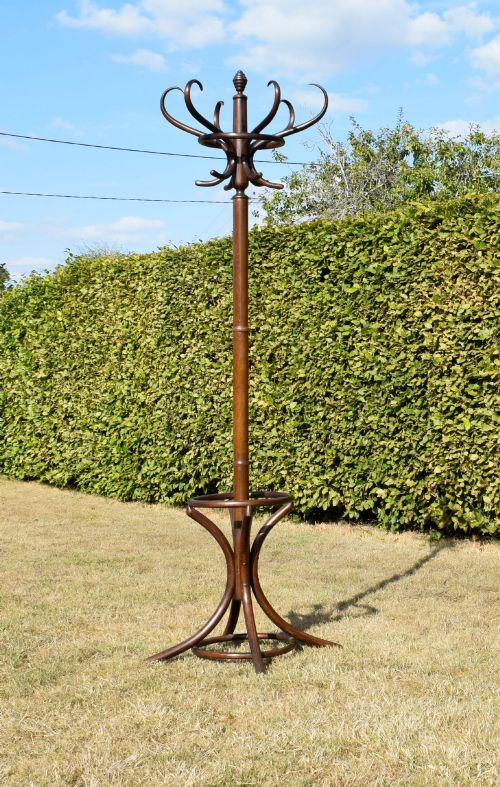
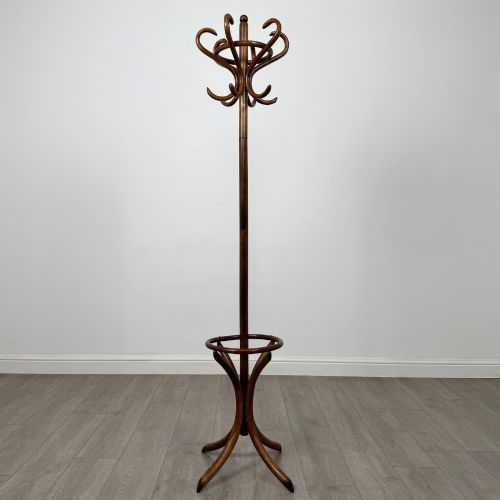
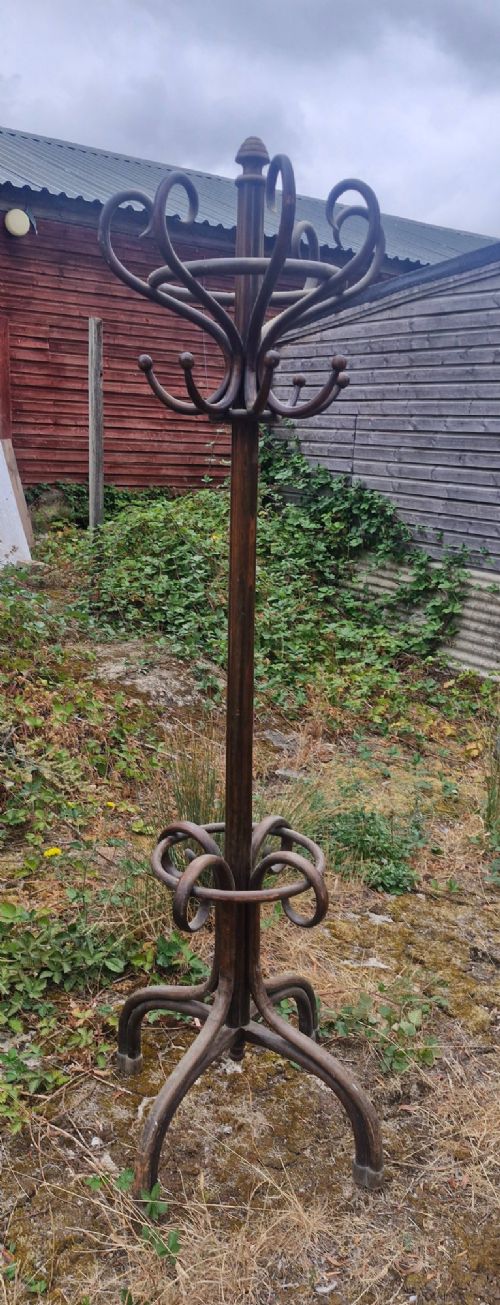
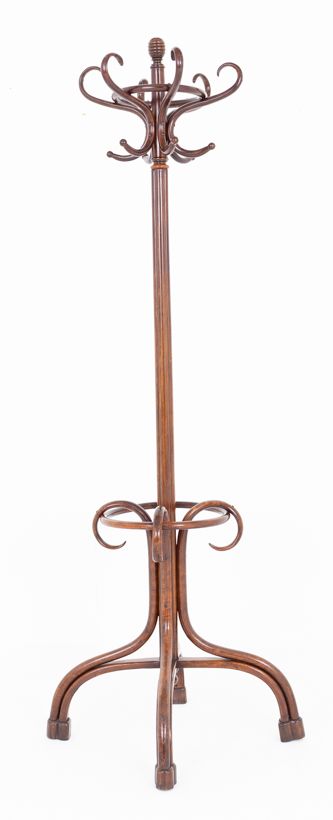
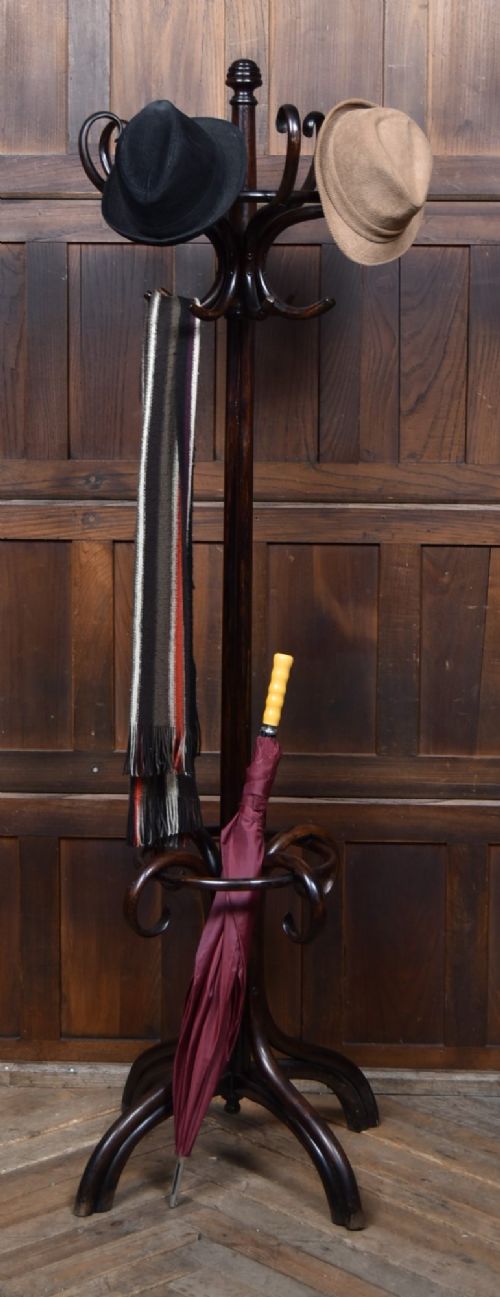
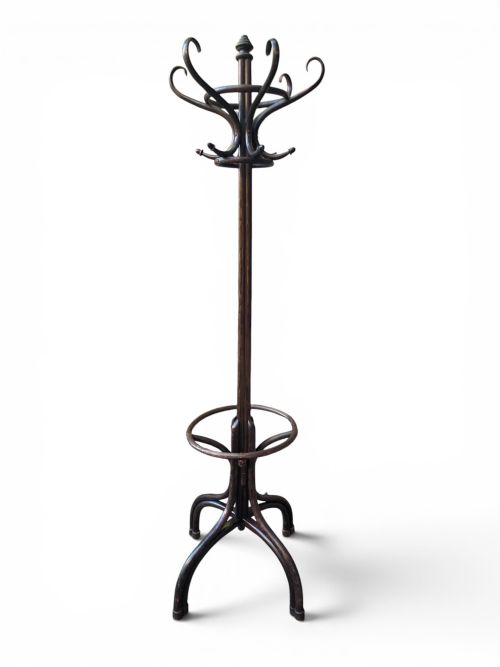
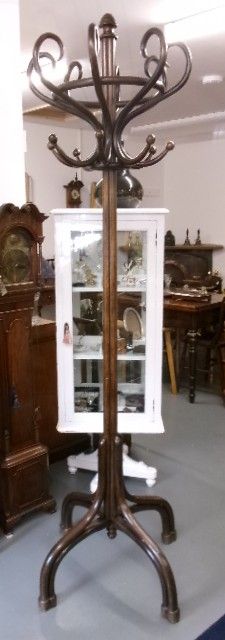
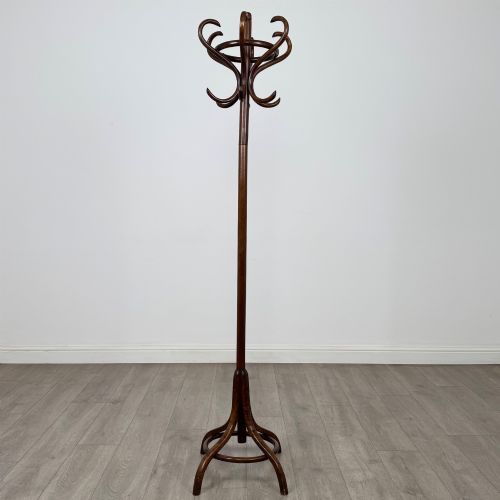
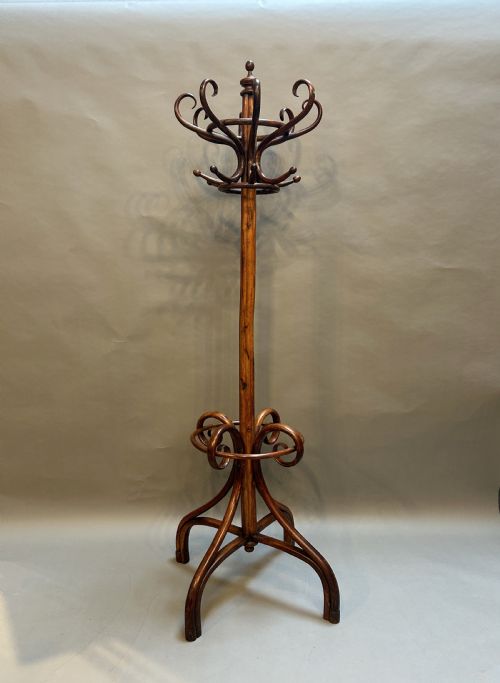
A beech coat tree is a vertical freestanding frame designed for hats, coats, and walking sticks in hallways and vestibules. These pieces appear in forms such as coat stands, hall stands, and revolving hatstands originating from the Victorian period through the early twentieth century.
Buyers meet examples shaped from steam-bent wood showcasing characteristic rounded loops and scrollwork. The selection spans pieces from the eighteen-eighties up through nineteen-thirty, often bearing the distinct stylistic influence of Thonet workshop designs.
What varies in quality
Quality rests in the scale of the frame and the complexity of the bentwood loops, with larger stands and double tops representing more ambitious carpentry. Heavier framework indicates sturdier construction designed to bear the weight of winter garments.
The refinement of the curves and the crispness of the turning on the central column distinguish standard production from superior pieces. Preservation of the original honey-coloured finish also elevates an example.
Some revolving hatstands let you spin your bowler hat in circles while deciding which walking stick matches your mood.
The Beech Coat Tree Glossary
- Bentwood
- A technique where timber is subjected to steam and bent into curved structural forms. This process defines the characteristic appearance of these stands.
- Hall stand
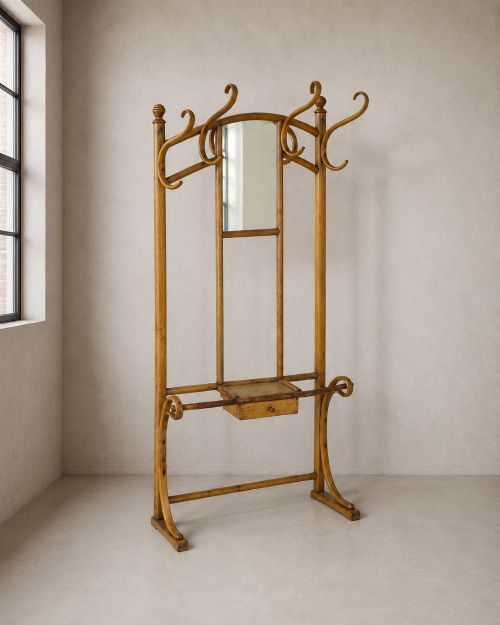
- A piece of furniture combining coat hooks with umbrella holders and sometimes a mirror or small shelf. These serve the same entry-space function as a coat tree.
- Steam-bent wood
- Timber shaped by moisture and heat before drying into permanent curves. It provides the lightweight strength required for tall vertical coat racks.
- Revolving top
- A rotating upper section allowing access to hooks placed around a central axis. This mechanism appears on select hatstands.
Beech Coat Tree: Frequently Asked Questions
How do I date a bentwood stand?
Dating relies on stylistic markers and construction methods matching periods from the late nineteenth century to nineteen-thirty. Early Victorian pieces often feature heavier turning.
Later Edwardian and nineteen-twenties examples tend toward simplified forms and specific manufacturer numbering.
Are these stands stable enough for heavy coats?
Most pieces handle daily outerwear comfortably when placed on a level floor. The wide footprint of the lower legs distributes weight outward.
Heavier quality examples provide additional mass to counter unbalanced hanging.
What is the difference between a coat tree and a hall stand?
A coat tree primarily consists of a central post with branching hooks for garments and hats. Hall stands frequently incorporate lower umbrella rings and backboards.
Both serve entryways using similar bentwood construction.
How should I clean the wood finish?
Maintenance requires gentle dusting with a dry or slightly damp cloth to protect the stained surface. Avoid harsh chemical cleaners that strip historical patination.
Wax can nourish honey-coloured beech when applied sparingly.