

Bedroom Storage Chest Walnut
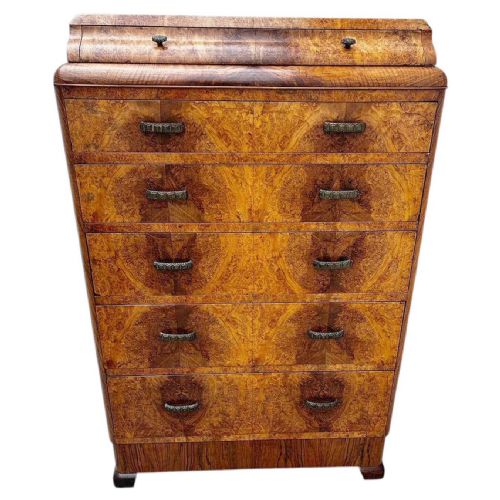
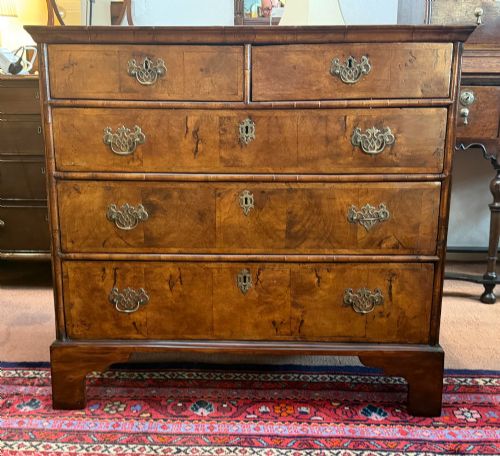
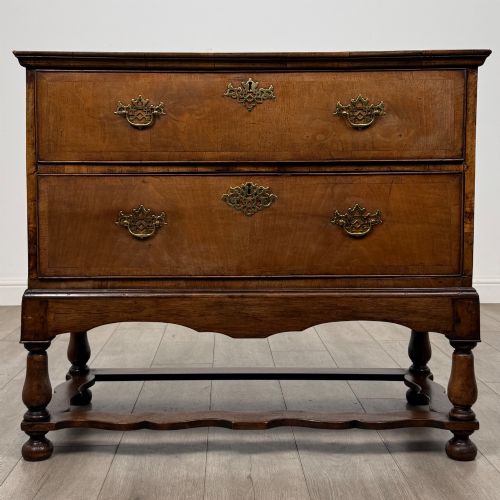
A bedroom storage chest walnut brings rich timber grain and historic character to a room, offering deep drawers for garments and linen.
Bedroom Storage Chest Walnut
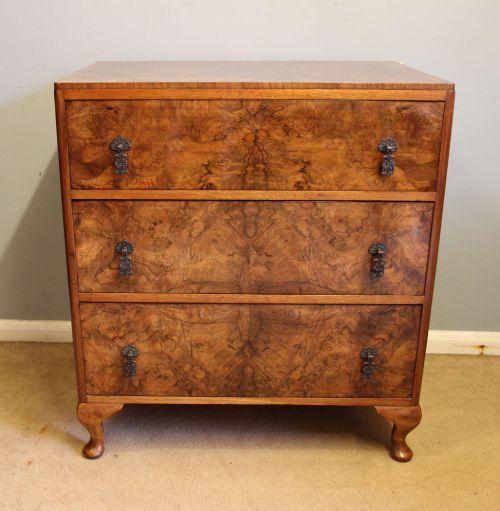
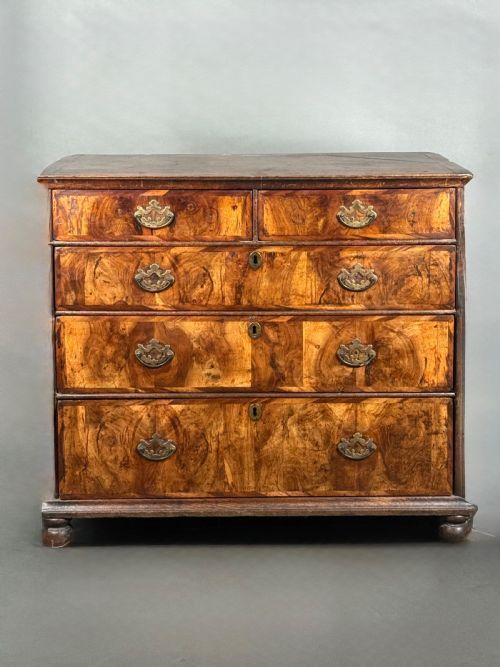
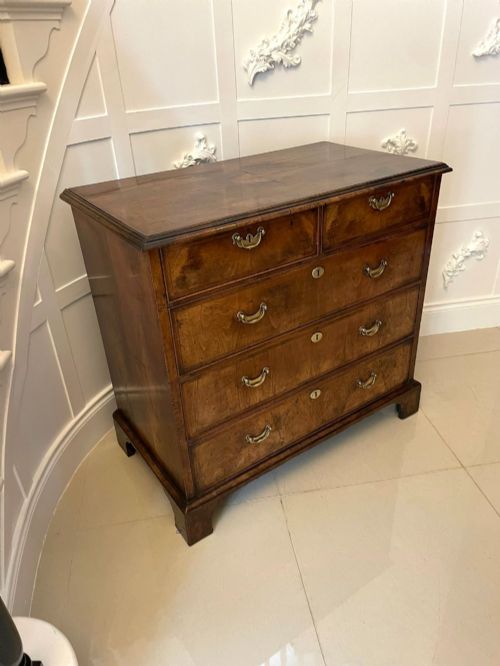
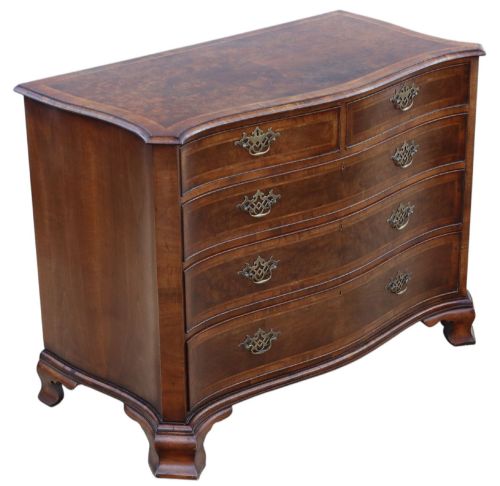
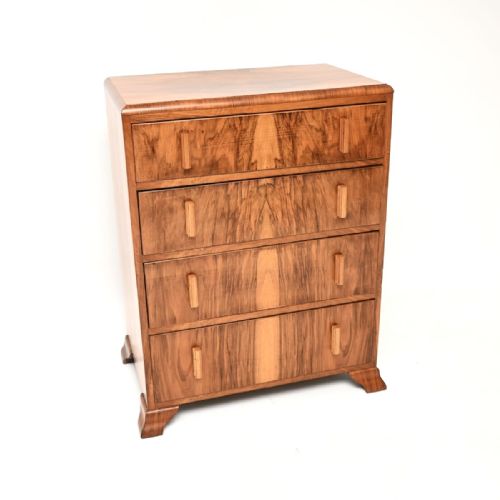
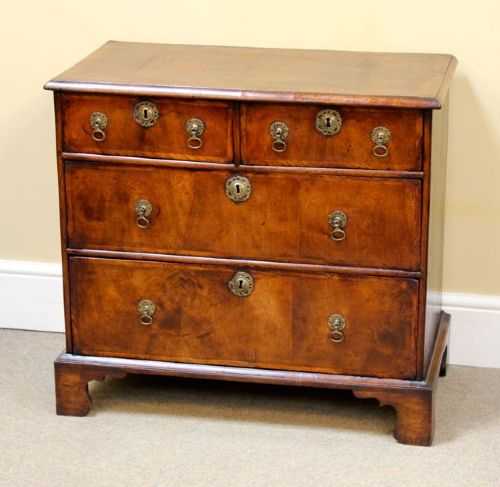
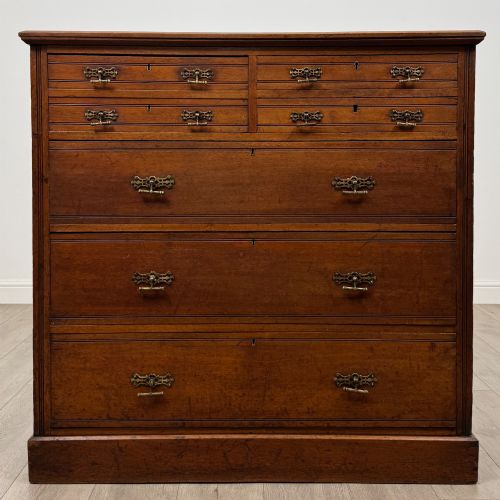
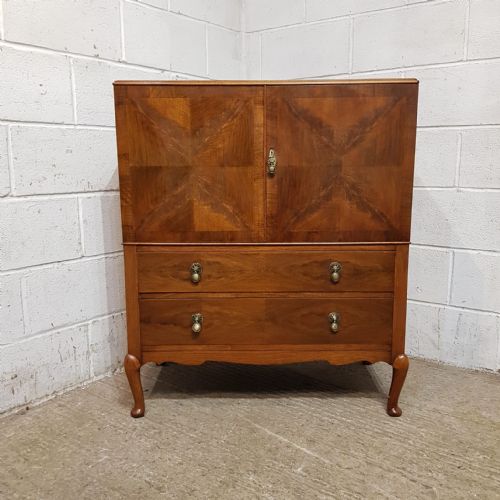
A bedroom storage chest walnut spans several centuries of design, encompassing classic forms designed for domestic organisation and clothing storage. Pieces meeting this description range from early Georgian and Queen Anne examples to later Art Deco iterations.
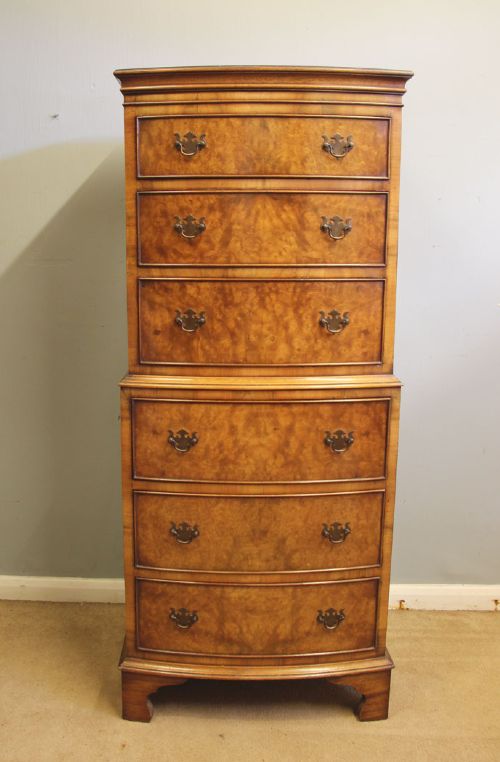
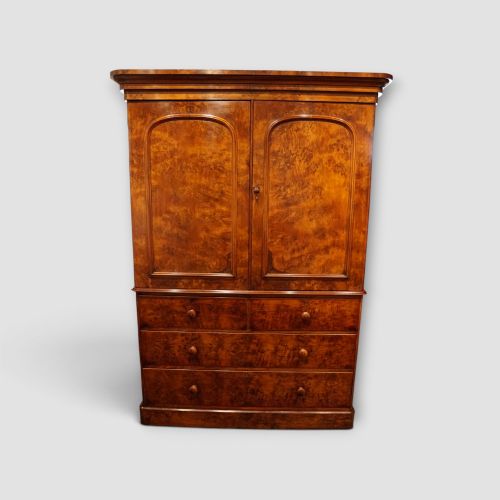
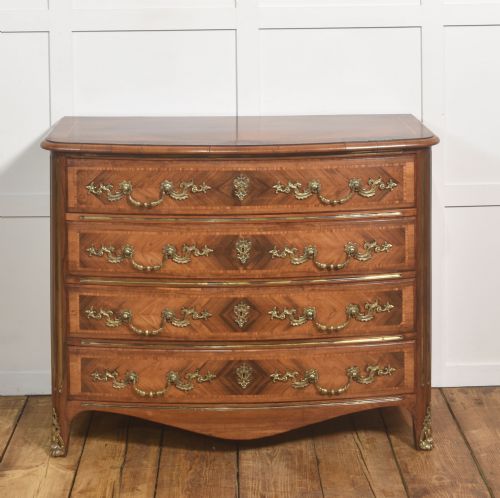
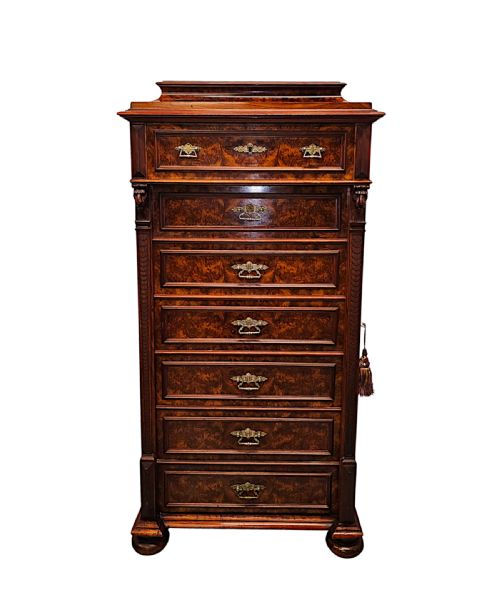
The selection on this page includes chests of drawers, tallboys, linen presses, and bedside cabinets. Buyers encounter both straightforward rectangular drawer units and more decorative serpentine or bow front shapes.
Origins stretch across English workshops and continental makers, incorporating styles such as George I, Victorian, and Edwardian revivals alongside period originals.
How they were made
Cabinet makers utilised solid timbers alongside specialised decorative veneers like burr walnut, figured walnut, and crossbanding to create rich surface patterns. Secondary woods such as oak and pine frequently form the internal drawer linings and structural carcases.
Traditional construction relies on tight dovetail joints for drawers and hand-cut framing, paired with brass handles, escutcheons, and occasional marble tops on commodes.
Listings feature walnut chests spanning the eighteenth, nineteenth, and twentieth centuries, incorporating oak, pine, and brass elements.
What varies in quality
The refinement of the timber selection dictates much of the visual appeal, separating uniform surfaces from highly figured, book-matched burr walnut veneers that demand advanced craftsmanship. The crispness of carved details, such as bracket feet, mouldings, and crossbanded borders, marks the distinction between standard production and superior workshop output.
Internal integrity also determines grade, evident in the neatness of dovetail joints, the smoothness of drawer action, and the retention of original brass hardware rather than later replacements.
Jas Shoolbred
The Bedroom Storage Chest Walnut Glossary
- Burr walnut
- A veneer taken from the growth excrescence of a walnut tree, yielding a swirling, highly decorative grain pattern. This material appears frequently on high-status cabinet fronts.
- Tallboy
- A tall chest of drawers standing upon another chest, often combining a lower base with an upper section to maximise storage. These pieces provide significant vertical capacity.
- Crossbanding
- A strip of veneer applied perpendicularly to the surrounding grain along the edges of a drawer front or top. This technique frames the primary timber.
- Wellington chest
- A tall, narrow chest of drawers secured by a hinged locking side pilaster bar. Originating in the nineteenth century, it holds numerous shallow drawers.
- Linen press
- A tall storage cabinet containing sliding trays or shelves in the upper section and drawer storage below. Originally built for household textiles.
Bedroom Storage Chest Walnut: Frequently Asked Questions
How do I date a walnut chest?
Dating relies on examining construction methods, timber choices, and hardware styles. Early pieces from the eighteenth century often feature solid timber, hand-cut dovetails, and different secondary woods compared to later Edwardian or Art Deco reinterpretations.
Secondary indicators include the presence of veneer types, drawer lining materials, and overall proportions that match specific historical periods like Queen Anne or George I.
What is the difference between a tallboy and a chest on chest?
A tallboy typically refers to a single tall chest of drawers, sometimes incorporating a cupboard section at the top. A chest on chest specifically describes a two-part piece where a slightly smaller chest sits directly upon a wider base chest.
Both forms offer generous vertical storage whilst occupying a minimal floor footprint in a bedroom setting.
How should I care for walnut veneer?
Walnut veneer requires protection from direct sunlight and dramatic shifts in room temperature or humidity to prevent lifting or drying out. Regular dusting with a soft, dry cloth keeps the surface clean without damaging the historic finish.
Occasional application of appropriate wax polish maintains the lustre of the timber without building up heavy chemical layers.
Are these chests suitable for modern clothes storage?
These historical chests provide deep and functional drawer space suited for folded garments, knitwear, and linen. Measuring the internal drawer dimensions ensures compatibility with modern clothing organisation needs.
Placing drawer liners inside protects delicate fabrics from older timber interiors while preserving the interior structure.