

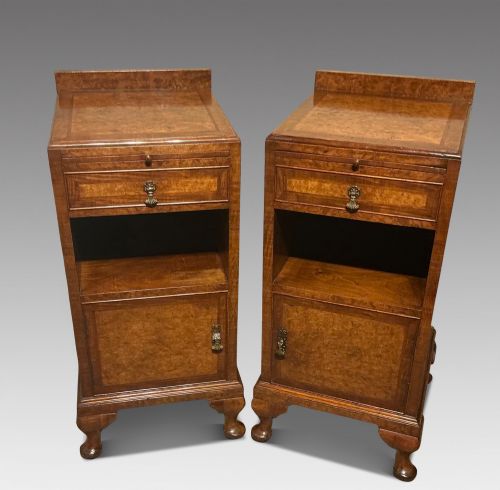

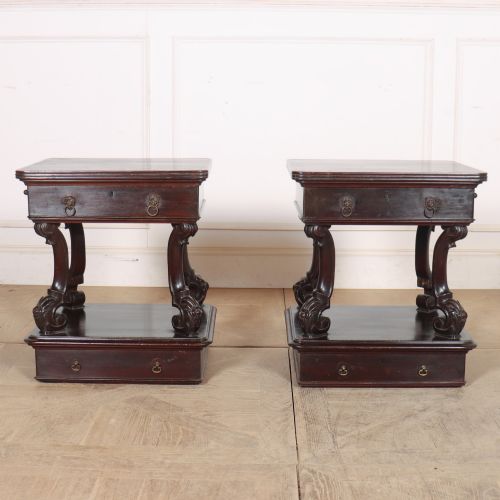


Bedroom Lamp Tables
These bedroom lamp tables combine practicality and period character, offering convenient bedside surfaces shaped by Victorian, Edwardian, and Art Deco hands.
Bedroom Lamp Tables
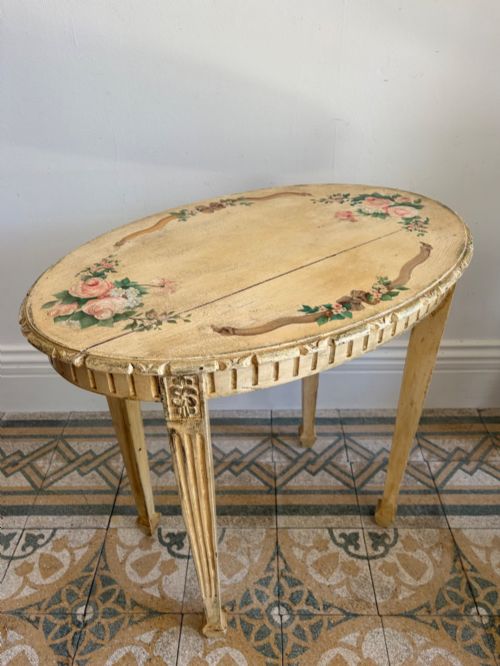
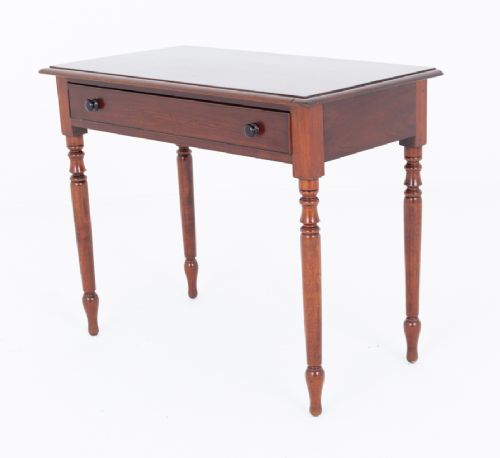
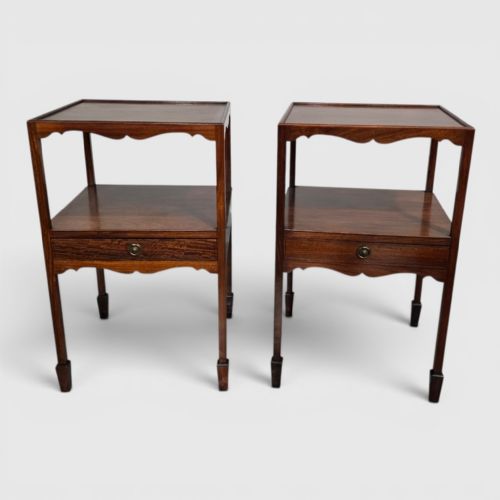
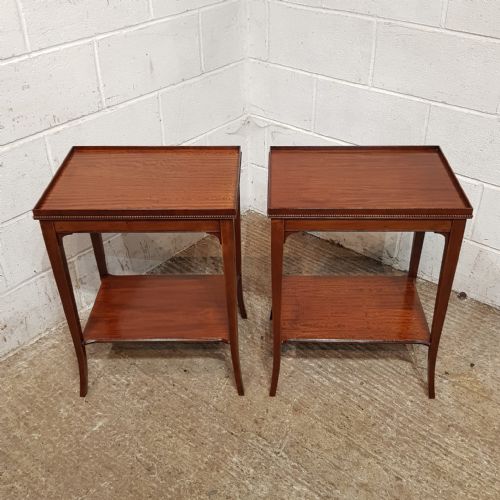
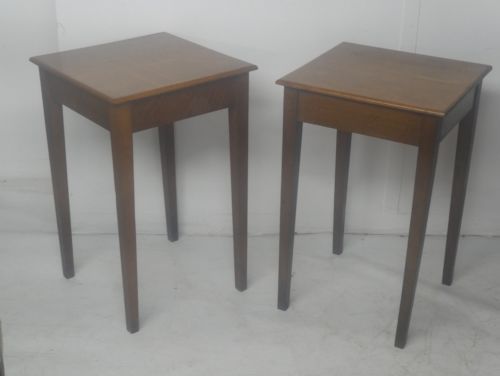
When you search for bedroom lamp tables, you encounter compact furniture forms designed for beside the bed or as small supporting surfaces in sitting rooms. The selection ranges from Victorian and Regency pieces to Edwardian and Art Deco iterations.
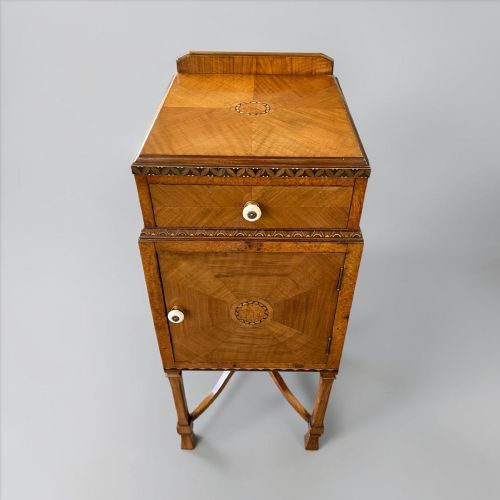
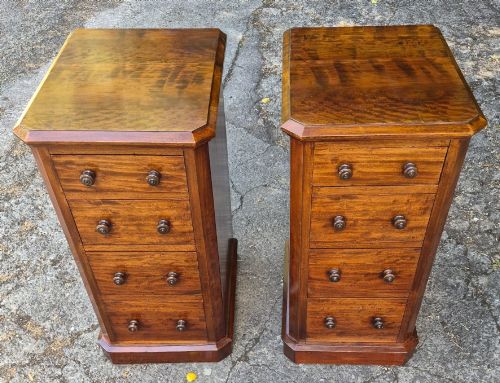
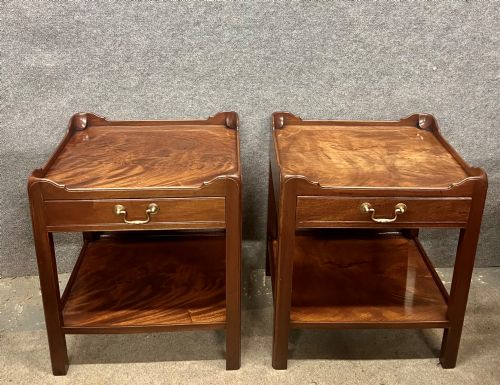
The most common formats you meet include pairs of bedside chests, small side tables, and pot cupboards with single drawers or enclosed doors. These items originate from the nineteenth and early twentieth centuries, spanning periods such as eighteen-sixty, nineteen-hundred, and nineteen-thirty.
Makers adapted traditional forms like chest of drawers and night stands into smaller footprints suited for holding lamps and bedside necessities. Scottish oak, Irish variants, and French styles appear alongside standard English mahogany and walnut pieces.
Materials and Construction
Cabinet makers utilised dense hardwoods including mahogany, walnut, burr walnut, and satinbirch, frequently applying decorative veneer over secondary timbers. Solid oak and metal components also surface across the inventory.
Construction techniques involve traditional joinery, serpentine shaping of drawer fronts, and the incorporation of brass hardware or ormolu mounts. Surfaces display polished wood grains, while specific examples incorporate birds-eye maple or bone details.
Materials across the listings include mahogany, walnut, burr walnut, satinbirch, oak, metal, brass, and bone.
Craftsmanship and Proportion
The distinction between standard and superior pieces rests in the selection of figured timbers, such as burr walnut or heavily grained mahogany, and the crispness of the cabinet work. Matched pairs command greater attention than solitary items.
Refined proportions, such as neat widths under forty centimetres and well-executed serpentine drawer fronts, separate ordinary utility furniture from finer examples intended for polite rooms.
The Bedroom Lamp Tables Glossary
- Night stand
- A small bedside table or cabinet designed to hold a lamp and nighttime items. These pieces often feature a single drawer above an open shelf or enclosed cupboard.
- Pot cupboard
- A small bedside cabinet originally constructed to house a chamber pot. Over time, collectors and dealers use the term interchangeably with bedside cabinet.
- Serpentine
- A furniture front curved with a convex centre flanked by concave ends. This undulating shape requires high skill in woodworking and veneer application.
- Burr walnut
- Timber taken from a walnut tree outgrowth, producing intricate, swirling grain patterns. Cabinet makers prized this wood for high-status veneering on drawer fronts and top surfaces.
Bedroom Lamp Tables: Frequently Asked Questions
What is a bedroom lamp table?
A bedroom lamp table is a small piece of furniture designed to sit beside a bed or chair to hold a light source and small personal items. They appear as compact side tables, miniature chests of drawers, or enclosed cupboards.
These versatile pieces span multiple historical periods, offering functional surfaces combined with period wood grains and decorative detailing.
How do I identify a Victorian bedside table?
Victorian bedside tables typically feature solid mahogany or walnut construction, turning or structural moulding, and simple drawer configurations. They often show deep, dark polish and robust joinery.
Many examples from this era function as pot cupboards or small side tables with single drawers and panelled doors.
Are Art Deco lamp tables different?
Art Deco lamp tables, dating around nineteen-twenty to nineteen-thirty, favour geometric simplicity and striking wood veneers. You will notice birds-eye maple, burr walnut, and clean, rounded lines.
These pieces break away from Victorian ornamentation, focusing instead on the natural pattern of the wood and streamlined cabinet forms.
Can I use these tables in modern rooms?
These compact tables fit easily into contemporary bedrooms due to their modest footprints and diverse stylistic range. Their small widths make them practical for tight spaces.
Mixing a nineteenth-century mahogany side table or an Edwardian cabinet with modern decor adds texture and historical contrast to a room.