
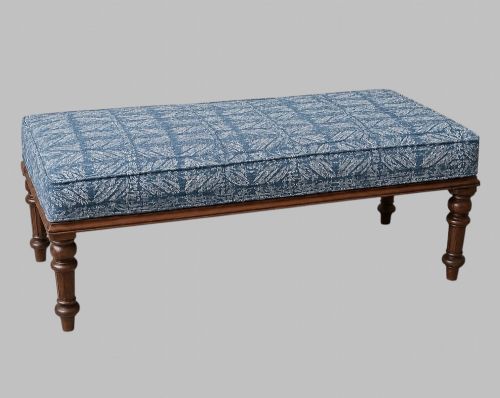
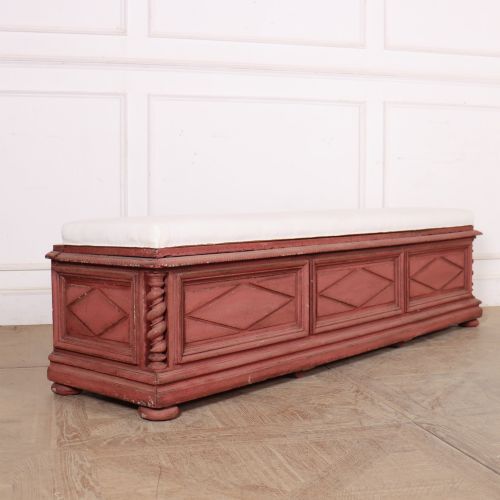
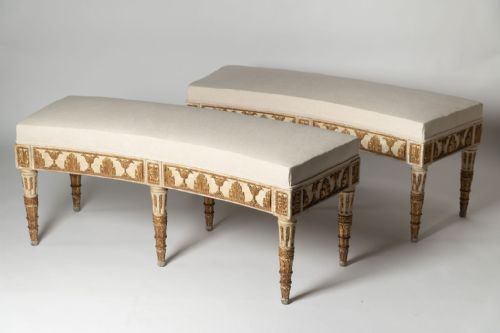


Bed End Benches
Bed end benches are versatile seating pieces designed to sit at the foot of a bed, combining practical utility with refined interior placement.
Bed End Benches
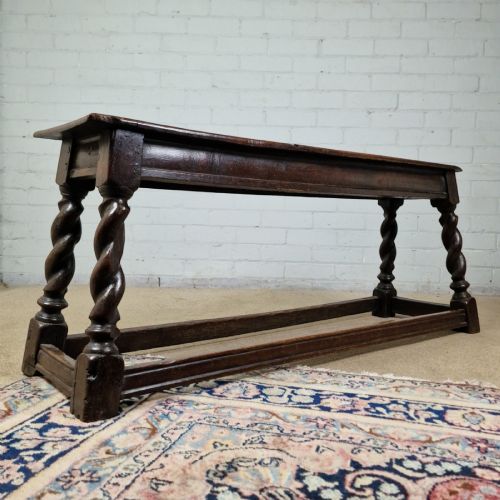
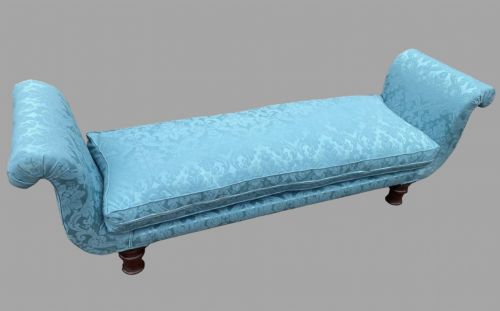
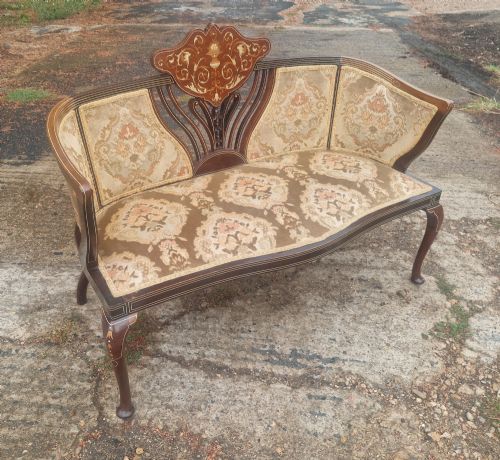
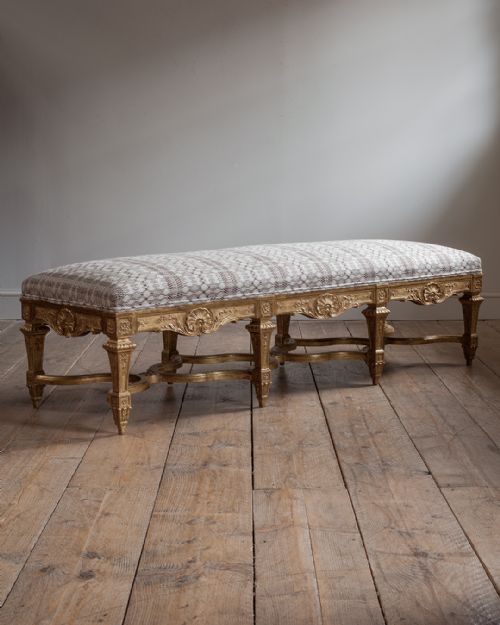
Bed end benches encompass a variety of seating forms placed at the foot of a bed, including window seats, long stools, ottomans, and small sofas. When searching for bed end benches, buyers encounter pieces spanning from the eighteenth century through to the twentieth century, reflecting diverse historical revivals.
Origin styles vary widely, encompassing English Georgian revival, Italian neoclassical, French provincial, and Arts and Crafts aesthetics. This stylistic breadth allows these pieces to integrate into both traditional and modern bedroom schemes.
Materials and construction
Makers utilised solid timbers such as mahogany, walnut, oak, and birch for the structural frames of bed end benches. Carved details, fluted legs, and ball and claw feet demonstrate traditional cabinet-making techniques.
Upholstery forms an essential component, utilising fabrics like velvet, linen, and patterned textiles from makers such as Morris and Co. and Liberty. Frames frequently feature decorative inlays of satinwood and bone, alongside painted or giltwood finishes.
Periods represented span from the 18th century through the Victorian, Edwardian, and Art Deco eras into the 20th century.
Distinctions in quality
Quality in bed end benches rests upon the crispness of timber carving, the integrity of the frame construction, and the fidelity of period stylistic details. Superior examples exhibit balanced proportions and hand-carved elements rather than mechanical uniformity.
The standard of upholstery and the choice of covering fabric significantly influence the execution of the piece. Period-appropriate textiles and professional reupholstery maintain the integrity of historic frames.
The Bed End Benches Glossary
- Window seat
- A long, narrow upholstered bench originally designed to fit into the recess of a bay window. These forms translate well to placement at the foot of a bed.
- Ottoman
- A low, fully upholstered seat or stool without a back or arms, often featuring internal storage or deep buttoning. They provide functional softness at the bed end.
- Lit bateau
- A French sleigh bed design featuring scrolled head and footboards of equal height, often accompanied by matching daybeds or benches. The style gained popularity during the nineteenth century.
- Cabriole leg
- A furniture leg that curves outward at the knee and tapers inward toward the foot, mimicking animal limbs. This form frequently appears on eighteenth and nineteenth-century seating.
- Giltwood
- Wood that has been treated with gold leaf or a gold-coloured metallic finish. It characterises decorative French and neoclassical styles.
Bed End Benches: Frequently Asked Questions
What is a bed end bench used for?
Bed end benches serve as practical seating for dressing and provide a convenient surface for laying out garments or decorative cushions.
They also anchor the visual composition of a bedroom, bridging the gap between the bed and surrounding furniture.
How do I choose the right size?
Measure the width of your bed to ensure the bench does not exceed the mattress span, leaving adequate clearance for movement around the room.
Consider the height relative to the mattress base so the proportions remain balanced within the bedroom space.
Are these benches comfortable to sit on?
Comfort depends upon the firmness of the internal padding and whether the piece has been recently reupholstered with modern support materials.
Many historic window seats and long stools feature firm cushioning intended for brief periods of seating rather than lounging.
How do I identify Edwardian examples?
Edwardian pieces often display lighter woods such as satinwood inlays, alongside mahogany frames with refined classical revival motifs.
Construction methods from this early twentieth-century period combine traditional cabinet-making with standardised framing techniques.