



Barrel Back Wingback Chair
A barrel back wingback chair offers wrapped comfort and draught-excluding sides, making it a timeless addition to any traditional room.
Barrel Back Wingback Chair
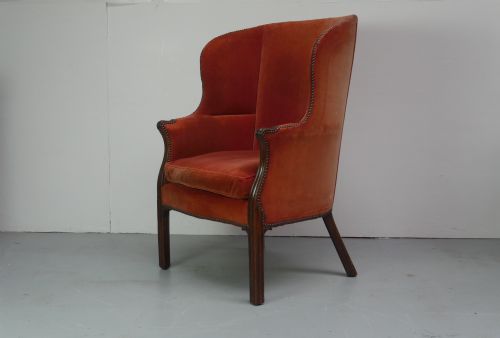
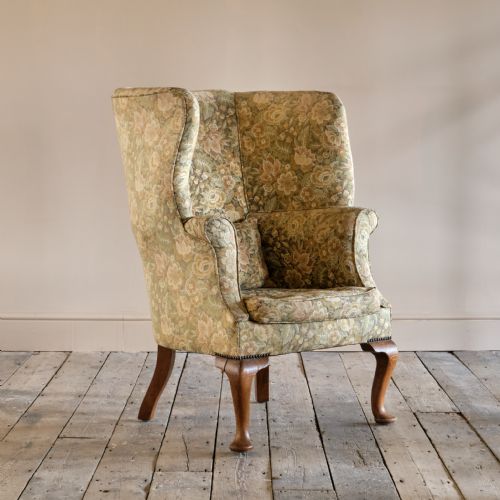
A barrel back wingback chair provides deep, enclosed seating designed to keep out household draughts. The curved back flows directly into enclosed wings, creating a sheltered space for the sitter.
You will most commonly encounter examples dating from the Georgian period through to the early twentieth century, including Victorian, Edwardian, and nineteen-twenties interpretations. These pieces appear in forms ranging from compact reading chairs to large suites.
Originating in English seating design, these armchairs combine solid timber frames with generous upholstered bodies. They serve equally well as fireside seating or as statement pieces in a study.
How they were made
The foundation relies on sturdy internal timber frames constructed from mahogany, hardwood, and general timber. Master carpenters shaped these woods to form the signature curved back and integrated wing assembly.
Traditional upholstery techniques layer natural stuffings within the barrel curve. Finish materials span from durable fabric and velvet to tapestry upholstery, leather, and recycled cotton.
The listings span multiple eras, including Georgian, Victorian, Edwardian, and nineteen-twenties pieces constructed from mahogany, hardwood, leather, and velvet.
What varies in quality
The grace of the curved wooden frame dictates the baseline of quality. Superior pieces maintain a smooth, continuous sweep from the top rail down through the arms without awkward junctions.
Upholstery execution separates standard examples from exceptional ones. The tautness of the fabric over the complex curves and the precision of the ribbing reveal the maker's underlying skill.
The Barrel Back Wingback Chair Glossary
- Barrel back
- An upholstered seating form where the back curves continuously into the arms to enclose the sitter. This design evolved to provide maximum protection from cold room draughts.
- Wingback
- A style featuring protective flaps attached to the back frame of the armchair. These wings block side breezes and trap the heat generated by a fireplace.
- Georgian
- A design period spanning the eighteenth and early nineteenth centuries. Pieces from this era typically display refined proportions and quality mahogany or hardwood construction.
- Victorian
- The nineteenth-century design period known for robust proportions and varied revival styles. Chairs from this era often scale larger and incorporate heavier padding.
- Edwardian
- A twentieth-century period characterised by lighter domestic furniture forms. These items often blend traditional silhouettes with accessible materials.
Barrel Back Wingback Chair: Frequently Asked Questions
What is a barrel back wingback chair?
A barrel back wingback chair is an upholstered armchair featuring a rounded, enclosed back that curves forward into integrated arms. The attached wings provide additional shelter and comfort for the sitter.
These pieces were historically placed near hearths to block cold air. Today, they function as comfortable reading seats or focal points in traditional interiors.
How do I date an antique barrel back chair?
Dating relies on examining the timber species, upholstery style, and overall frame proportions. Georgian examples usually feature mahogany and restrained lines, whereas Victorian versions tend to be larger.
Twentieth-century pieces from the nineteen-tens and twenties often introduce distinct fabric choices like blue ribbed cotton. Comparing these construction traits to known period styles clarifies the age.
Where should I place a barrel back chair?
These chairs suit rooms where you want to create a cosy, sheltered reading nook. Their enclosed shape makes them ideal companions for a fireplace or a quiet corner of a study.
Ensure there is sufficient space around the chair to appreciate the curved silhouette. They also pair well with classic sofas in larger reception rooms.
What materials are used in these chairs?
The structural frames are built from timber, hardwood, and mahogany, often reinforced with brass details. These strong woods support the heavy curve of the back.
Upholstery materials vary from traditional velvet and tapestry to leather, recycled cotton, and fabric. This diverse selection reflects the different eras in which the chairs were built.