

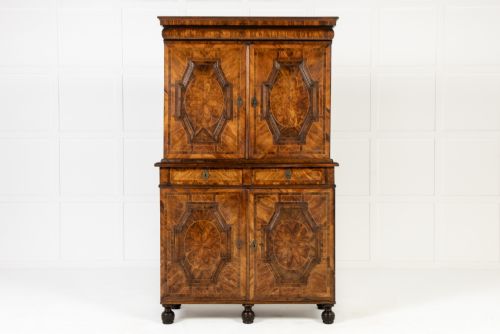


Baroque Wooden Armoire
A baroque wooden armoire is a substantial piece of storage furniture offering deep cupboards and heavy timber construction that anchors a room with period presence.
Baroque Wooden Armoire
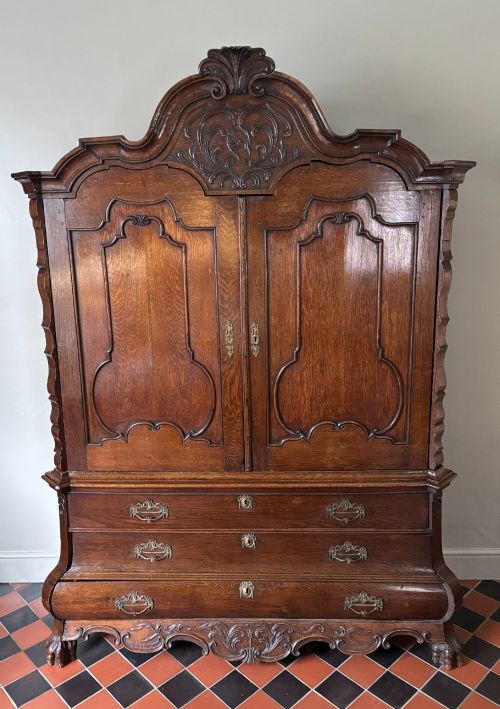
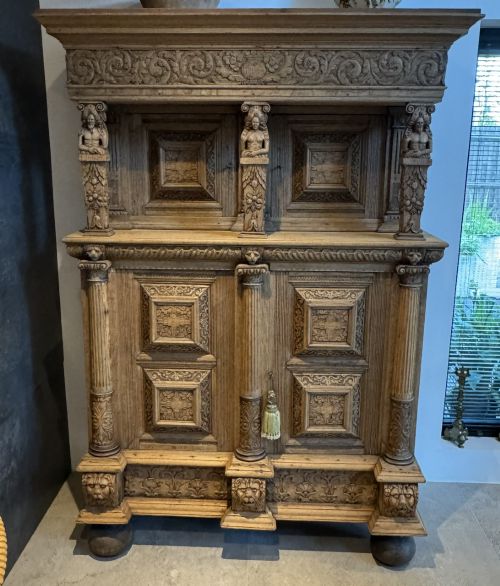
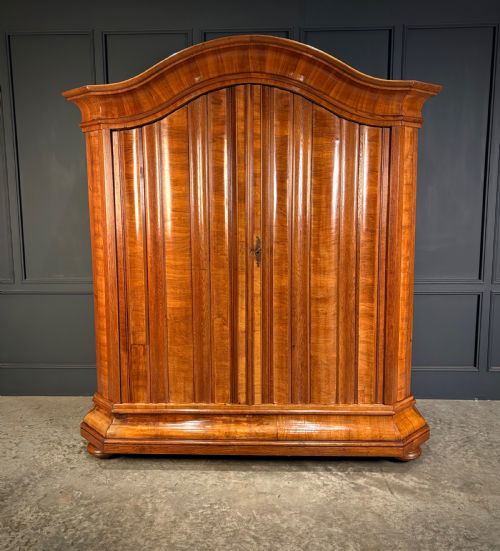
When searching for a baroque wooden armoire, buyers encounter large storage pieces originating from the seventeenth and eighteenth centuries across continental Europe. These include oak linen press cupboards, walnut cabinets, and fruitwood wardrobes created to store household textiles and garments in grand domestic interiors.
The pieces listed on this page encompass regional variations such as Dutch, Spanish, Flemish, French, and German examples. Forms range from freestanding wardrobes and press cupboards to cabinets on stands and marquetry robes.
The most common form met here is the large oak or walnut cabinet and press cupboard dating from the eighteenth century. These heavy timber pieces demonstrate the robust proportions and functional interior shelving characteristic of the period.
How they were made
Construction relies heavily on solid timber framing utilising oak, walnut, fruitwood, kingwood, and pine. Master joiners shaped these dense woods into heavy panels and structural carcases designed to withstand decades of domestic use.
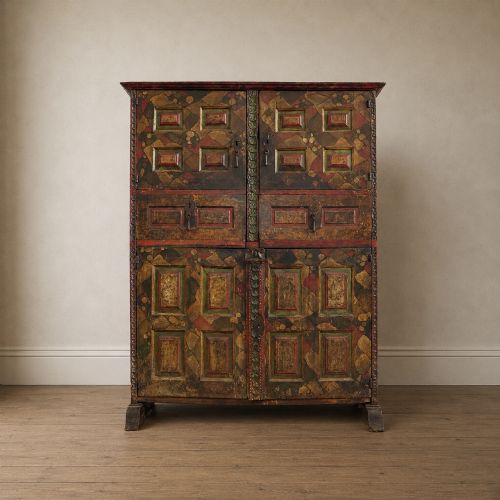
Surface decoration incorporates contrasting veneers, intricate marquetry, and polychrome pigment. Metalwork components in brass and iron provide structural reinforcement and functional hardware for doors and internal presses.
Baroque Wooden Armoire Retail Price Guide 2026
Typical asking prices for baroque wooden armoire among the pieces listed under this phrase on Sellingantiques today, from the lower quarter to the upper quarter. They describe what is for sale here now, not the wider market.
Current listings feature pieces spanning the seventeenth and eighteenth centuries, constructed from oak, walnut, kingwood, and fruitwood.
What varies in quality
The refinement of the timber selection and the complexity of the surface ornament divide standard utility pieces from exceptional works. Finer examples display sophisticated marquetry patterns, highly figured walnut veneers, and carefully applied polychrome painted finishes.
The architectural ambition of the joinery also sets pieces apart, with superior items featuring carved mouldings, panelled doors, and integrated stands that elevate the proportions of the cabinet.
The Baroque Wooden Armoire Glossary
- Armoire
- A large wardrobe or cupboard used primarily for hanging or storing garments. These substantial pieces often feature double doors enclosing deep internal shelving.
- Press cupboard
- A two-tier piece of furniture designed for storing linen and textiles, incorporating internal sliding trays or shelves. The upper and lower sections provide generous capacity for household storage.
- Marquetry
- The art of applying decorative veneer pieces in wood to a structural carcase to form geometric or pictorial designs. This technique creates patterned surfaces using contrasting timbers.
- Polychrome painted
- Decoration utilising multiple colours applied directly to the wooden surface. This historical finish appears on specific regional pieces to create pictorial or decorative schemes.
Baroque Wooden Armoire: Frequently Asked Questions
What is a baroque wooden armoire?
A baroque wooden armoire is a large storage cabinet originating from seventeenth and eighteenth-century Europe. These pieces utilise solid timbers like oak and walnut to provide deep internal shelving and wardrobe space.
They serve as prominent architectural furnishings in traditional interiors. Their robust construction and decorative details reflect the regional styles of the period.
How were these cabinets used historically?
Historically, these large wooden cabinets and press cupboards stored household textiles, linen, and garments. Their deep interiors and sturdy shelves accommodated bulky woven goods before fitted closets became standard.
Domestic households relied on them for secure and organised storage. They often held prized family linens and garments in main living or sleeping quarters.
How do you date a seventeenth-century cabinet?
Dating a seventeenth-century cabinet involves examining the timber species, joinery techniques, and structural hardware. Early pieces frequently utilise solid oak, walnut, or fruitwood joined with traditional pegged framing.
Stylistic indicators such as carved mouldings, iron hinges, and regional joinery patterns also help establish the period. Comparing construction methods against documented examples provides further clarity on age.
How do you care for an 18th-century wooden wardrobe?
Caring for an eighteenth-century wooden wardrobe requires maintaining a stable indoor environment away from direct sunlight and extreme humidity changes. Gentle dusting with a dry cloth preserves the aged timber and historic finishes.
Avoiding harsh chemical polishes protects the natural patina developed over centuries. Periodic application of appropriate furniture wax helps nourish dry wood surfaces.