


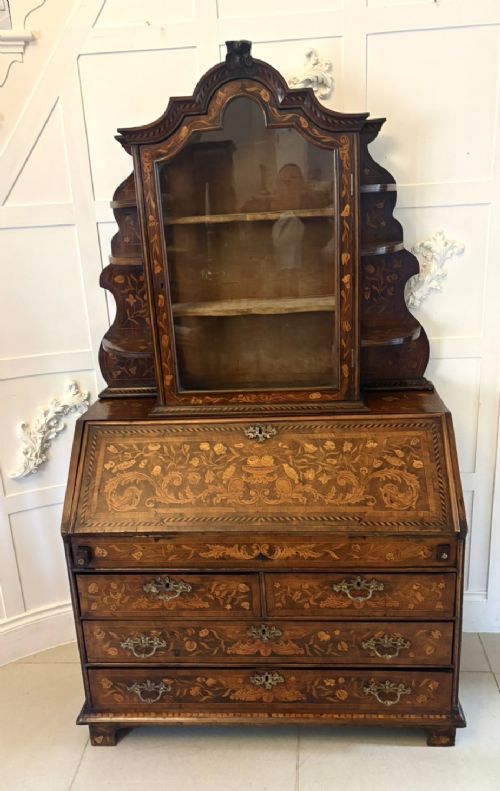


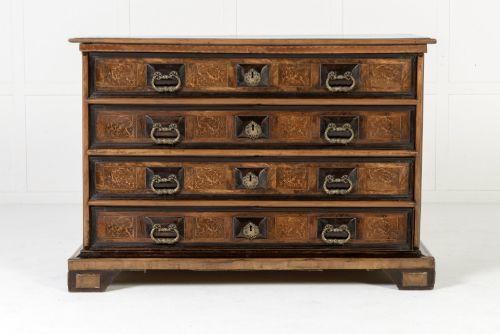


Baroque Walnut Bureau
A baroque walnut bureau is a writing cabinet of architectural presence, built from rich timber and dense floral inlay to anchor a period room.
Baroque Walnut Bureau
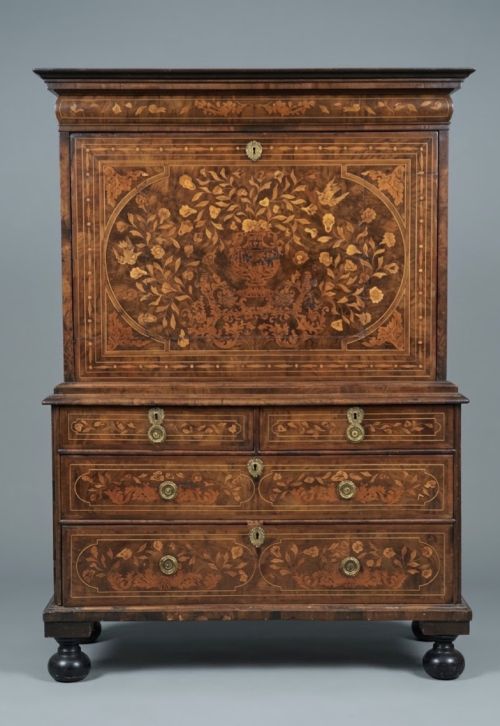
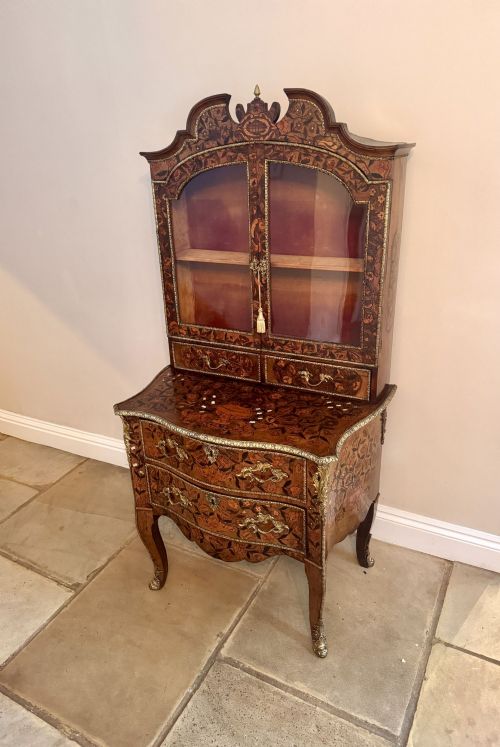
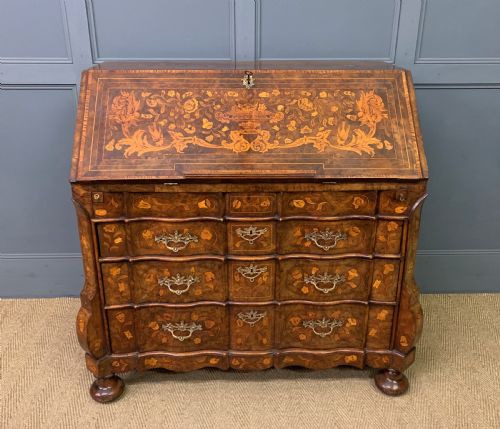
A baroque walnut bureau combines a fitted writing slope with storage, taking the form of a freestanding desk, a bureau bookcase, or a cabinet on chest. These pieces originate across continental Europe, with Dutch and South German examples prominent among the selection.
The materials and construction reflect the baroque taste for figured timber and pictorial marquetry. Walnut and burr walnut veneer provide the primary surface, enriched with marquetry inlay and fruitwood details.
How they were made
Cabinetmakers constructed these pieces using solid walnut and fruitwood carcasses, applying burr walnut veneer to create highly figured primary surfaces. Floral marquetry inlay was laboriously cut and fitted into the ground, often utilising contrasting lighter woods for botanical motifs.
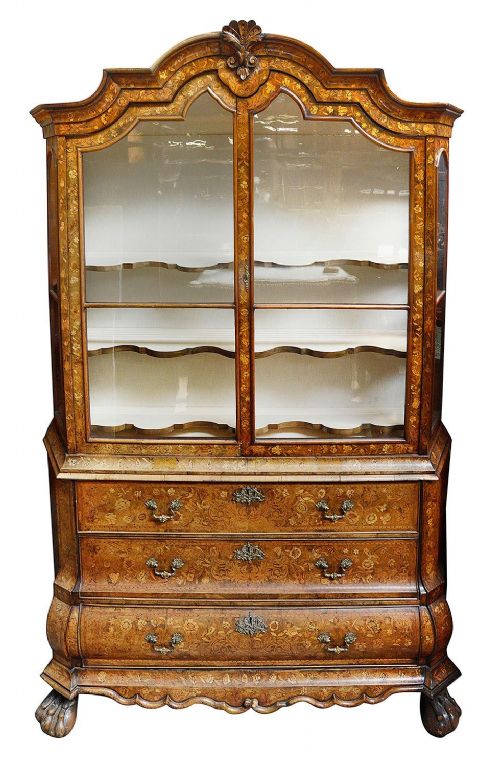
Brass hardware such as handles, escutcheons, and hinges secured the drop-front writing slopes and drawers. Glass panels appeared on bookcase and vitrine upper sections, while bombé shapes required advanced timber-bending and shaping techniques.
Baroque Walnut Bureau Retail Price Guide 2026
Typical asking prices for baroque walnut bureau among the pieces listed under this phrase on Sellingantiques today, from the lower quarter to the upper quarter. They describe what is for sale here now, not the wider market.
Materials recorded across the inventory include solid walnut, burr walnut veneer, fruitwood marquetry, and polished brass hardware.
What varies in quality
The distinction between standard and exceptional pieces rests upon the ambition of the marquetry and the choice of veneer. Finer examples display intricate floral marquetry that flows seamlessly across the fall-front and drawer fronts, utilising heavily figured burr walnut with deep natural chatoyancy.
Structural complexity also dictates the tier of a piece, separating simpler fall-front desks from large bureau bookcases and bombe-shaped cabinets with fitted interiors. The crispness of the brass mounts and the survival of original fruitwood details further elevate the standing of a bureau.
The Baroque Walnut Bureau Glossary
- Marquetry inlay
- Decorative patterns formed by inserting pieces of contrasting veneer into a prepared wood ground. This technique creates elaborate floral and pictorial scenes across the bureau exterior.
- Burr walnut
- Timber harvested from the irregular growths of a walnut tree, yielding highly figured patterns with swirling grain. It provides a luxurious surface for primary display areas.
- Bureau bookcase
- A dual-purpose furniture form featuring a sloping writing desk base surmounted by a glazed or panelled bookcase. It represents one of the grandest storage formats in baroque cabinetmaking.
- Bombe shaped
- A swelling or bulging contour characteristic of continental baroque furniture construction. This curved profile requires sophisticated joinery and timber manipulation.
- Vitrine
- A glass-fronted cabinet designed for the display of precious objects and porcelain. These are frequently integrated into the upper sections of bureau bookcases.
Baroque Walnut Bureau: Frequently Asked Questions
What is a baroque walnut bureau?
A baroque walnut bureau is a historical writing cabinet featuring a fall-front slope, internal drawers, and rich decorative veneers. These pieces combine utilitarian desk space with elaborate floral marquetry and architectural proportions.
Originating across continental workshops, they served as the primary administrative and display furniture for wealthy households. Their robust construction and figured timber surfaces ensure they remain striking focal points.
How were these bureaus used historically?
These pieces functioned primarily as private writing desks and secure storage units for correspondence, ledgers, and valuables. The drop-front slope folded down to provide a writing surface above a series of internal pigeonholes and small drawers.
The upper sections of bureau bookcases allowed owners to display fine porcelain and books, combining a personal study space with a formal display cabinet for guests.
How do I care for a walnut bureau?
Living with a walnut bureau requires maintaining stable room humidity and avoiding direct sunlight to protect the fragile burr veneers and marquetry. Gentle dusting with a dry cloth preserves the finish without stripping the historic surface.
Avoid placing the cabinet near heat sources or air conditioning vents, which can cause the old fruitwood and walnut timbers to dry out, warp, or split.
How do I distinguish regional styles?
Regional variations appear in the choice of decorative motifs and cabinet proportions. Dutch examples frequently showcase elaborate floral marquetry and bombé forms, while South German pieces lean towards architectural cabinetry and structured bookcase proportions.
Examining the secondary woods used inside the drawer linings and the specific style of inlay helps identify whether a piece originated in Italy, Germany, or the Netherlands.